Quick answer
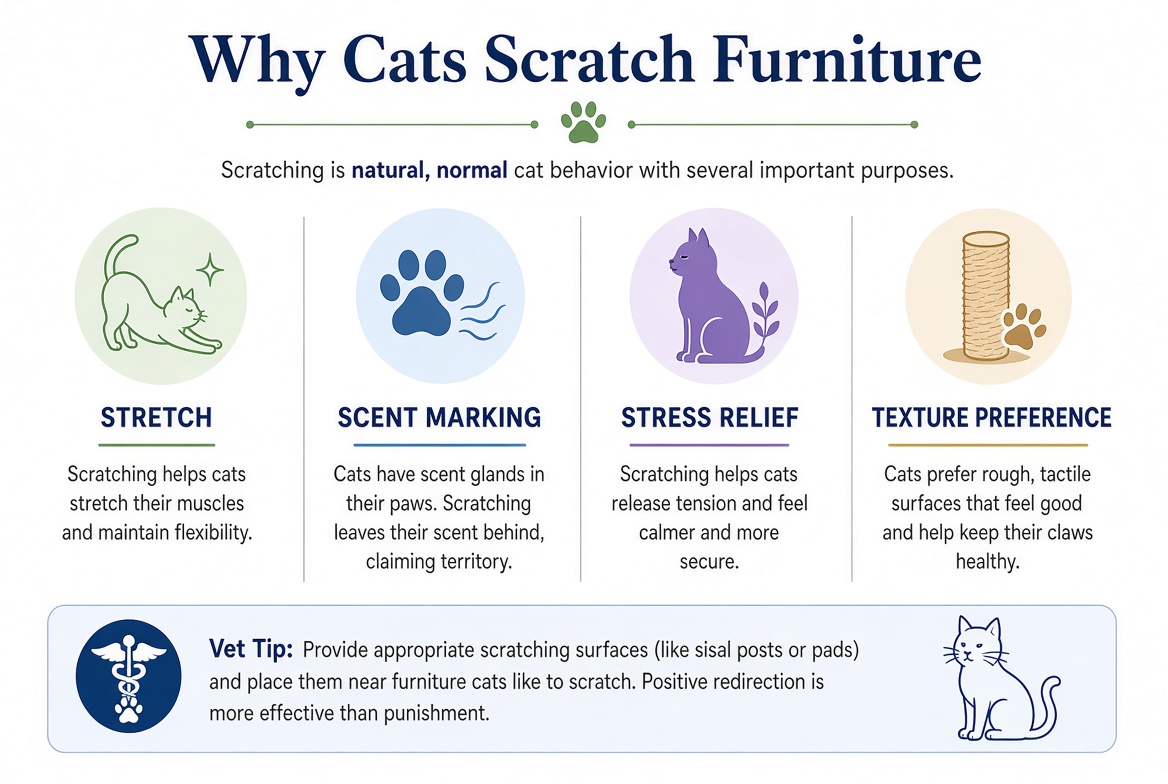
Cats scratch to stretch, maintain claws, and mark territory with scent glands in their paws. To protect furniture, give them tall, sturdy scratchers that match their preference (sisal, cardboard, vertical or horizontal) and place them where the cat already wants to scratch. Reward use of the scratcher and use gentle deterrents on furniture. Punishment increases stress and rarely works.
Why cats scratch furniture
- Physical need to stretch and shed claw sheaths
- Scent marking (pheromones from paw glands)
- Stress relief or boredom
- Preference for certain textures or locations near resting areas
Provide the right alternatives
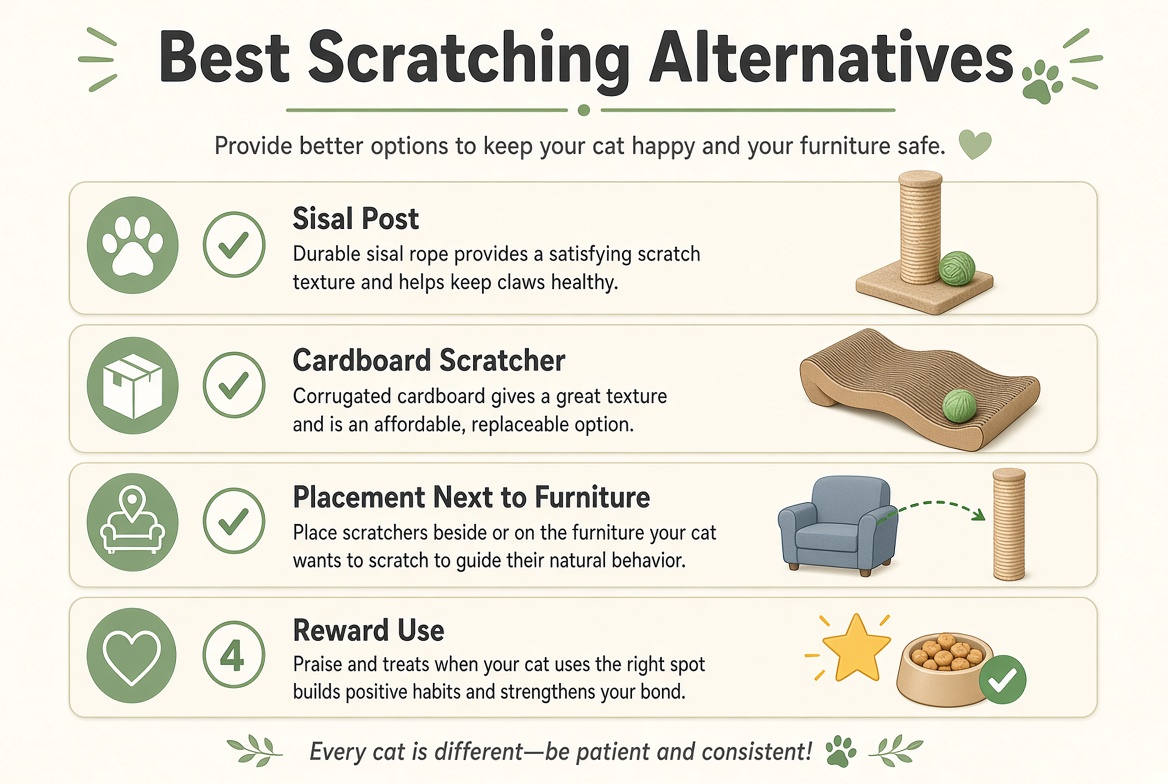
- Offer both vertical and horizontal scratchers. Some cats prefer one over the other.
- Use materials your cat likes: sisal rope, corrugated cardboard, or wood.
- Make posts tall enough for a full stretch and stable so they do not tip.
- Place scratchers next to the furniture the cat currently uses and in high-traffic areas.
How to redirect without punishment
- When the cat approaches furniture, calmly move them to the scratcher and reward with treats or catnip when they use it.
- Use double-sided tape, aluminum foil, or citrus-scented sprays (test first) as temporary deterrents on furniture.
- Keep nails trimmed regularly to reduce damage while training.
- Provide daily play and enrichment so scratching is not driven by boredom.
Frequently asked questions
Will declawing stop scratching?
Declawing is a surgical amputation and is not recommended by most veterinary organizations due to pain and behavioral side effects. Provide appropriate outlets instead.
How many scratchers do I need?
At least one per cat, plus extras in different locations and orientations.
My cat ignores the new post. What now?
Try different materials and locations. Rub catnip on it or place it exactly where the cat already scratches.
You may also like
Educational only. Persistent behavior issues can benefit from veterinary or behavior consultation.