Quick answer · Anatomy & normal function · Stages of disease · Signs · Treatment options · Prevention · FAQ
Quick answer
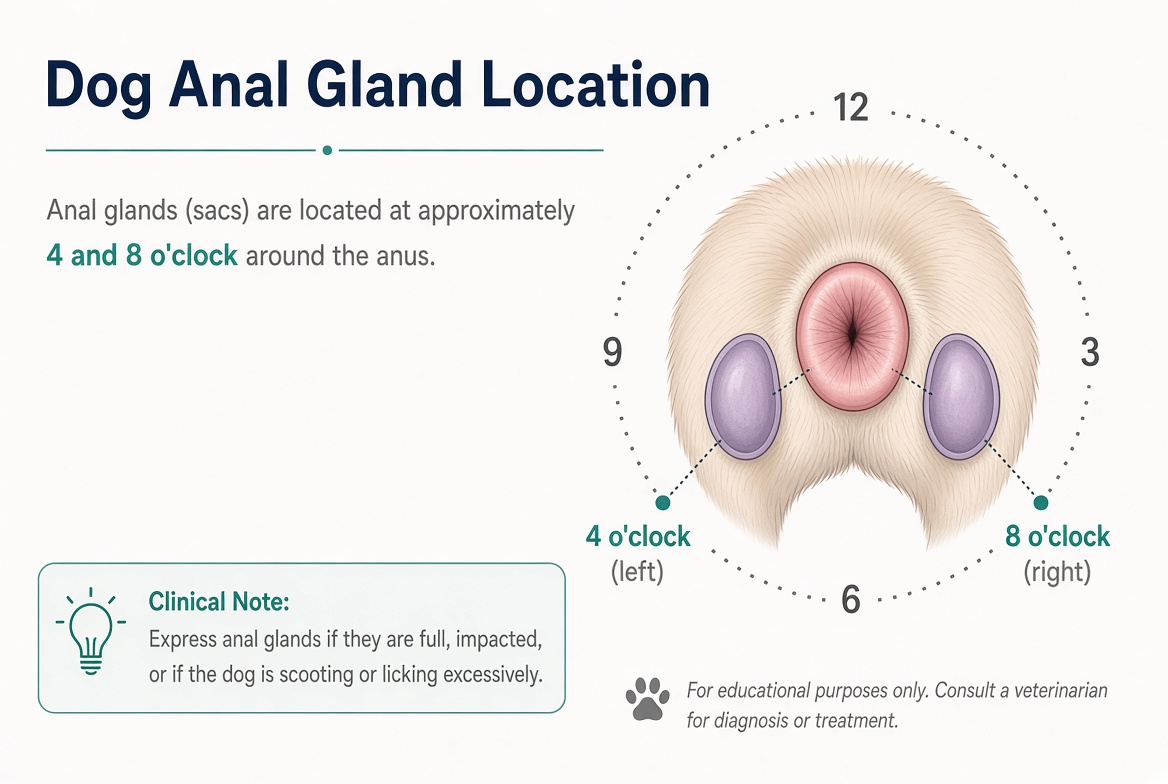
Anal glands (anal sacs) are two small sacs at roughly 4 and 8 o’clock around the anus. They normally empty during defecation. When the fluid thickens or the ducts block, dogs scoot, lick, or produce a strong odor. Mild impaction is often resolved with professional expression. Infection or abscess needs antibiotics and sometimes drainage. Chronic cases may benefit from diet changes or, rarely, surgical removal. Never attempt to express the glands at home if you are not trained — you can cause injury.
Anatomy and why problems develop
Each anal sac produces a smelly fluid that is normally expressed when the dog defecates. Soft stools, obesity, low fiber, allergies, or anatomical variation can prevent normal emptying. Over time the fluid becomes thick, the sac impacts, and bacteria can multiply. Some breeds (German Shepherds, Dachshunds, small breeds) appear over-represented. Older dogs and those with chronic soft stools are also at higher risk.
Stages of anal gland disease
| Stage | What is happening | Typical signs | Usual management |
|---|---|---|---|
| Impaction | Thick fluid that does not empty | Scooting, odor, mild discomfort | Professional expression ± diet change |
| Infection / inflammation | Bacteria or inflammation inside the sac | Increased licking, pain, discharge | Expression + antibiotics / anti-inflammatories |
| Abscess | Pus-filled sac that may rupture | Swelling, pain, bloody or purulent discharge, fever possible | Drainage, antibiotics, pain control |
| Chronic / recurrent | Repeated episodes despite management | Frequent scooting, owner frustration | Diet trials, weight management, possible surgery |
Common signs owners notice
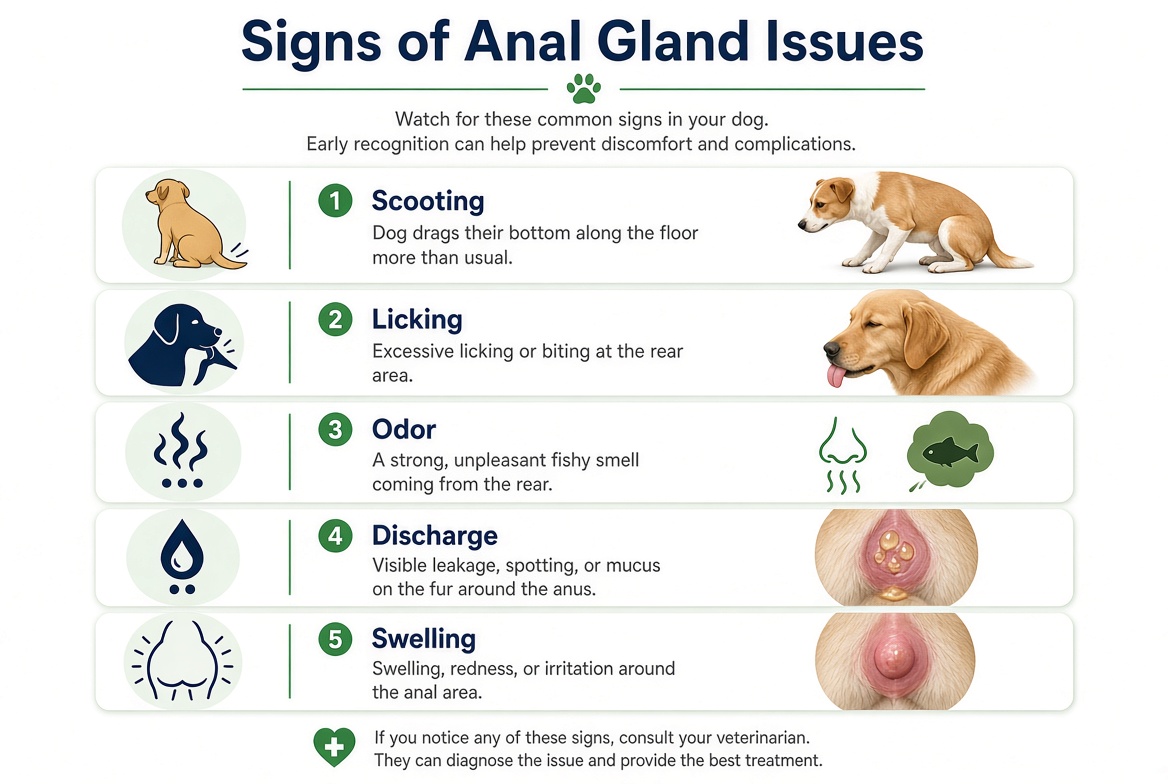
- Scooting the rear across the floor or carpet
- Licking or biting at the hind end
- Strong fishy or metallic odor
- Straining or discomfort during defecation
- Reluctance to sit
- Brownish or bloody discharge on bedding
- In advanced cases: swelling beside the anus, lethargy, or fever
Treatment options
Most dogs improve with one or more of the following:
- Professional expression: Done by a veterinarian or trained technician. Not recommended as a routine home procedure for most owners.
- Antibiotics and anti-inflammatories: Used when infection or significant inflammation is present. Culture is sometimes performed for recurrent cases.
- Diet and fiber: Firmer stools help natural expression. Weight loss reduces pressure on the area in overweight dogs.
- Surgical removal (anal sacculectomy): Considered for dogs with repeated abscesses or severe chronic disease that does not respond to medical management. It is not a first-line treatment and carries risks of incontinence or other complications that should be discussed thoroughly.
- There is visible swelling, redness, or open drainage beside the anus
- The dog is painful, lethargic, or febrile
- Scooting or odor returns within days of expression
- You see blood or pus
Reducing recurrence
Not every dog needs ongoing expression. For those that do, consistent fiber, weight control, and prompt attention to soft stools help. Some dogs benefit from a veterinary-recommended fiber supplement or a diet change. Avoid unnecessary home expression, which can irritate the ducts.
Frequently asked questions
Can I express the glands myself?
Most veterinarians advise against routine home expression unless you have been specifically trained. Improper technique can cause pain, swelling, or infection.
Why do some dogs need frequent expression?
Soft stools, obesity, allergies, or individual anatomy can prevent normal emptying. Addressing the underlying factor often reduces the frequency.
Is surgery always successful?
Anal sacculectomy resolves the gland problem in most cases but is reserved for refractory disease because of potential complications. Discuss risks and benefits with a veterinarian experienced in the procedure.
Do cats get anal gland problems too?
Yes, though less commonly discussed. Scooting or excessive licking of the rear in a cat should also be evaluated.
You may also like
Educational only. Anal gland disease should be diagnosed and treated by a veterinarian. Do not attempt drainage or medication without professional guidance.