Quick answer · One paw vs all four · Main causes · Yeast & corn-chip smell · Safe home steps · When to see a vet · FAQ
Quick answer: why is my dog licking paws constantly?
Dogs lick their paws most often because of environmental or food allergies, secondary yeast or bacterial infections, a foreign body (grass awn, thorn), or localized pain or injury. All four paws usually points to allergy. One paw that started suddenly more often means something stuck between the toes or a nail/pad injury. A musty “corn chip” smell is classic for yeast (Malassezia) overgrowth on moist skin.
Occasional licking after walks is normal grooming. Hours of licking, redness, swelling, limping, or odor are not. The goal is to stop the moisture cycle and find the underlying trigger rather than only treating the symptom.
Read the pattern: one paw or all four?
| What you see | Most likely meaning | Practical next step |
|---|---|---|
| All four paws, on and off for days or weeks | Allergy (environmental or food). Paws are a classic allergy site in dogs. | Note season, ear/belly involvement, diet history. Book veterinary visit. |
| One paw, started suddenly after a walk | Foreign body (grass seed/awn), cut, torn nail, or sting | Inspect carefully between toes and pads. If nothing visible and licking continues, see vet same day. |
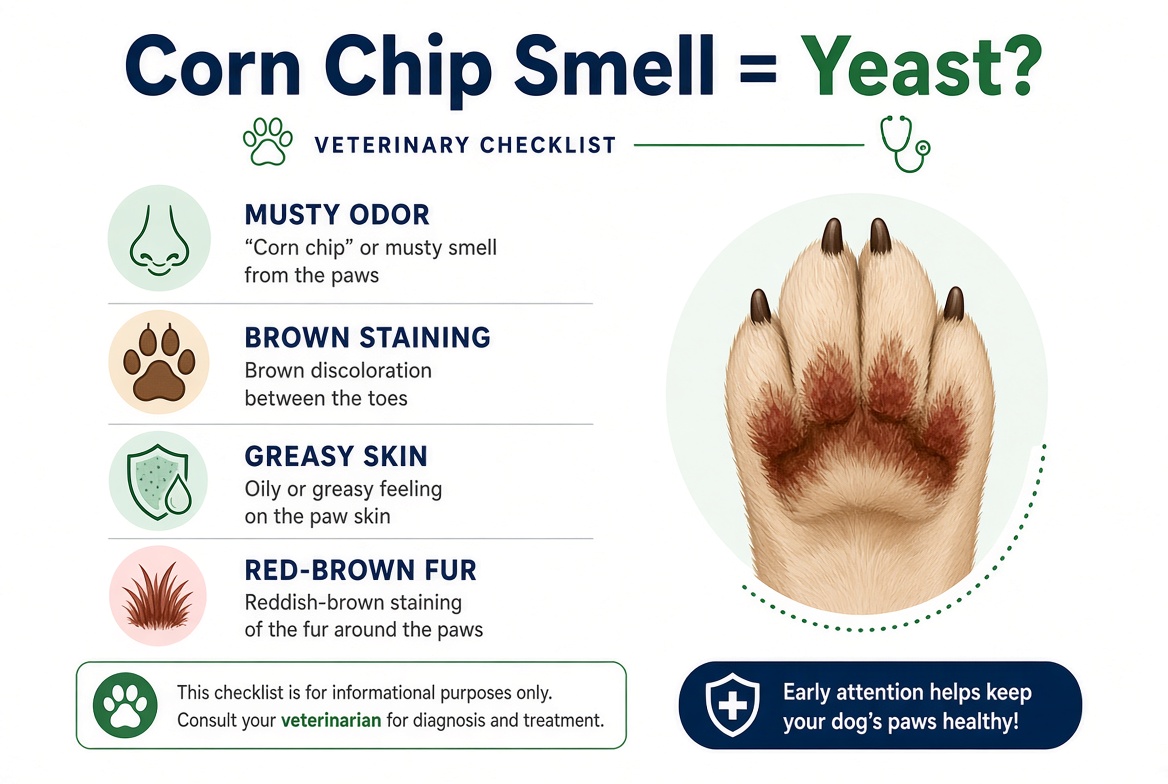
| Musty corn-chip smell, greasy or brown-tinged skin between toes | Yeast (Malassezia) overgrowth, usually secondary to allergy + moisture | Veterinary confirmation (cytology) needed. Treatment required or the cycle continues. |
| Rust or pink-brown stained fur on light coats | Saliva staining from prolonged licking | Evidence the problem has been going on for weeks. Address cause, not just stain. |
| Licking mostly when alone or at night, paws look normal | Possible habit, boredom, or stress (diagnosis of exclusion) | Rule out medical causes first. Then enrichment and behavior support. |
Main causes of excessive paw licking
1. Allergies (most common chronic cause)
Environmental allergies (pollen, grass, dust mites) and food allergies both drive intense itch. Dogs often target paws, ears, and belly. Environmental allergies are frequently seasonal; food allergies tend to be year-round. Secondary infections develop quickly once the dog starts licking because saliva keeps the skin wet.
2. Yeast and bacterial infections
Malassezia yeast thrives in warm, moist environments created by licking. Bacterial pyoderma can appear at the same time. The classic owner clue is the corn-chip or Frito-like smell. Red-brown discoloration and greasy feel between the toes are also common. These infections almost never resolve with home rinsing alone.
3. Foreign bodies and trauma
Grass awns, foxtails, thorns, and small stones lodge between toes or pads. They can migrate and cause swelling or abscesses. Sudden onset on one paw after outdoor activity is the classic story. Even if you cannot see the object, continued licking or limping warrants veterinary examination.
4. Pain from nails, pads, or joints
Torn nails, cracked pads, interdigital cysts, or pain from arthritis higher up the limb can all trigger focused licking. Dogs with joint pain sometimes lick the paw on the affected side as a referred behavior.
5. Parasites and other skin disease
Demodex mites, fleas, and contact irritants can contribute. Less commonly, immune-mediated nail disease or endocrine conditions play a role. These require specific diagnostics.
- Swelling, heat, or refusal to bear weight
- Bleeding, open sores, or pus
- Sudden intense licking of one paw with no obvious cause
- Systemic signs (lethargy, vomiting, pale gums)
Yeast, the corn-chip smell, and the moisture cycle
Once licking starts, saliva creates a perfect environment for yeast. The yeast produces more itch, which drives more licking, which keeps the area wet. Breaking the cycle requires treating both the yeast and the underlying allergy or irritation. Topical therapy alone rarely works if the dog continues to lick; many dogs need a short course of an Elizabethan collar while treatment takes effect.
Safe steps you can take while arranging veterinary care
- Rinse paws with plain lukewarm water after walks and gently pat dry. Avoid human soaps, essential oils, or hydrogen peroxide.
- Inspect between toes and pads in good light. Remove any visible debris carefully.
- Prevent further trauma with a properly fitted cone or recovery suit if the skin is already raw.
- Keep a simple log: which paws, time of day, any odor, limping, ear or belly involvement, recent diet or environment changes.
Do not apply over-the-counter human antifungal creams, steroid creams, or antibiotics without veterinary guidance. Many products are toxic if licked or delay proper diagnosis.
What your veterinarian will typically check
Expect a thorough skin and paw examination, cytology (tape or impression smear) to look for yeast and bacteria, and questions about seasonality, diet, and other itchy areas. Depending on findings, the plan may include medicated wipes or shampoos, short-course oral or topical antifungals/antibiotics, anti-itch medication, and an elimination diet trial if food allergy is suspected. Allergy testing or referral is considered for long-term management.
Frequently asked questions
Is paw licking always an allergy?
No. Allergies are the most common chronic cause, but sudden one-paw licking is more often injury or foreign body. Yeast can appear secondary to almost any cause that keeps the paws wet.
Can I stop the licking with a cone alone?
A cone prevents further damage and helps medication work, but it does not treat the underlying itch or infection. Most dogs need both.
Why do the paws smell like corn chips?
That odor is characteristic of Malassezia yeast. It is a useful clue but still needs veterinary confirmation and treatment.
How long should I wait before seeing a vet?
If licking is constant, skin is red or broken, there is odor or limping, or it has lasted more than a couple of days, schedule a visit. Sudden intense one-paw licking warrants same-day evaluation.
You may also like
This guide is educational and does not replace an in-person examination by a licensed veterinarian. Emergencies and conditions requiring diagnostics or prescription treatment should be handled by your veterinary clinic.