Quick answer · Rule out medical first · Behavioral picky eating · What actually works · When to call the vet · FAQ
Quick answer
A dog that suddenly refuses food needs a veterinary check first — dental pain, nausea, parasites, or systemic illness are common. A long-term picky eater that is otherwise healthy, maintains weight, and has normal energy and stools is more often a behavioral or management issue. The most effective fixes are scheduled meals (no free-feeding), limited treats, and resisting the urge to switch foods every few days.
Rule out medical causes first
In consults, the most frequent oversight is labeling a dog “picky” before checking for pain or illness. Common medical drivers include:
- Dental disease or oral pain (even when teeth look clean from the outside)
- Nausea from gastrointestinal disease, kidney issues, or medications
- Parasites or recent diet change causing stomach upset
- Pain from arthritis or other sources that reduces interest in eating
- Stress, anxiety, or cognitive changes in senior dogs
When it is truly behavioral or management-related
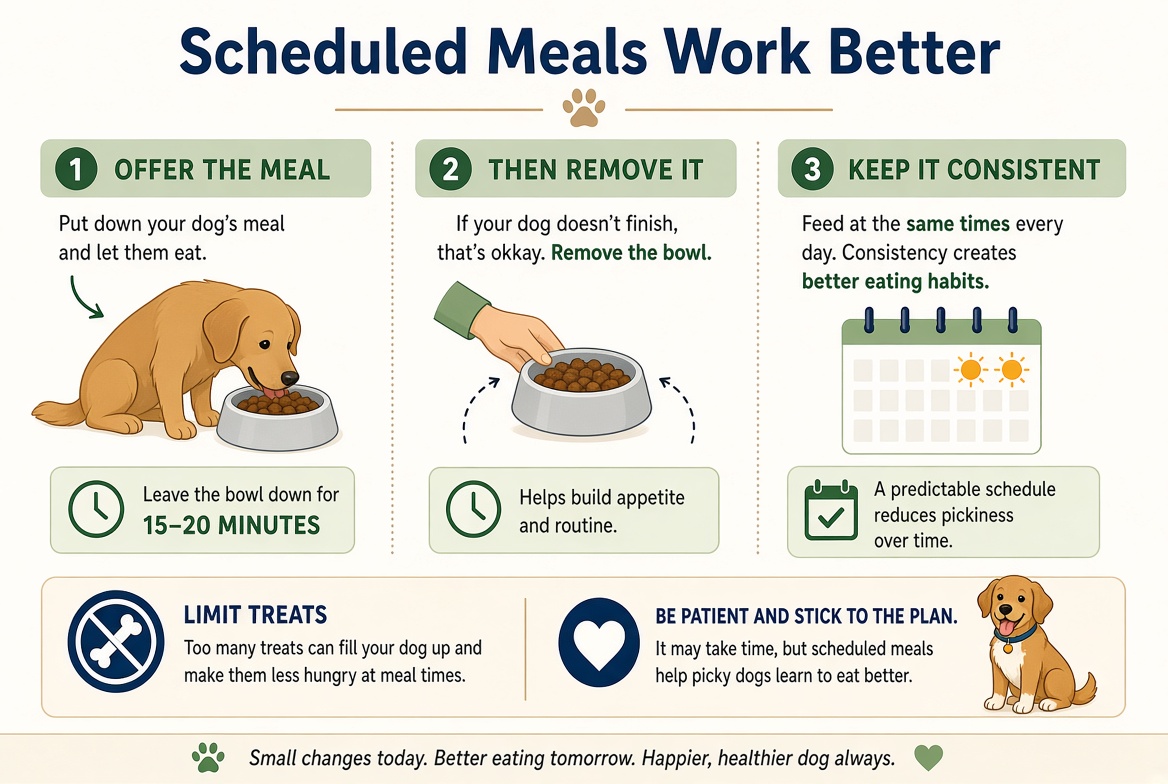
Healthy dogs that skip meals but remain bright, maintain body condition, and have normal stools are often responding to how food is offered. Free-feeding, frequent treat handouts, or constant food switching can teach a dog that something better is always coming. Some dogs simply have lower food motivation and do fine missing an occasional meal.
| Pattern | Likely driver | Practical adjustment |
|---|---|---|
| Eats enthusiastically at first, then slows | Too many calories from treats or table scraps | Cut treats to <10% of daily calories; measure meals |
| Ignores kibble but eats anything else | Learned preference from frequent topping or switching | Return to scheduled meals; limit variety for 2 weeks |
| Eats well for others but not you | Attention or routine association | Consistent feeder and schedule; avoid hand-feeding long-term |
| Skips meals but stays active and stable weight | Low food motivation (common in some breeds/individuals) | Offer meal for 15–20 minutes, then pick up; do not add extras |
Strategies that help most picky but healthy dogs
- Feed at consistent times and remove the bowl after 15–20 minutes.
- Warm food slightly or add a small amount of warm water to increase aroma (never hot).
- Use a slow feeder or puzzle only after the dog is reliably eating the base diet.
- Avoid rotating proteins or brands every few days — this often worsens selectivity.
- Keep treats and human food minimal and counted toward daily calories.
What to expect at the veterinary visit
Your veterinarian will examine the mouth, check body condition, and ask about stool quality, energy, and recent changes. Basic bloodwork or dental evaluation may be recommended if anything looks off. Once medical issues are ruled out, the conversation usually shifts to feeding schedule, treat volume, and realistic expectations for that individual dog.
Scavenging is a different problem from fussiness. If your dog eats stool, read our guide on why dogs eat poop and how to stop it.
Frequently asked questions
Should I switch foods if my dog won’t eat?
Only after a veterinary check and only gradually. Frequent switching often reinforces pickiness.
Is it okay if my healthy dog skips a meal?
Yes, for most adult dogs in good body condition with normal stools and energy. Offer the next scheduled meal as usual.
Can toppers help?
A small amount of plain cooked meat or a commercial topper can increase aroma short-term, but use sparingly so the dog still eats the complete diet.
You may also like
Educational only. Does not replace veterinary examination or personalized nutritional advice.