Dog Bad Breath: Vet-Approved Causes, Dental Disease Signs, and When Odor Means More
Dog bad breath is usually dental — and sometimes a clue to kidney or metabolic disease. Learn causes, home care, and when to book an exam.
Dog bad breath is usually dental — and sometimes a clue to kidney or metabolic disease. Learn causes, home care, and when to book an exam.
Dog bad breath is not “just how dogs smell.” When owners search “dog bad breath,” “bad breath in dogs,” or “dog breath stinks,” they are usually noticing a change — a new sour, rotten, or metallic odor that was not there before. The most common driver is dental disease: plaque, tartar, gingivitis, and periodontal infection. Less often, the odor points toward oral foreign bodies, oral tumors, or systemic problems such as kidney disease or uncontrolled diabetes.
This article is educational and does not replace a veterinary examination. Sudden severe oral odor with swelling, bleeding, refusal to eat, or difficulty swallowing needs prompt professional care. Home dental products support hygiene — they do not replace professional cleaning when infection is established.
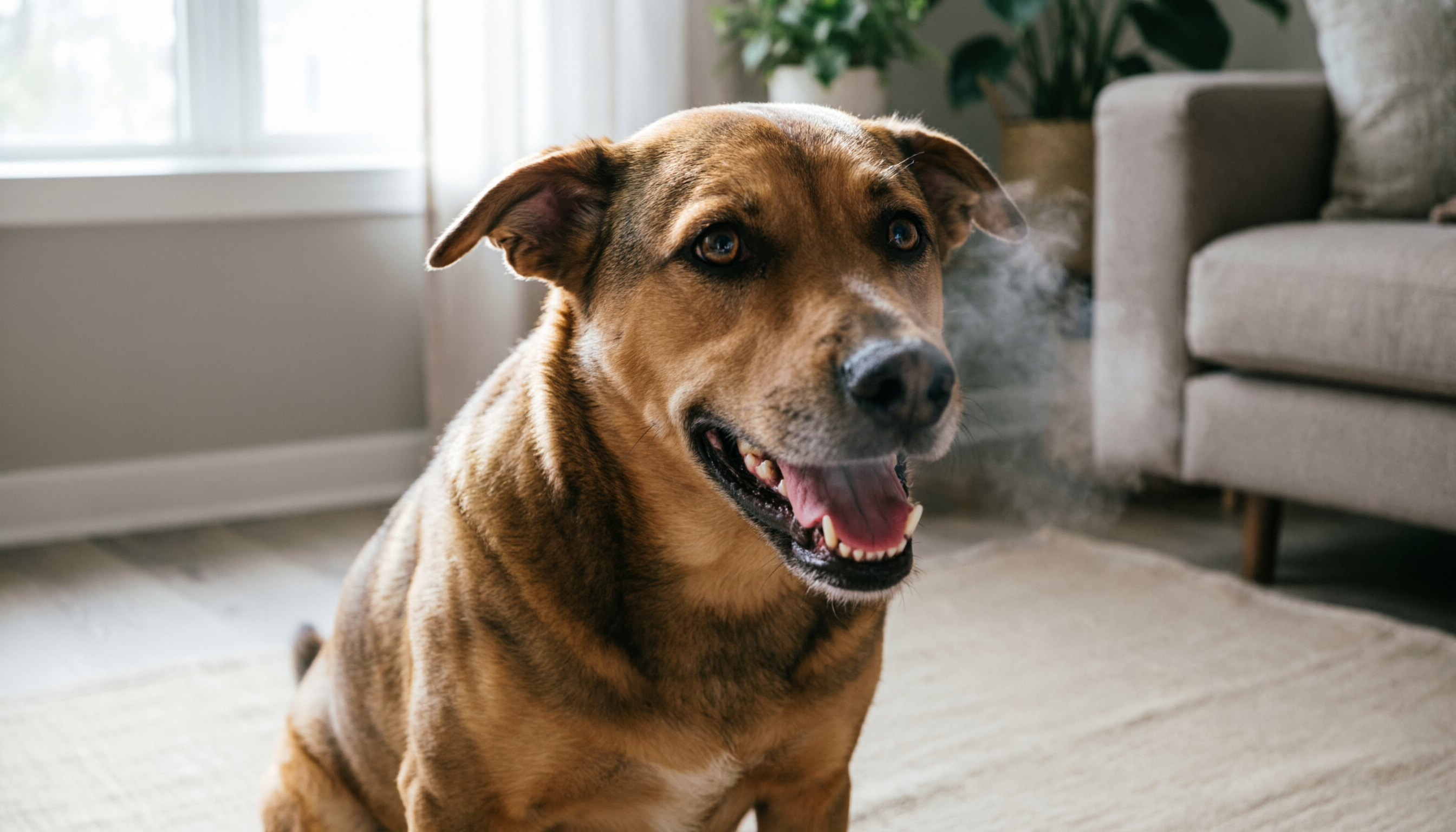
Dog bad breath is often the first clue of dental disease — and sometimes of problems beyond the mouth.
Across US households, dental care is one of the most deferred parts of pet health — partly because anesthesia worries and cost fears delay cleaning. The result is progressive periodontal disease that makes breath worse and can seed infection deeper into the jaw.
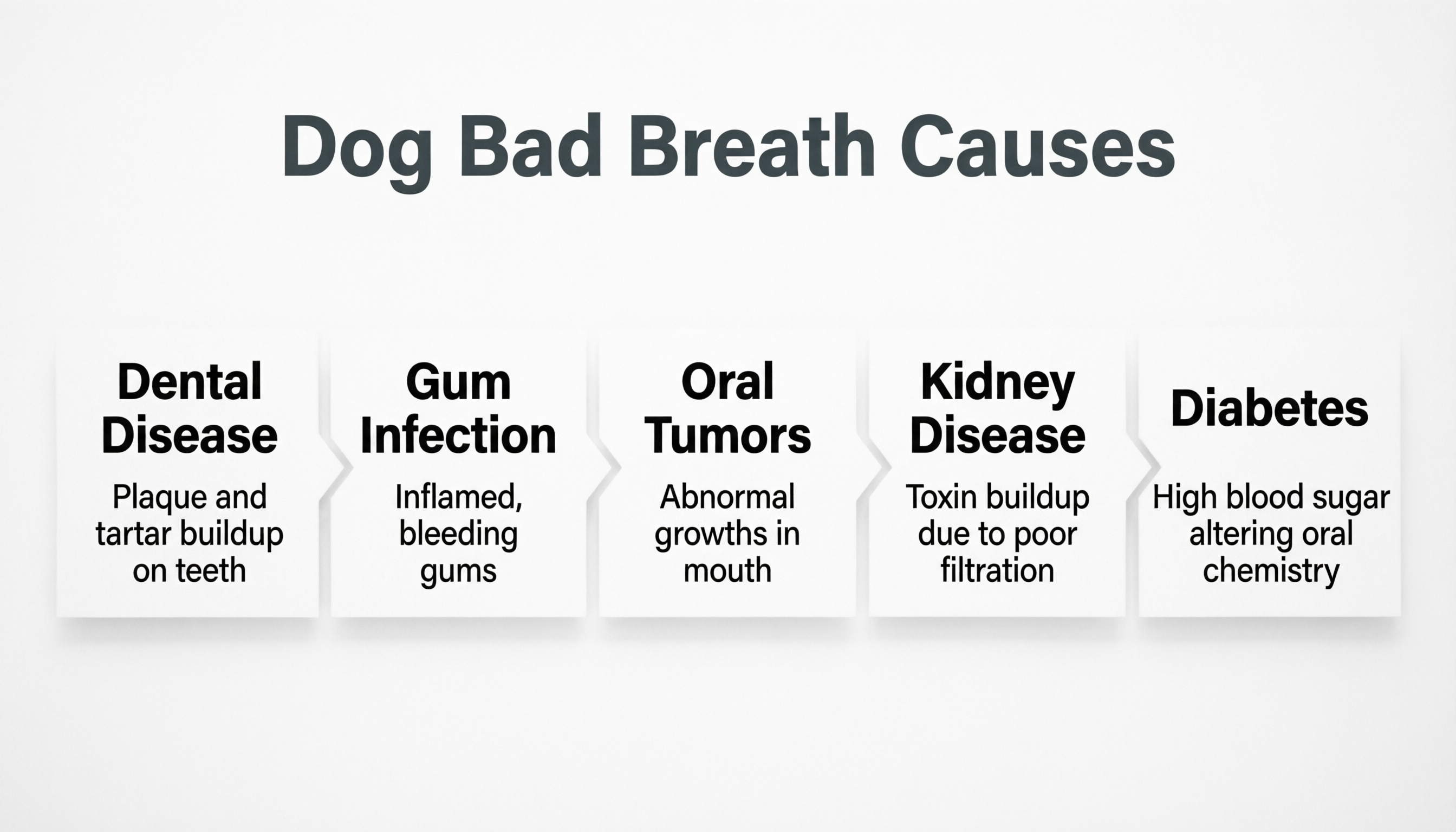
Most bad breath in dogs starts with the teeth and gums — systemic disease is less common but important to rule out.
According to veterinary dental teaching standards used in US clinics, by age three a large share of dogs already show some degree of periodontal disease. Breath is often the clue owners notice first — long before they see a loose tooth.
| Clue | More consistent with dental disease | Raises systemic concern |
|---|---|---|
| Odor type | Rotten, “infected mouth” | Ammonia-like, chemical, or sweet/unusual |
| Mouth exam | Tartar, red gums, pain on chewing | Mouth looks cleaner than the odor suggests |
| Other signs | Drooling, dropping food, face rubbing | Increased thirst, weight loss, vomiting, lethargy |
| Onset | Gradual over months | Can be gradual or paired with whole-body change |
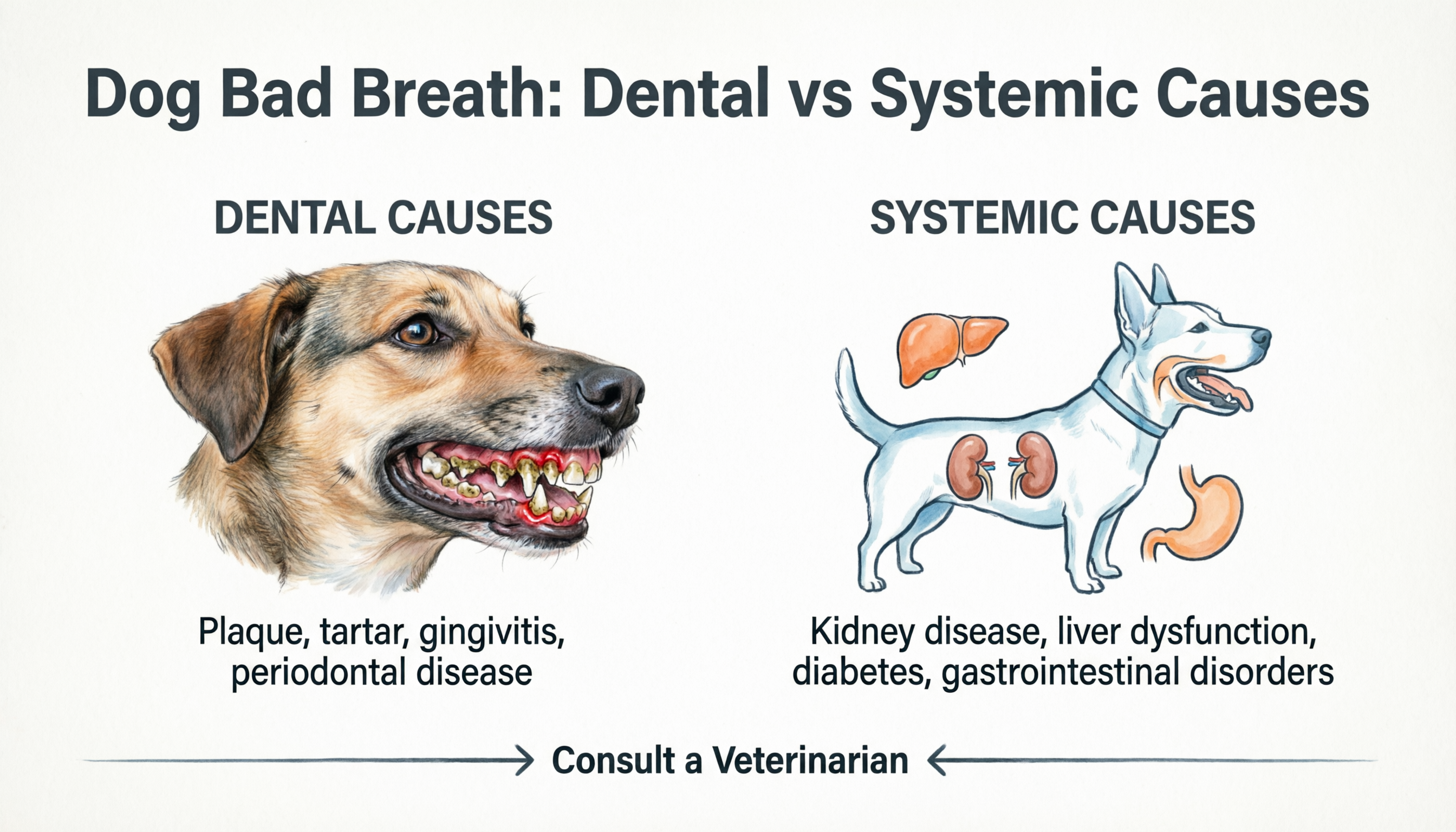
Dental disease drives most cases of dog bad breath; kidney disease and metabolic problems are less common but higher stakes.
Seek veterinary care promptly if:
Breath alone is rarely an emergency — but breath plus systemic signs can be.
Healthcare Consultations and Diagnostics Support can help you organise questions about anesthesia, staging, and home care between cleanings.
Owners sometimes read that bad breath equals kidney failure. Periodontal disease remains far more common. That said, advanced kidney disease can contribute to an ammonia-type oral odor, usually alongside increased drinking, increased urination, reduced appetite, or weight loss. Breath should prompt a mouth check first — and a broader health discussion when other signs are present.
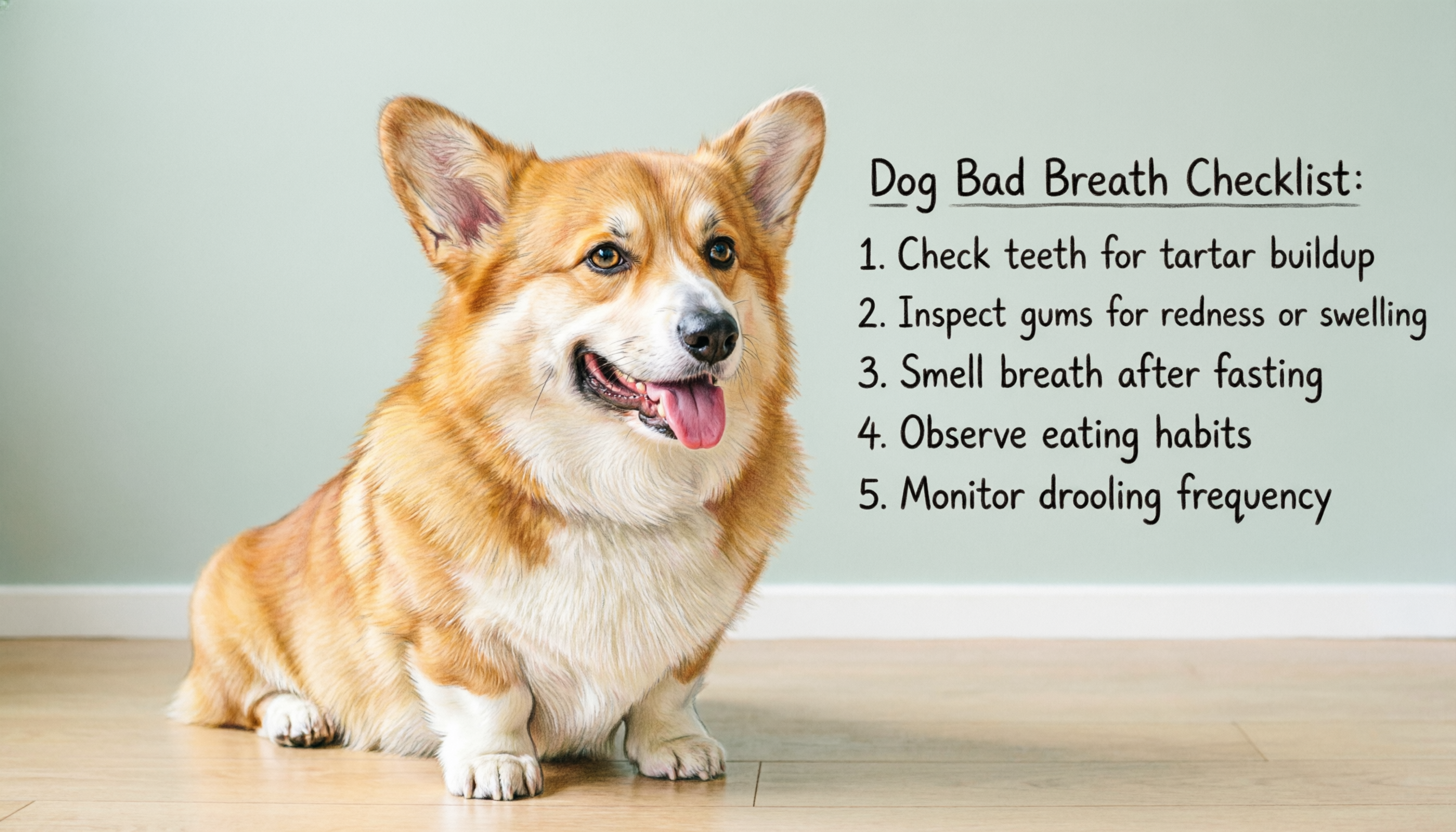
Home care supports dental health — it does not replace professional cleaning when infection is under the gumline.
Persistent odor, visible tartar, red or bleeding gums, chewing pain, or any systemic signs deserve an exam. Waiting until the dog is already thin or not eating narrows options and can increase anesthesia risk if dental surgery becomes urgent.
Oral exam awake, then often under anesthesia for full charting, probing, and dental radiographs — because much of periodontal disease hides below the gumline.
Whole-patient assessment when history suggests systemic disease — including bloodwork before anesthesia in many adult and senior dogs.
According to American Veterinary Dental College principles taught in specialty practice, cleaning without evaluation under the gumline treats only the visible tip of the problem.

Consistent home care plus timely professional cleanings keep most dogs more comfortable — and less odorous.
Why does my dog have bad breath?
Most often dental disease. Other causes include oral infection, foreign material, and, less commonly, systemic illness such as kidney disease.
Dog breath stinks — is that normal?
Mild dog odor exists; a strong rotten smell is not something to ignore indefinitely.
How do I get rid of dog bad breath?
Treat the cause. Home brushing helps maintenance; established periodontal disease needs veterinary dental care.
Can kidney disease cause dog bad breath?
Yes, sometimes — usually with other signs like increased thirst. Dental disease remains the more common explanation.
Do dental chews fix bad breath?
Some VOHC-accepted products reduce plaque; they do not replace cleaning when infection is already present.
Is anesthesia required for dental cleaning?
Thorough cleaning and dental X-rays require anesthesia. “Anesthesia-free” scraping only reaches the visible crown and can miss painful disease below the gumline.
What toothpaste is safe?
Only dog-specific toothpaste. Human products may contain xylitol or fluoride at unsafe levels for pets.
Dog bad breath is a message from the mouth — and sometimes from the rest of the body. Start with a look at the teeth and gums, build a realistic home care habit, and schedule professional dental care when odor and tartar persist. Bookmark this page at nextgenpetcare.com for more trusted pet health guidance, and reach out through Healthcare Consultations if you want help preparing questions for your veterinary dental visit.
Medical disclaimer: This article is intended for general education and does not constitute veterinary advice, diagnosis, or treatment. Only a licensed veterinarian who has examined your dog can diagnose the cause of bad breath and recommend care.