Dog Barking: Why It Happens and How to Stop Excessive Barking
Types of barking, common triggers, training that works, and when a hoarse or frantic bark needs a vet check.
Types of barking, common triggers, training that works, and when a hoarse or frantic bark needs a vet check.
Dog barking is normal communication — but when it turns into hours of noise, neighbors complain, or your puppy never settles, US owners need a clear plan. Rising apartment density and HOA rules in many cities make excessive barking a real quality-of-life and housing risk.
If you searched “dog barking,” “why is my dog barking,” “dog won’t stop barking,” or “how to stop dog barking,” this guide covers what different barks mean, common triggers, training steps that actually work, and when a veterinarian should rule out pain or medical causes first.
Educational content only. Sudden voice change, coughing with bark, or distress requires in-person veterinary evaluation.

Barking is communication. The goal is not a silent dog — it is a dog that can settle when the situation is safe.
Dogs bark to alert, greet, demand, warn, play, and relieve stress. According to Dr. Sarah Miller, DVM, a veterinary behavior-aware clinician working with US urban clients, the problem is rarely “the bark itself.” It is frequency, duration, context, and whether the dog can return to calm.
Normal: brief alert at the door, play vocalizing, short warning at a stranger on the property.
Problem: barking for hours when alone, nonstop reaction to every sidewalk sound, or escalating aggression with the bark.
Understanding bark type helps you choose the right fix instead of guessing.
| Bark type | Common meaning | First response |
|---|---|---|
| Alert / alarm | Something changed in the environment | Acknowledge, then redirect to settle |
| Demand / attention | Wants food, play, or access | Do not reward the bark; reward quiet |
| Anxiety / separation | Distress when alone or anticipating leave | Desensitization plan; rule out panic |
| Territorial / barrier | Fence, window, or door frustration | Block visual triggers; train “quiet + place” |
| Play / excitement | Arousal during greetings or games | Calm greetings; structured play rules |
| High-pitched / frantic | Fear, high arousal, or pain in some cases | Assess body language; medical check if new |
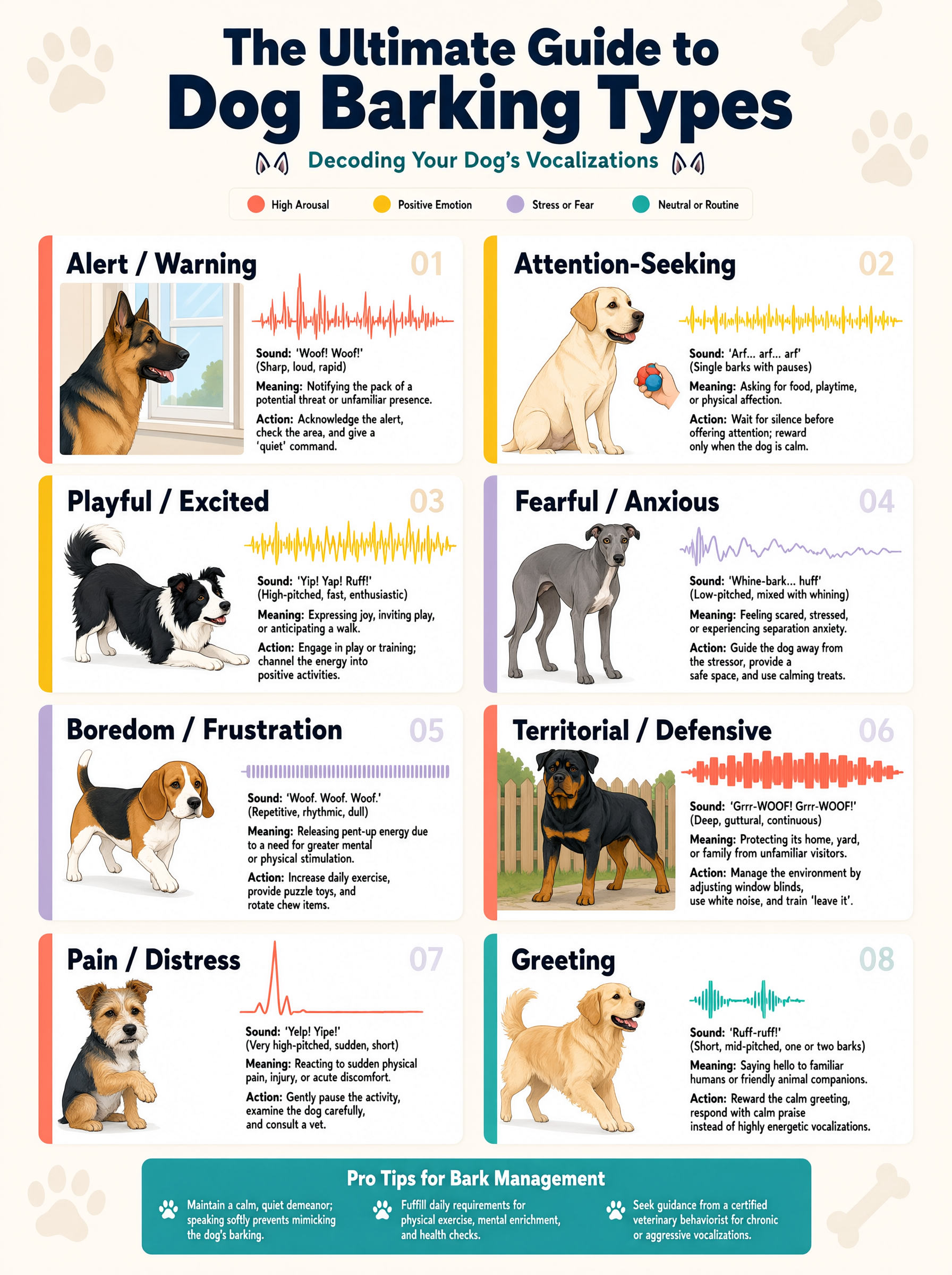
Match the bark type to the plan. Treating demand barking like separation anxiety wastes time.
Dr. Miller notes that many “stubborn barkers” are simply successful: the bark worked to get a reaction, so the behavior sticks.
No single gadget replaces training. Start with management, then teach an alternate behavior.
Close blinds on high-traffic streets. Use white noise. Move the dog’s rest area away from the front window. Management cuts rehearsals of the bad habit.
Let one or two alert barks happen, then mark calm. Reward silence with food or access — not the bark itself. Consistency across all household members matters more than perfect technique.
A tired brain barks less. Walks, sniff walks, puzzle feeders, and short training sessions reduce demand and boredom barking more than longer “just run” sessions alone.
Yelling “stop” often sounds like joining the bark. Walk away from demand barking. Reward the first quiet moment.
If barking only happens when you leave, this may be anxiety, not “spite.” Gradual absences, calm departures, and professional help beat punishment. Shock or citronella collars can worsen fear in anxious dogs.
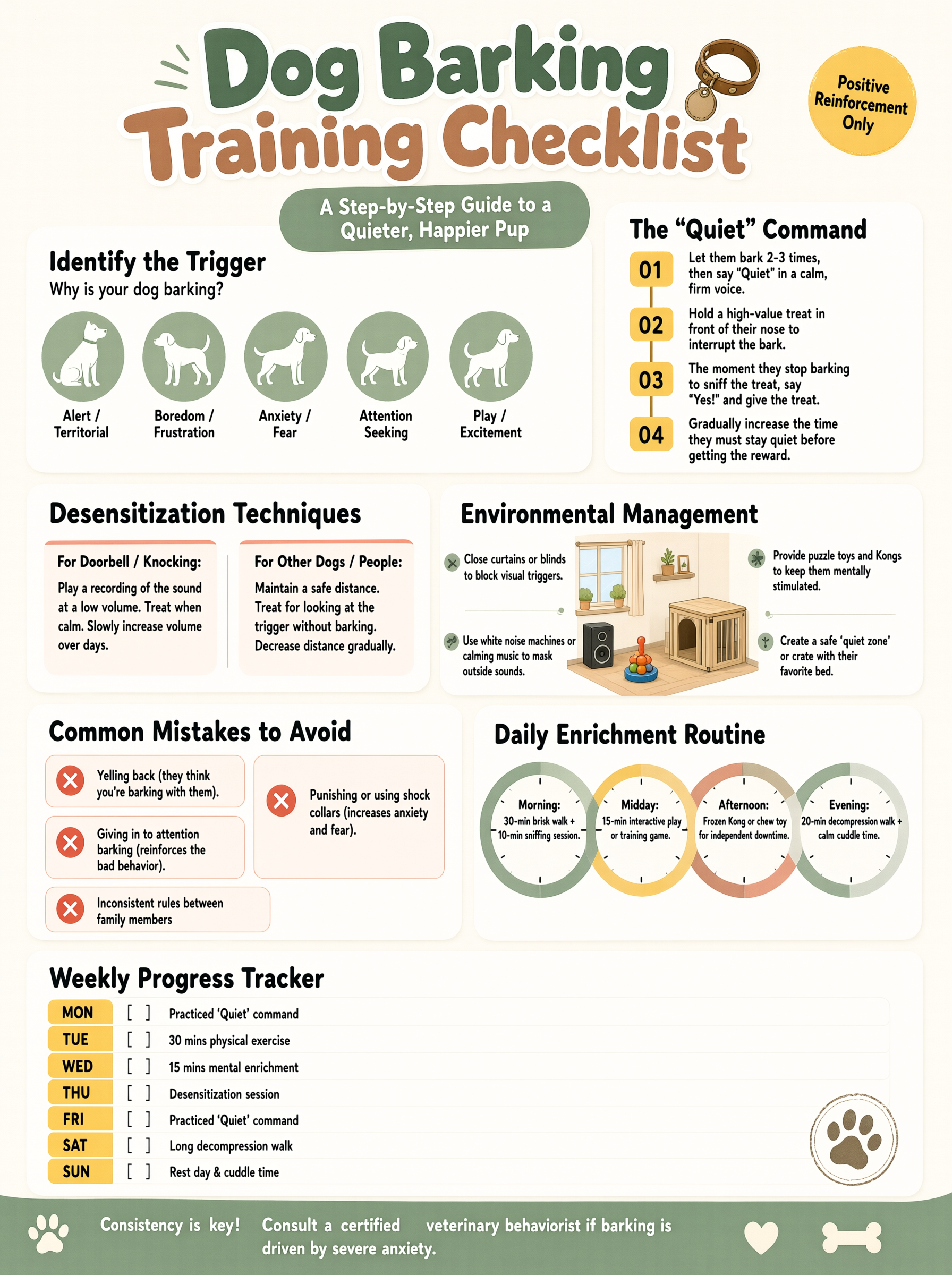
Practical checklist: block triggers, reward quiet, exercise brain and body, avoid punishing anxiety.
Healthcare Consultations can help you organize history, videos, and questions before a trainer or veterinary behavior visit.
Puppy barking often includes play, frustration during house training, and early alert habits. Short, consistent responses work better than long lectures. Socialization to everyday sounds (mail, elevators, other dogs at a distance) reduces later reactivity.
Adult dogs may have years of reinforced barking. Progress is still possible, but expect weeks of consistent management — not overnight silence.
Most barking is behavioral. Still, rule out pain and airway issues when the pattern is new or the voice changes.
See a veterinarian promptly if you notice:
According to clinical experience shared across general practice, laryngeal irritation, kennel cough–type disease, oral pain, and cognitive changes in seniors can all alter vocalization. Do not assume “just behavior” when the sound itself has changed.

The goal: a dog that can alert once, then settle — not a permanently muted companion.
Why is my dog barking so much?
Common reasons include alerting to sights and sounds, demanding attention, boredom, barrier frustration, and separation-related distress. Context tells you which one.
How do I stop my dog from barking at every noise?
Reduce visual access, add white noise, teach a quiet cue, and reward calm. Systematic desensitization to specific sounds works better than yelling.
Will my dog ever stop excessive barking?
Many improve substantially with consistent management and training. Some breeds stay more vocal; the realistic goal is controllable barking, not zero sound.
Is puppy barking normal?
Yes, within reason. Teach boundaries early so play and alert barks do not become all-day habits.
Can dogs bark themselves hoarse?
Heavy barking can irritate the throat. Persistent hoarseness still deserves a veterinary check to rule out other airway or laryngeal problems.
Do anti-bark collars work?
Some suppress sound short-term. They do not teach an alternate behavior and can increase fear. Training and management are preferred first-line approaches for most pet homes.
Dog barking starts as communication. Excessive barking becomes a solvable problem when you match the cause — trigger, attention, anxiety, or medical change — to the right plan. Block easy rehearsals, reward quiet, meet exercise needs, and call your veterinarian if the voice or comfort level changes. Bookmark this page at nextgenpetcare.com for more practical pet behavior and health guidance.
Disclaimer: Educational only. Not a substitute for veterinary diagnosis or a certified behavior professional’s plan for an individual dog.