Dog Diarrhea: Vet-Approved Causes, Bland Diet Rules, and When to See a Vet
Why does my dog have diarrhea? Learn common causes, safe home steps, bland diet basics, and the red flags that mean it is time for the clinic.
Why does my dog have diarrhea? Learn common causes, safe home steps, bland diet basics, and the red flags that mean it is time for the clinic.
Dog diarrhea is one of the most common reasons US pet owners search for urgent answers at 2 a.m. When stools turn loose, watery, or frequent, people type “dog diarrhea,” “why does my dog have diarrhea,” and “dog has diarrhea” looking for a clear next step — not a lecture. Causes range from dietary indiscretion (garbage, table scraps, new treats) to parasites, viral or bacterial infection, stress colitis, food intolerance, pancreatitis, and inflammatory bowel disease.
This article is educational and does not replace a veterinary examination. Bloody diarrhea, repeated vomiting, extreme lethargy, a painful abdomen, or a puppy with diarrhea needs prompt professional care. Do not give human anti-diarrheal medicines unless a veterinarian specifically directs you.
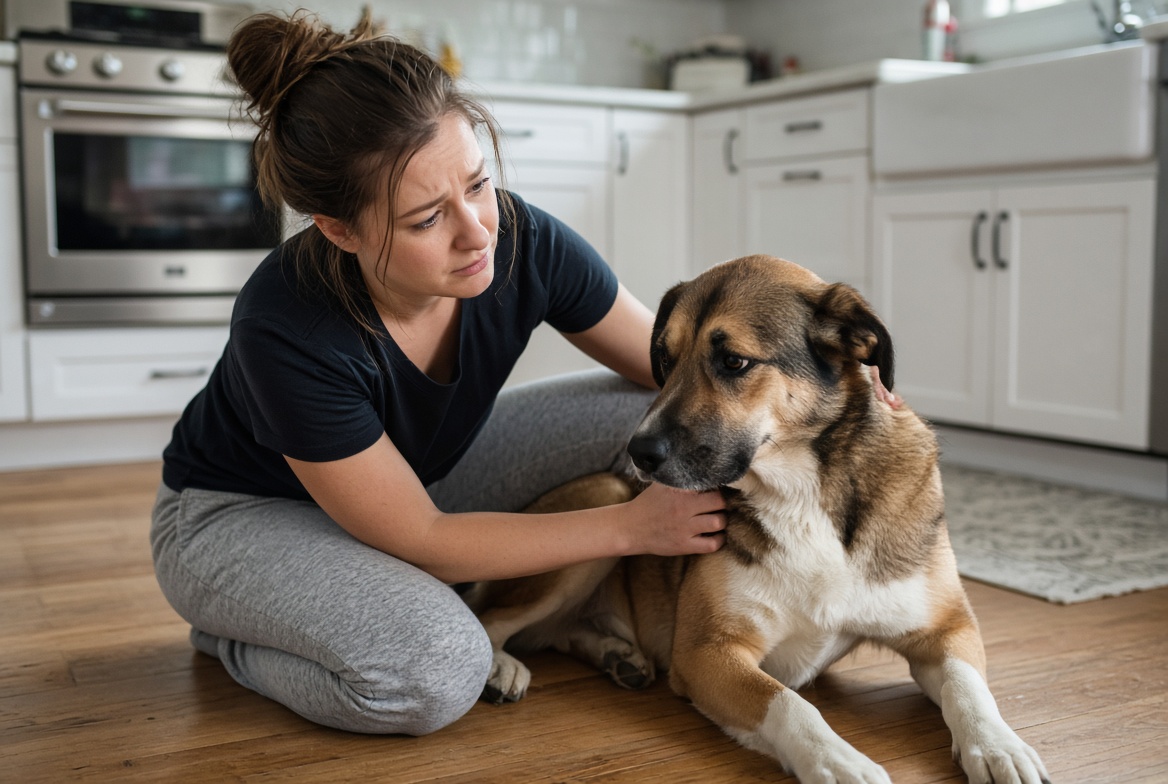
Dog diarrhea is common — the priority is deciding when a bland diet is enough and when a vet visit cannot wait.
With rising emergency clinic costs across the US, many owners try a night of fasting and rice first. That can be reasonable for a bright, hydrated adult dog with mild, short-lived soft stool. It is not reasonable for a collapsed puppy, bloody diarrhea, or a dog that cannot keep water down.
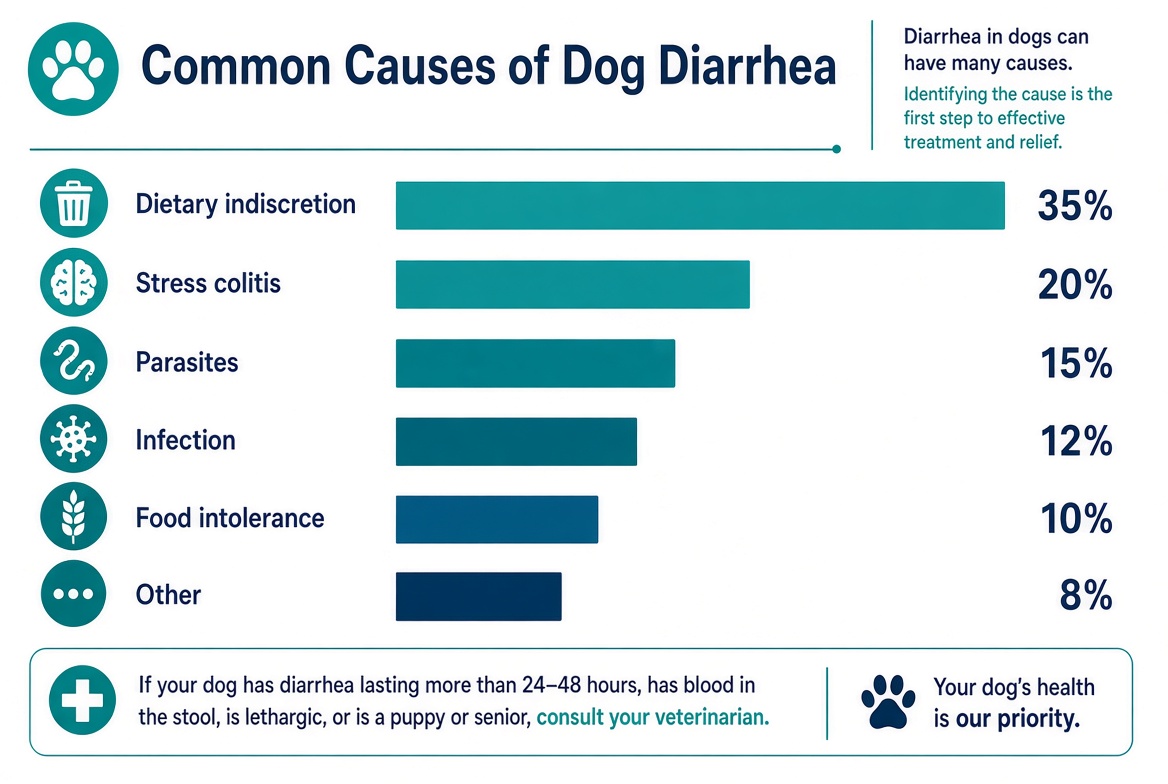
Common drivers behind dog diarrhea searches — diet change, scavenging, stress, parasites, and infection lead the list.
According to clinical patterns seen in general practice, the most common story is a previously healthy dog that got into something — or a stressful weekend that triggered colitis. The second most common mistake is waiting too long when the dog is also vomiting or becoming weak.
| Pattern | Typical duration | What it often means |
|---|---|---|
| Acute diarrhea | Hours to a few days | Indiscretion, stress colitis, mild infection |
| Acute + vomiting | Same-day onset | Higher risk of dehydration; faster vet threshold |
| Chronic diarrhea | Weeks or intermittent for months | Food-responsive disease, IBD, parasites, other chronic GI issues |
| Bloody diarrhea | Any duration | Needs prompt assessment — colitis to more serious disease |
| Puppy diarrhea | Any | Lower tolerance for delay; parasites and viruses more dangerous |
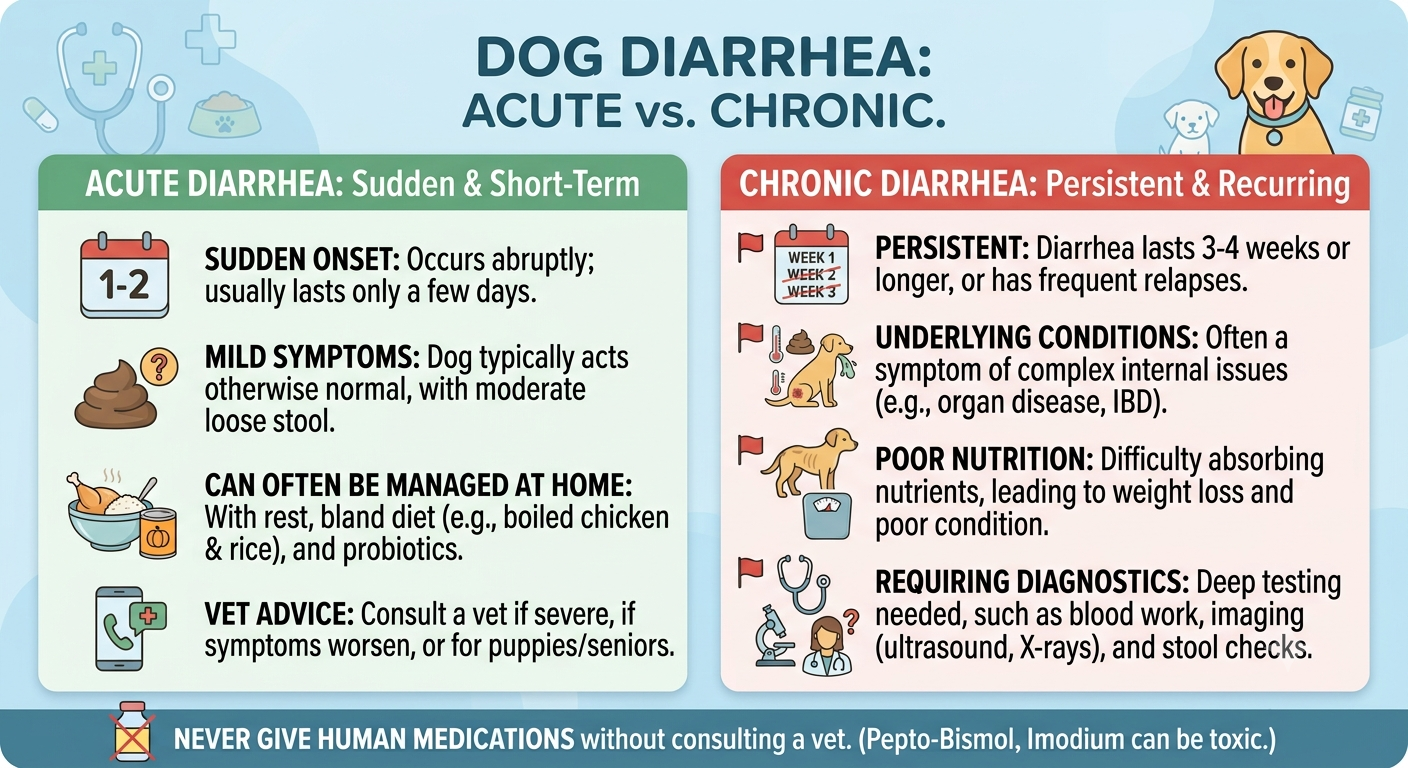
Acute soft stool in a bright adult dog is handled differently from weeks of chronic diarrhea or any bloody stool.
Seek veterinary care promptly (emergency if severe) if:
Do not give human anti-diarrheals, ibuprofen, or other people medicines unless a veterinarian instructs you.
Diagnostics Support can help you organise stool notes, appetite logs, and questions for your veterinary team.
For a mild case in a bright, hydrated adult dog, veterinarians often recommend a short bland diet trial — not a week of random leftovers.
Skip fatty meats, milk, rich broths, and “just a little” junk food. If the dog refuses food, vomits the bland diet, or worsens, stop home trials and call the clinic.
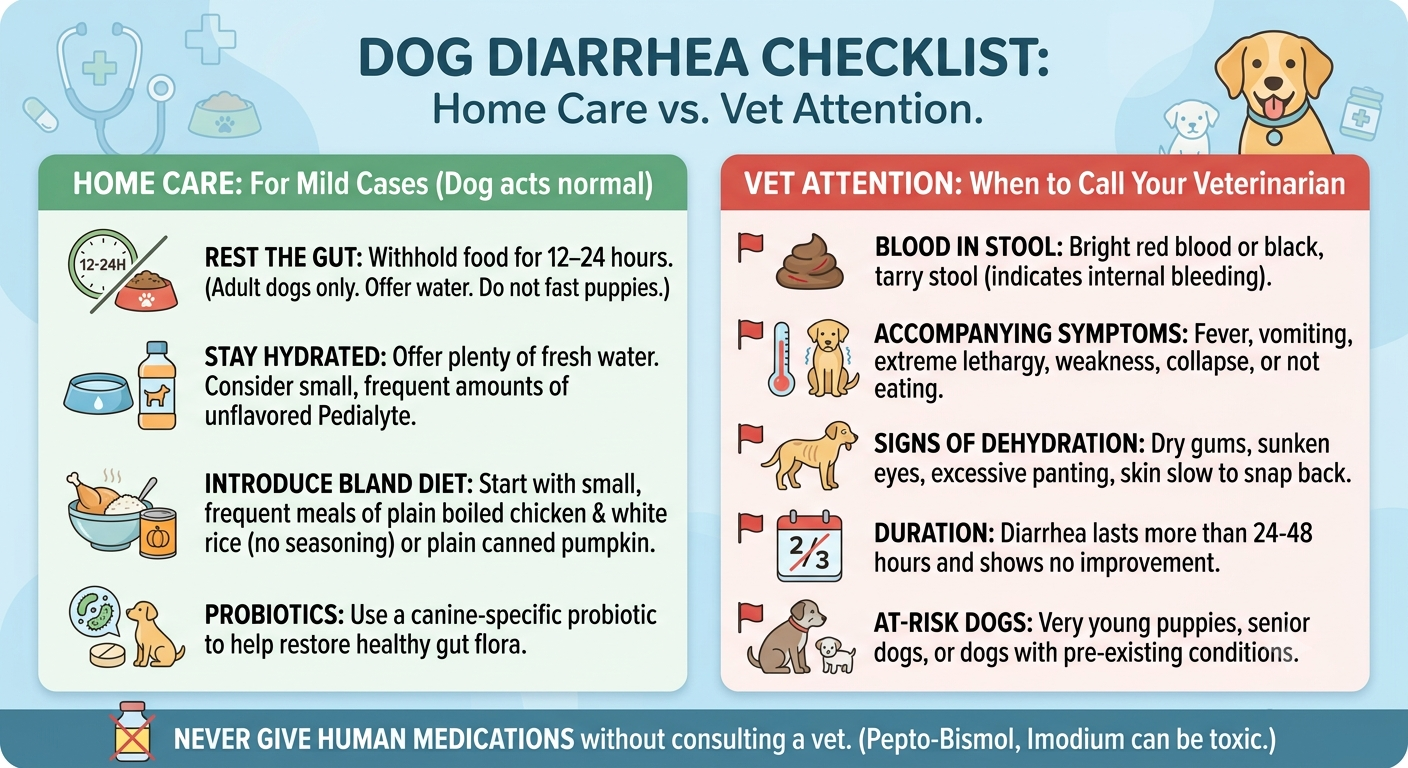
Home checklist: water access, bland meals if appropriate, watch for blood or lethargy, and know your 24–48 hour limit.
History. Duration, stool character, diet changes, scavenging, travel, medications, and other pets affected.
Exam. Hydration, abdominal comfort, temperature, and overall attitude.
Fecal testing. Often used to look for parasites and other infectious clues.
Bloodwork and imaging when systemic disease, obstruction, or pancreatitis is a concern.
According to standard small-animal practice guidance taught in US veterinary programs, a puppy with diarrhea and lethargy is triaged more aggressively than a bright adult with one soft stool after stealing pizza crusts — age and systemic signs change the urgency.
There is no universal over-the-counter cure. “Dog diarrhea treatment” online lists often mix useful diet tips with unsafe human drug advice — stick to veterinary direction for medicines.
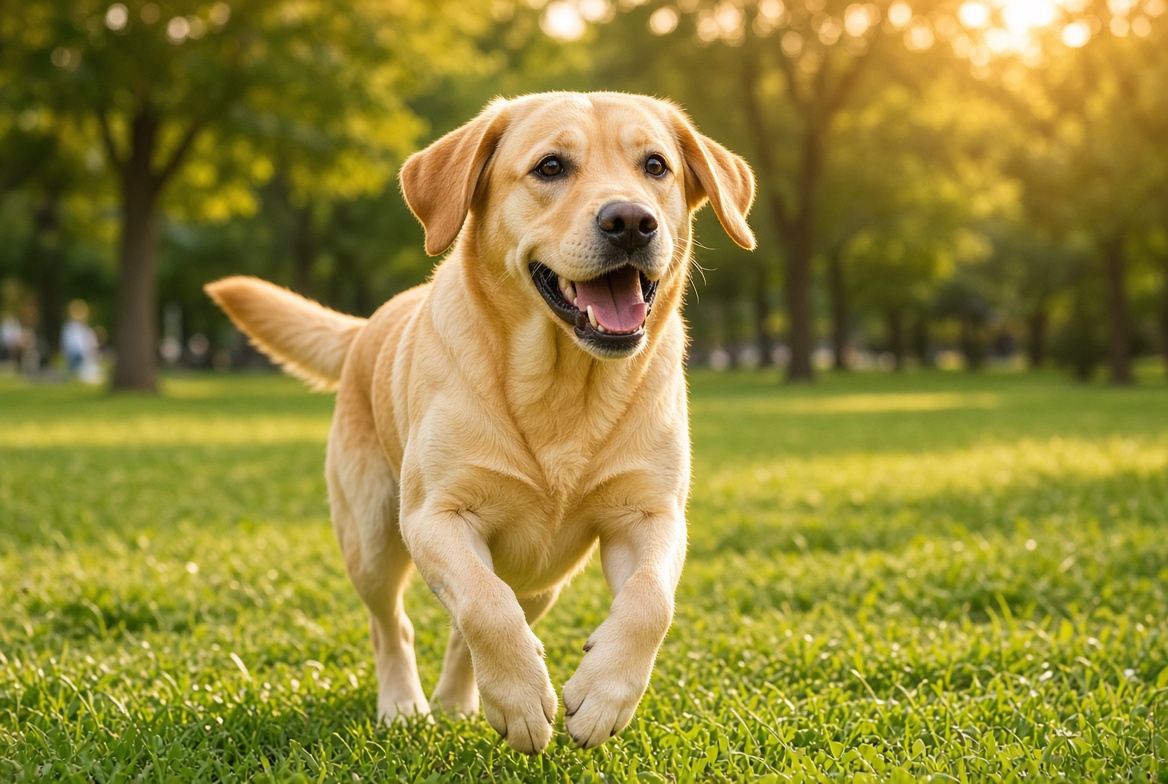
Most mild dietary diarrhea cases improve quickly with the right support — chronic or severe cases need a real work-up.
Puppies dehydrate faster and face higher risk from parasites and contagious viruses. “Wait and see” is a narrower window. If a puppy has diarrhea with vomiting, low energy, or refusal to drink, seek care the same day.
Why does my dog have diarrhea?
Common causes include dietary indiscretion, stress, parasites, infection, and food intolerance. Persistent or severe cases need testing.
Dog has diarrhea — what should I do?
Offer water, stop rich foods, consider a short bland diet if the dog is otherwise well, and contact a vet for blood, lethargy, vomiting, or diarrhea lasting more than a day or two.
Is dog diarrhea an emergency?
It can be — especially with blood, repeated vomiting, weakness, or in puppies.
What causes diarrhea in dogs most often?
Scavenging and sudden diet changes top everyday cases; parasites and infection are also frequent, especially in younger dogs.
Can I give my dog human anti-diarrhea medicine?
Not without veterinary guidance. Some human products are unsafe for dogs.
How long can dog diarrhea last before a vet visit?
Mild cases in bright adults: reassess within 24–48 hours. Severe signs: same day.
Does bland diet fix dog diarrhea?
It helps many mild dietary cases. It does not replace care for infection, obstruction, or chronic disease.
Why is my dog having diarrhea after antibiotics?
Antibiotics can disrupt gut flora. Ask your veterinarian about supportive options; do not stop prescribed antibiotics without advice.
Dog diarrhea is common, messy, and usually manageable when you match the response to the severity. Water, a sensible bland diet for mild cases, and a hard stop on human medicines cover the first layer. Blood, weakness, vomiting, or a sick puppy move the plan to the clinic. Bookmark this page at nextgenpetcare.com for more trusted pet health guidance, and use Diagnostics Support if you want help preparing a clear symptom summary for your vet.
Medical disclaimer: This article is intended for general education and does not constitute veterinary advice, diagnosis, or treatment. Only a licensed veterinarian who has examined your dog can determine the cause of diarrhea and recommend care.