Quick answer · What the color means · Common causes · Safe cleaning · When to see a vet · FAQ
Quick answer
Normal eye discharge in dogs is usually a small amount of clear or whitish material that collects overnight and is easy to wipe away. Yellow or green discharge, sudden increase in watery tearing, redness, squinting, or swelling are not normal and need a veterinary exam. Do not use human eye drops or leftover medications.
What different colors of eye discharge usually mean
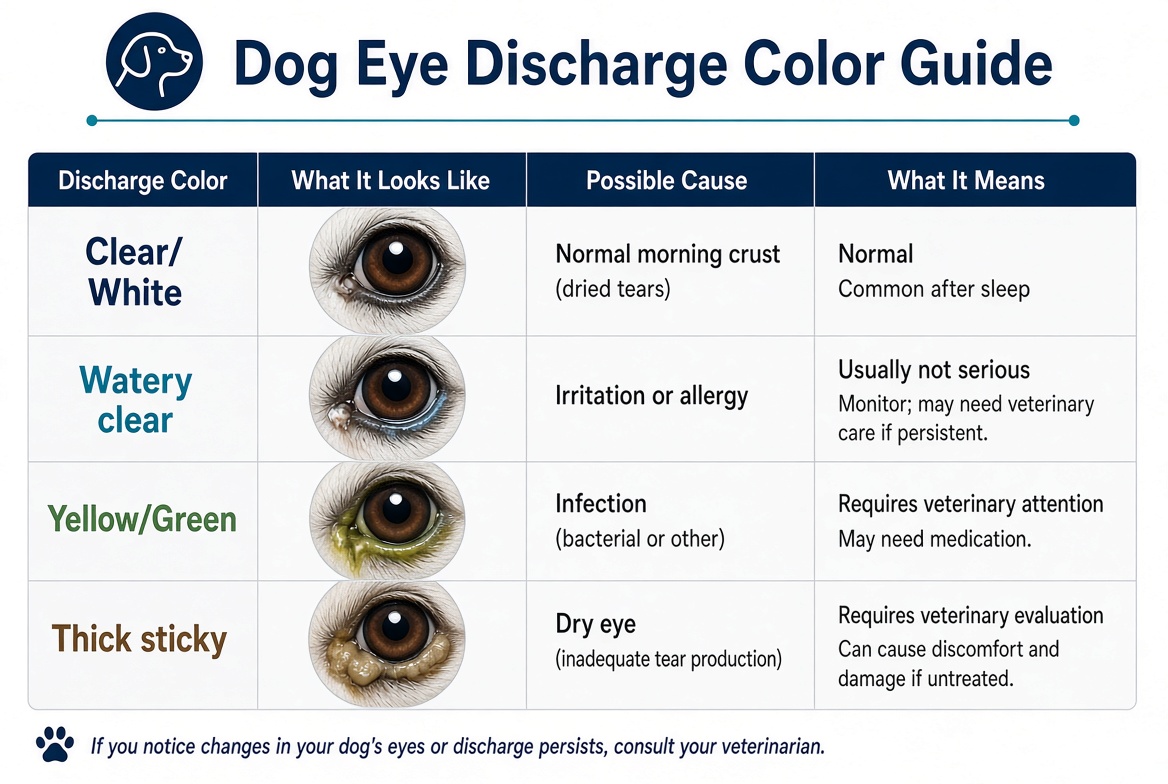
| Appearance | Most common meaning | Urgency |
|---|---|---|
| Small amount of clear or white crust in the morning | Normal overnight accumulation | Low — wipe gently |
| Increased clear watery discharge | Irritation, allergy, foreign body, or early corneal issue | Veterinary check if persistent or with squinting |
| Yellow or green discharge | Bacterial infection or secondary infection from dry eye/ulcer | See vet within 24 hours |
| Thick, sticky, or mucoid discharge | Often dry eye (KCS) or chronic irritation | Veterinary diagnosis needed |
| Bloody or sudden heavy discharge with pain | Trauma, ulcer, or serious eye disease | Same-day emergency |
Common causes
Conjunctivitis and infection
Bacterial conjunctivitis often produces yellow-green discharge and redness. It can be primary or secondary to a scratch, foreign body, or dry eye. Viral or allergic causes tend to produce more watery discharge.
Dry eye (keratoconjunctivitis sicca)
Insufficient tear production leads to thick, sticky discharge, redness, and recurrent infections. Diagnosis requires a Schirmer tear test. Treatment is usually lifelong with cyclosporine or tacrolimus eye medication.
Corneal ulcers and foreign bodies
A scratch or grass seed can cause sudden squinting, tearing, and discharge. These are painful and can worsen quickly. Fluorescein staining is used to confirm ulcers.
Allergies and anatomical issues
Environmental allergies can increase tearing. Some breeds with prominent eyes or entropion (rolled-in eyelids) are more prone to chronic discharge.
- Squinting, pawing at the eye, or keeping the eye closed
- Yellow, green, or bloody discharge
- Cloudiness, swelling, or sudden vision change
- Any discharge after known trauma
Safe cleaning while you arrange a visit
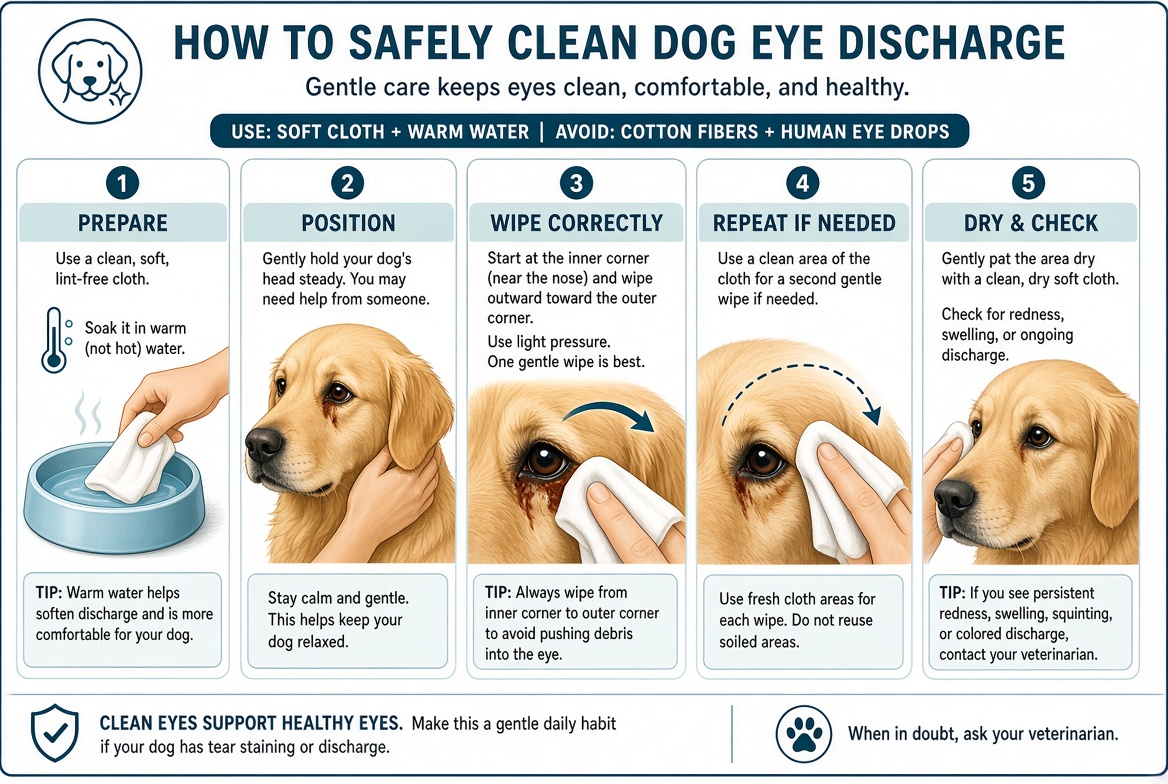
- Use a clean, soft cloth or gauze dampened with lukewarm water or sterile saline.
- Wipe from the inner corner outward. Use a fresh area of the cloth for each eye.
- Do not use cotton balls that leave fibers, hydrogen peroxide, alcohol, or human eye drops.
- Prevent further rubbing with a cone if the dog is pawing at the eye.
What the veterinarian will typically do
Expect an eye exam, fluorescein stain to check for ulcers, and possibly a tear test. Treatment may include antibiotic eye ointment, anti-inflammatory drops (only after ulcers are ruled out), artificial tears, or specific dry-eye medication. Human products are not safe substitutes.
Frequently asked questions
Is morning eye crust always normal?
A small, consistent amount of clear or white material is common. Any change in amount, color, or accompanying redness or squinting should be checked.
Can I use leftover antibiotic ointment?
No. Incorrect medication can worsen ulcers or delay proper diagnosis. Eyes need specific veterinary products.
How quickly can an eye problem worsen?
Corneal ulcers and infections can progress within hours. Squinting or colored discharge should not wait until the next day if the clinic is open.
You may also like
Educational guidance only. Eye problems can worsen rapidly — contact a veterinarian for diagnosis and treatment.