Quick answer
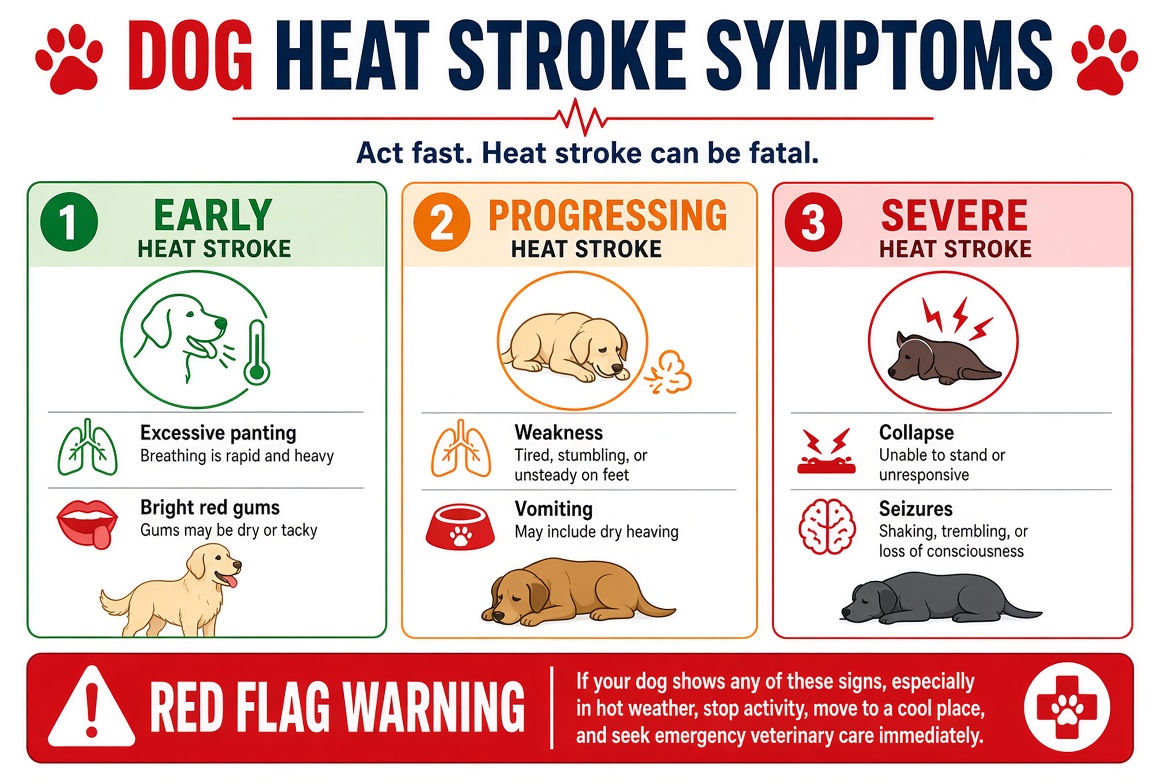
Dog heat stroke occurs when body temperature rises above roughly 104°F (40°C) and the dog can no longer cool itself. Classic early signs are heavy panting, bright red gums, and distress. Later signs include weakness, vomiting, collapse, and seizures. Start cooling with lukewarm (not ice-cold) water on the way to the nearest emergency clinic. Never leave a dog in a car.
Heat stroke symptoms by stage
| Stage | Common signs | Action |
|---|---|---|
| Early | Excessive panting, bright red gums, restlessness, seeking shade | Move to cool area, offer water, begin cooling, call vet |
| Progressing | Weakness, stumbling, vomiting, diarrhea, rapid heart rate | Cool en route and go to emergency clinic immediately |
| Severe | Collapse, seizures, bloody vomit/diarrhea, pale or blue gums, coma | Emergency veterinary care — survival drops sharply with delay |
Emergency cooling steps (do this while traveling to the vet)
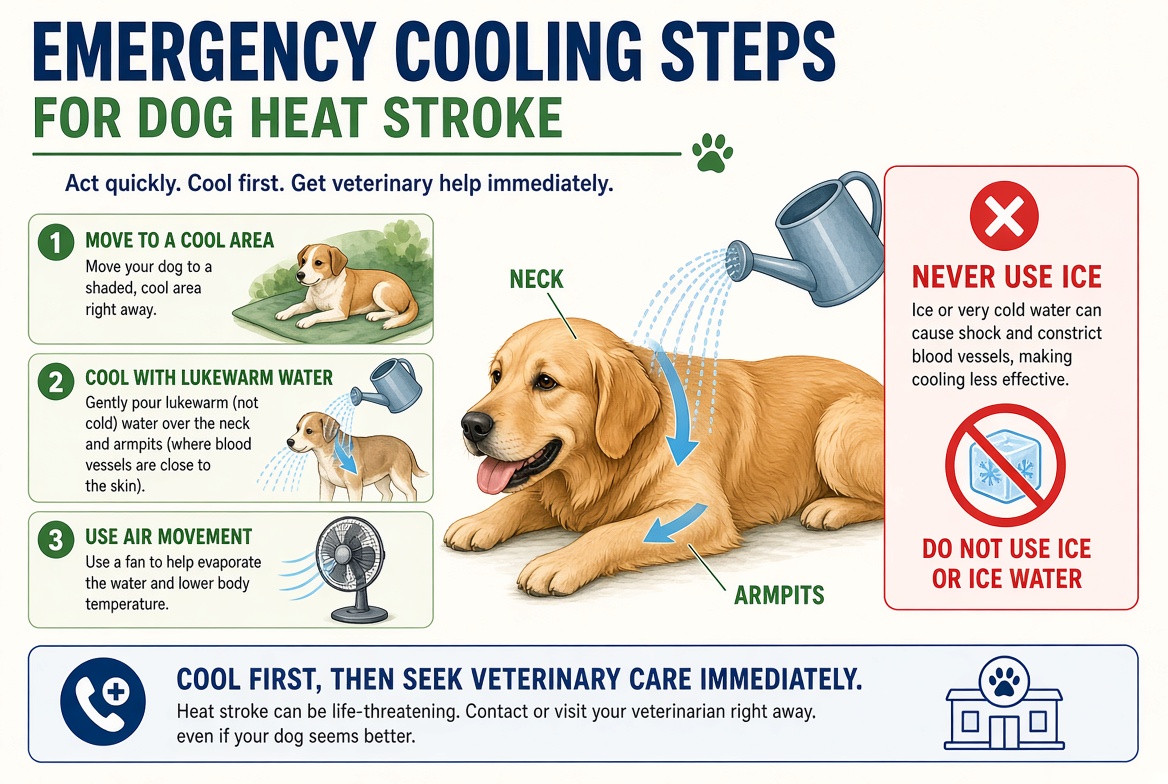
Cooling before arrival improves survival. Use these steps:
- Move the dog out of the heat into shade or air conditioning immediately.
- Soak the dog with lukewarm or cool (not ice-cold) water, focusing on neck, armpits, and groin.
- Use fans or car vents to increase evaporative cooling.
- Offer small amounts of cool water if the dog is conscious and able to swallow.
- Do not use ice, ice packs, or very cold water — this can cause blood vessels to constrict and slow cooling.
- Do not force water if the dog is unconscious or vomiting.
What happens at the veterinary hospital
Treatment usually includes intravenous fluids, careful temperature monitoring, medications to protect the gut and prevent seizures or brain swelling if needed, and bloodwork to check organ function and clotting. Hospitalization is common. Prognosis is better when cooling starts early and the dog reaches care quickly.
Prevention
- Never leave a dog in a parked car — interior temperatures rise rapidly even on mild days.
- Walk and exercise only in the cooler parts of the day.
- Provide constant access to shade and fresh water outdoors.
- Brachycephalic (flat-faced) breeds, overweight dogs, seniors, and dogs with heart or respiratory disease are at higher risk.
- Use cooling vests or mats only as supplements, never as a substitute for shade and water.
Cooling off in water has its own risk. Learn the signs of water intoxication in dogs and how to keep water play safe.
Frequently asked questions
Can I use ice to cool a dog with heat stroke?
No. Ice and ice-cold water can cause vasoconstriction and make cooling less effective. Lukewarm water plus airflow is safer and more effective.
How fast can a car heat up?
Interior temperatures can rise 20°F or more within minutes. Cracking windows does not make it safe.
Are some breeds more at risk?
Yes. Bulldogs, Pugs, Boston Terriers, and other brachycephalic breeds, plus overweight or senior dogs, overheat more easily.
You may also like
Educational only. Heat stroke requires immediate veterinary care. This is not a substitute for emergency treatment.