Quick answer: why does my dog lunge on the leash?
Most leash reactivity is driven by fear, frustration (wanting to greet but being restrained), or lack of early socialization. The dog is not “dominant.” In consults, owners often notice the dog is fine off-leash with other dogs but explodes when restrained. The practical path is management so the dog stops practicing the reaction, then gradual counterconditioning at a distance where the dog can still think.
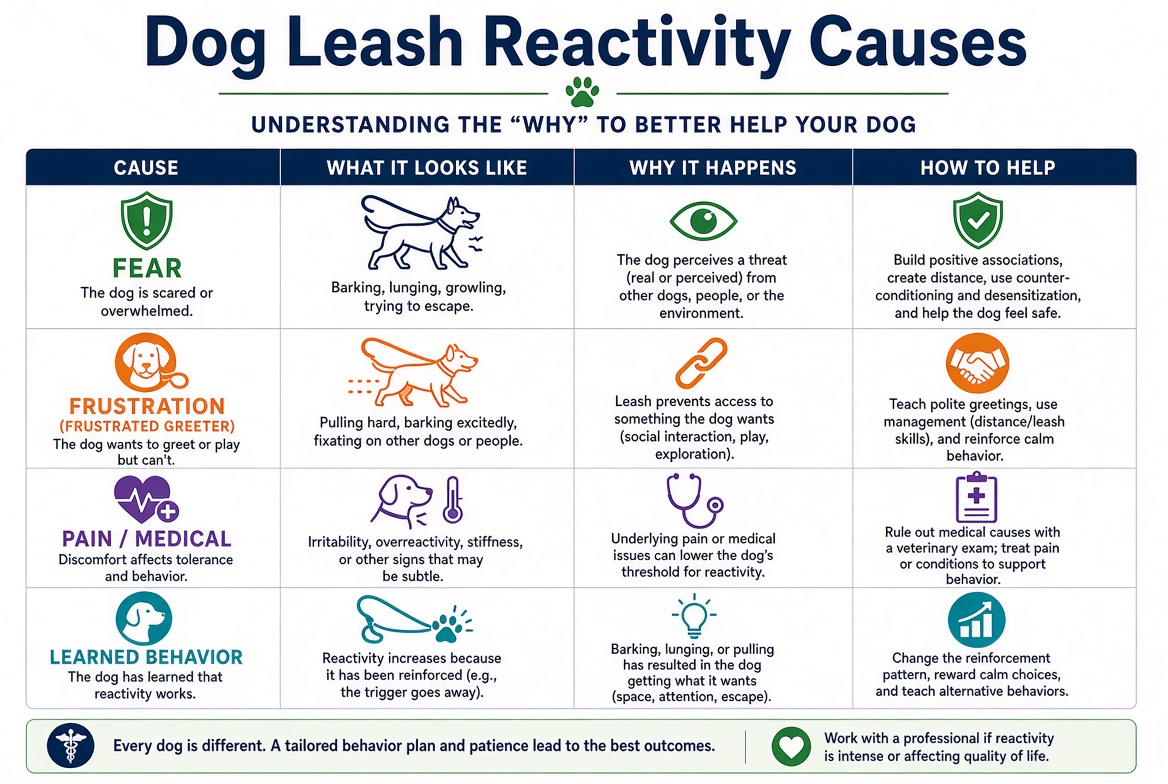
Common causes
| Driver | What it looks like | Typical history |
|---|---|---|
| Fear / anxiety | Lunges to create distance, may tuck tail or show whale eye | Poor socialization or past negative encounters |
| Frustration (frustrated greeter) | Barking, spinning, pulling toward other dogs while wanting to play | Fine off-leash; frustrated by the barrier of the leash |
| Pain or medical | Sudden onset or worsening | Arthritis, vision changes, or other discomfort |
| Learned behavior | Reaction gets stronger over time | Repeated flooding or punishment on walks |
Management comes before training
If every walk ends in an eruption, the dog is rehearsing the problem. Change the environment first:
- Walk at quieter times and on wider routes with good sightlines.
- Cross the street or create distance before the dog reaches threshold.
- Use a front-clip harness or head halter for better control without pain.
- Avoid punishment, choke chains, prong collars, and shock collars — they usually increase fear or frustration.
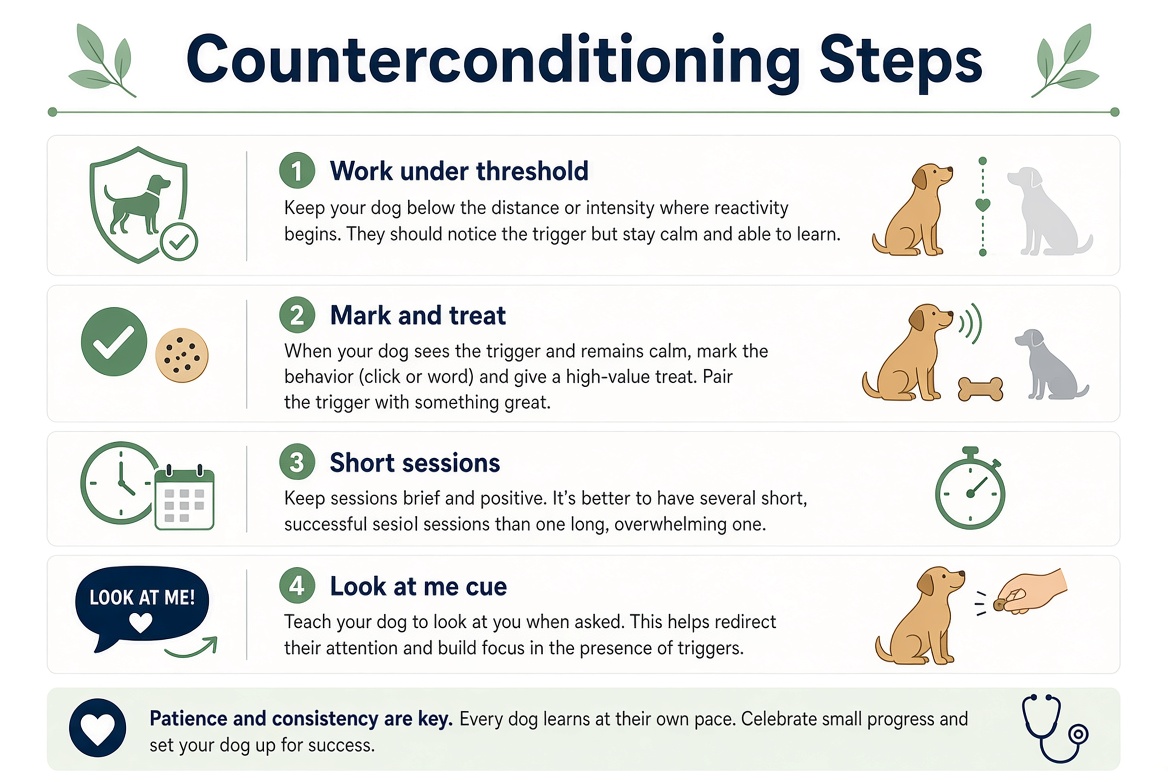
Counterconditioning basics
The goal is to change the emotional response so the trigger predicts good things:
- Find the distance where your dog notices the trigger but does not react (under threshold).
- As soon as the dog looks at the trigger, mark and feed high-value treats.
- Keep sessions short. End before the dog becomes overwhelmed.
- Gradually decrease distance only while the dog stays relaxed.
- Teach a “look at me” or “find it” behavior so the dog has something else to do.
When to get professional help
- Biting or near-biting incidents
- Reactivity that is getting worse despite management
- Sudden onset in an adult dog
- You feel unsafe handling the dog on walks
A veterinary behaviorist or certified force-free trainer experienced with reactivity can build a plan and rule out medical contributors.
Frequently asked questions
Is leash reactivity the same as aggression?
Not always. Many leash-reactive dogs play normally off-leash. True aggression can occur in other contexts too. A professional assessment helps distinguish the two.
Will a prong collar fix it?
Usually no. Aversive tools often suppress the behavior temporarily while increasing the underlying fear or frustration.
How long does improvement take?
With consistent management and training, many dogs improve over weeks to months. Severe cases take longer and benefit from professional guidance.
You may also like
Educational only. Reactivity involving risk of injury should be addressed with a veterinarian and qualified behavior professional.