Quick answer
Resource guarding happens when a dog protects something valuable (food, toys, resting spots) from perceived threats. It is often driven by anxiety or past experiences of items being taken away. The safest first step is management so no one gets hurt, followed by training that teaches the dog that people approaching predict good things. Never punish growling — it removes the warning and can lead to biting without warning.
Common signs of resource guarding
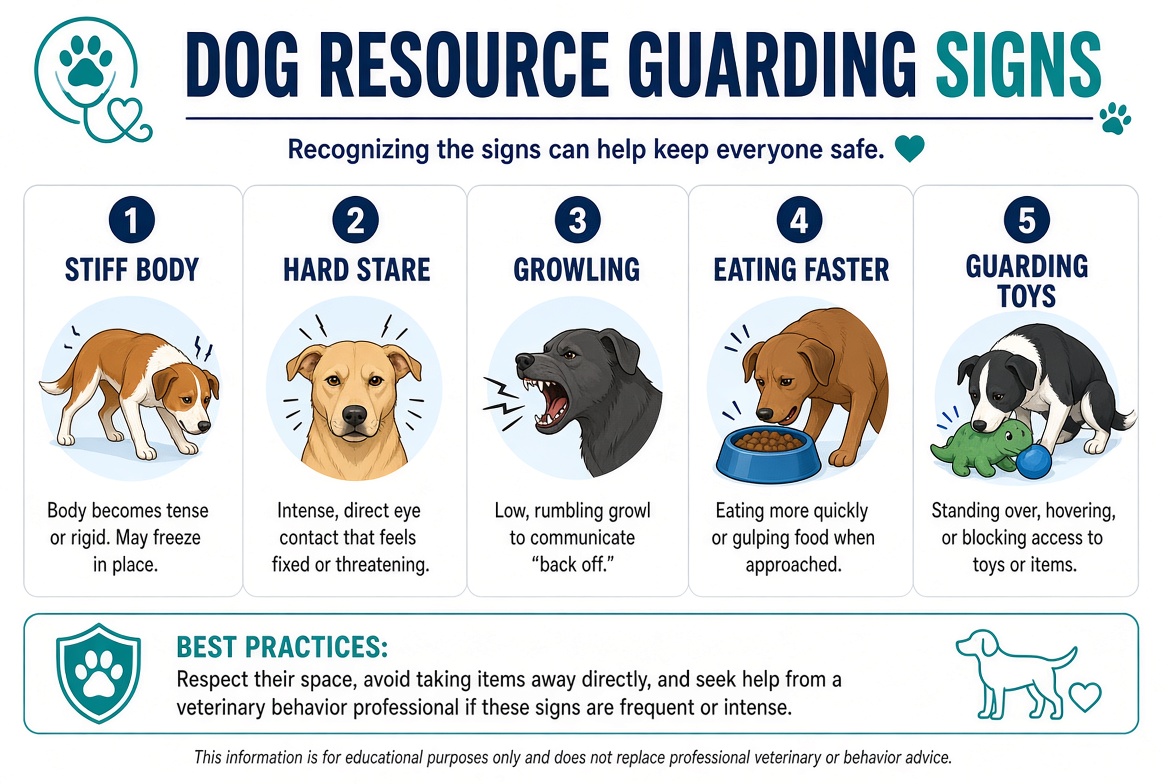
- Stiff body, hard stare, or freezing over food or a toy
- Growling, lip lifting, or snapping when approached
- Eating faster or guarding the bowl when people or other pets come near
- Protecting resting places or stolen items
Immediate safe management
- Feed in a separate room or behind a baby gate so the dog can eat without pressure.
- Pick up empty bowls after meals; never reach into a bowl while the dog is eating.
- Trade high-value items for something better rather than taking them away.
- Supervise interactions with children and other pets around valued resources.
- Remove tempting items the dog is not allowed to have when unsupervised.
Positive training approach
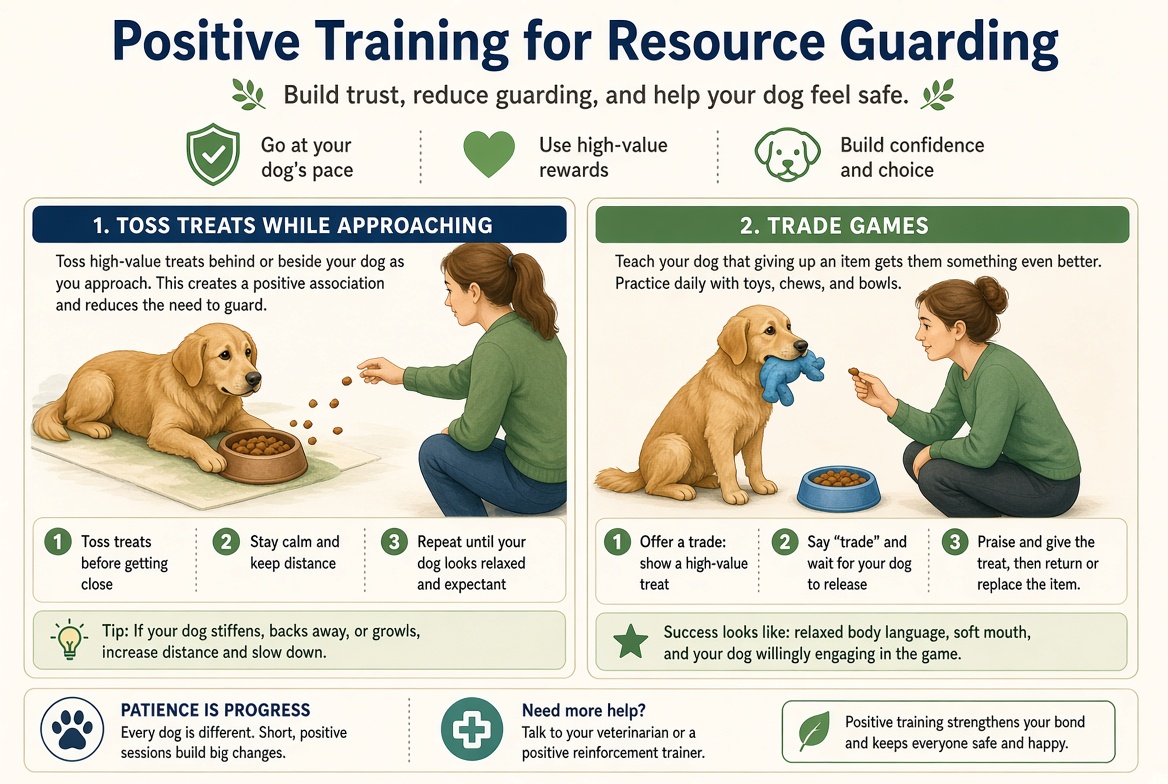
The goal is to change the dog’s emotional response so that people approaching predict something good:
- Start at a distance where the dog is comfortable.
- Toss high-value treats toward the dog (or into the bowl) as you approach, then leave.
- Gradually decrease distance only while the dog remains relaxed.
- Practice “trade” games: offer a better item and take the original only after the dog releases it willingly.
When to seek professional help
See a veterinarian first to rule out pain or medical issues that can increase irritability. If guarding is intense, involves biting, or involves multiple family members, work with a certified force-free trainer or veterinary behaviorist. Punishment or dominance-based methods increase risk.
Frequently asked questions
Is resource guarding normal?
The instinct is normal. Problematic intensity usually comes from anxiety, lack of predictability, or past experiences of items being removed.
Should I take the food bowl away to teach the dog?
No. This often worsens guarding. Teach the dog that your approach adds value instead.
Can puppies be prevented from developing it?
Yes. Early positive experiences with people approaching while the puppy eats or plays reduce the chance of serious guarding later.
You may also like
Educational only. Aggression and resource guarding should be addressed with professional guidance when there is any risk of injury.