Why Is My Dog Limping? Vet-Approved Causes and When to Seek Care
Dog limping can mean a thorn, a strain, arthritis, or a ligament injury. Learn front vs back leg patterns, sudden onset clues, and when rest is not enough.
Dog limping can mean a thorn, a strain, arthritis, or a ligament injury. Learn front vs back leg patterns, sudden onset clues, and when rest is not enough.
Dog limping is a symptom, not a diagnosis. When owners search “why is my dog limping,” “dog is limping,” or “my dog is limping what should I do,” they are usually seeing a real change in gait — a held-up paw, a shorter stride, or a sudden preference for three legs. Causes range from a thorn in the pad to cruciate ligament injury, panosteitis in growing puppies, arthritis in seniors, and, less often, fracture or neurological disease.
This article is educational and does not replace a veterinary examination. Non-weight-bearing limps, open wounds, severe swelling, or limping after trauma need prompt professional care. Do not give human painkillers such as ibuprofen or acetaminophen — they can be toxic to dogs.
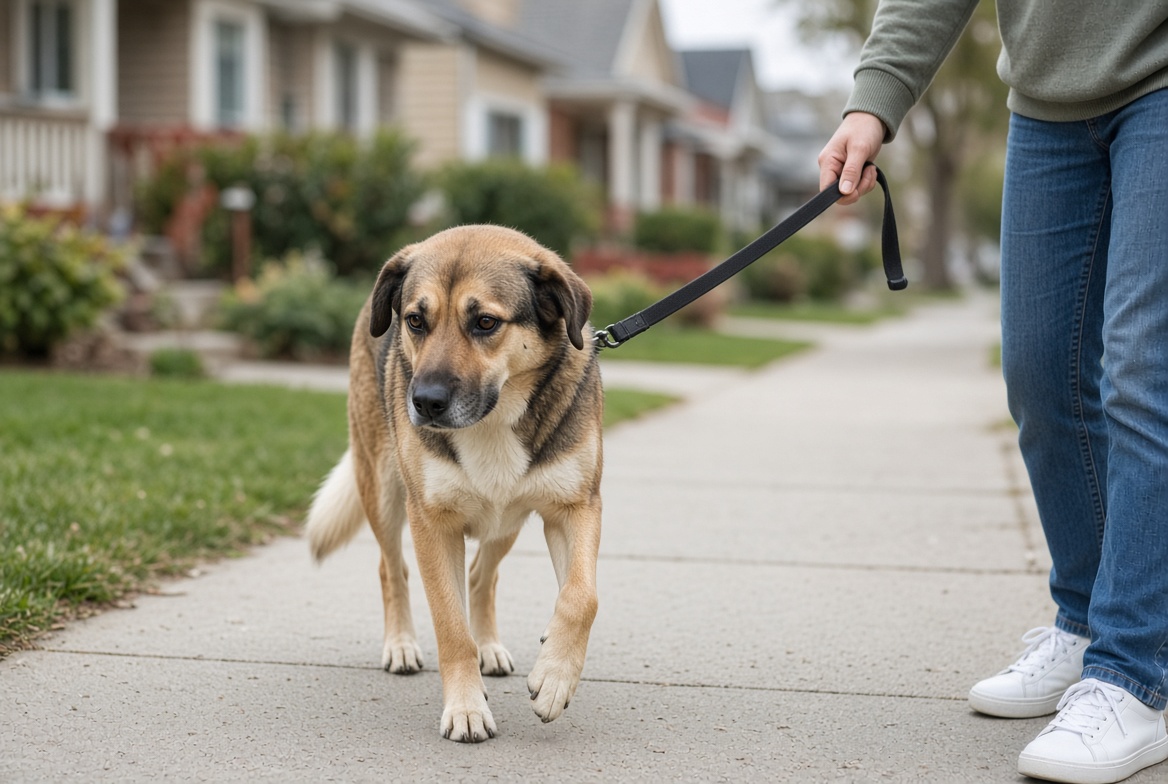
Dog limping is common — the key is deciding whether rest is enough or a veterinary exam is needed now.
With rising veterinary costs across the US, many owners hope a mild limp will resolve overnight. Sometimes it does. When it does not — or when the dog cannot bear weight — early assessment often prevents a small injury from becoming a larger one.
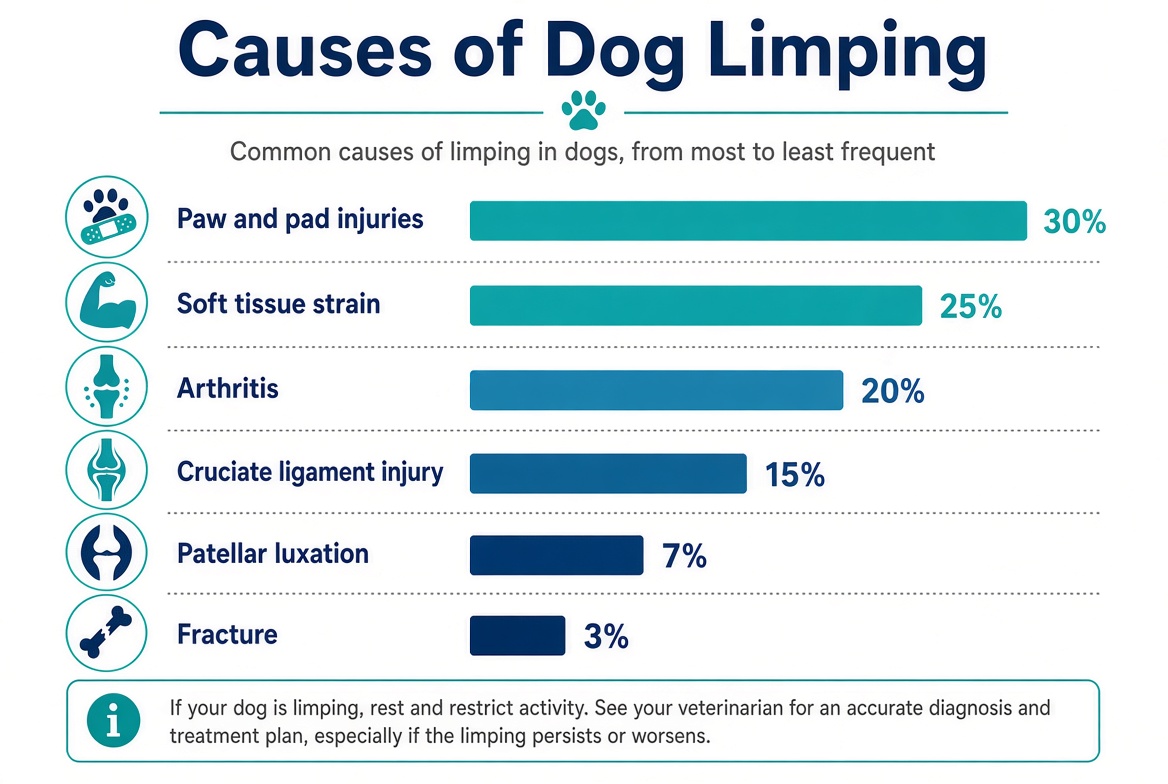
Common reasons owners search for dog limping help — paw problems, soft-tissue strain, arthritis, and ligament injury top the list.
According to clinical experience shared across general practice, the most common oversight is assuming “he just slept on it wrong” when the limp lasts more than a day or two, especially if the dog is otherwise uncomfortable.
| Pattern | What owners often notice | Common differentials |
|---|---|---|
| Dog limping front leg | Head bob, held-up front paw, reluctance to extend | Pad injury, nail trauma, shoulder/elbow strain, fracture |
| Hind-limb limp | Hip hike, skipping, sitting oddly | CCL tear, patellar luxation, hip pain, paw injury |
| Intermittent skip | Normal steps mixed with a hop | Medial patellar luxation is a classic cause |
| Non-weight-bearing | Leg held completely off the ground | Needs prompt veterinary assessment |
| After exercise | Worse after walks or play | Soft-tissue injury, early arthritis flare |
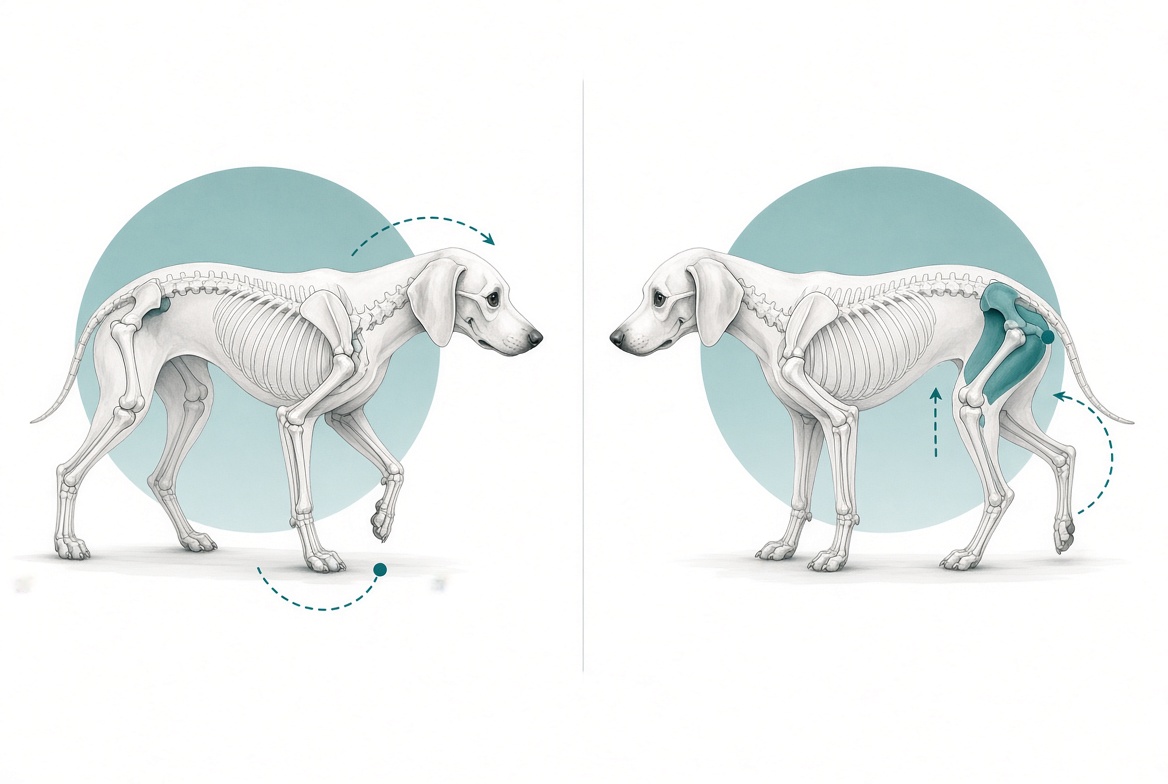
Front-leg limps often show a head bob; hind-leg limps may look like skipping or a raised hip.
Seek veterinary care promptly (emergency if severe) if:
Do not give human NSAIDs (ibuprofen, naproxen) or acetaminophen. These can cause serious toxicity in dogs.
Diagnostics Support can help you organise a clear symptom timeline and questions for your veterinary team.
Sudden limping after play or a misstep often points to soft-tissue injury, a nail problem, or a ligament event. Gradual limping that worsens over weeks is more typical of arthritis, developmental joint disease, or progressive ligament failure. Either pattern deserves attention if it persists or worsens.
“Dog limping for no reason” usually means the reason is not visible yet — not that no reason exists. Pads, nails, and interdigital spaces hide many small injuries.
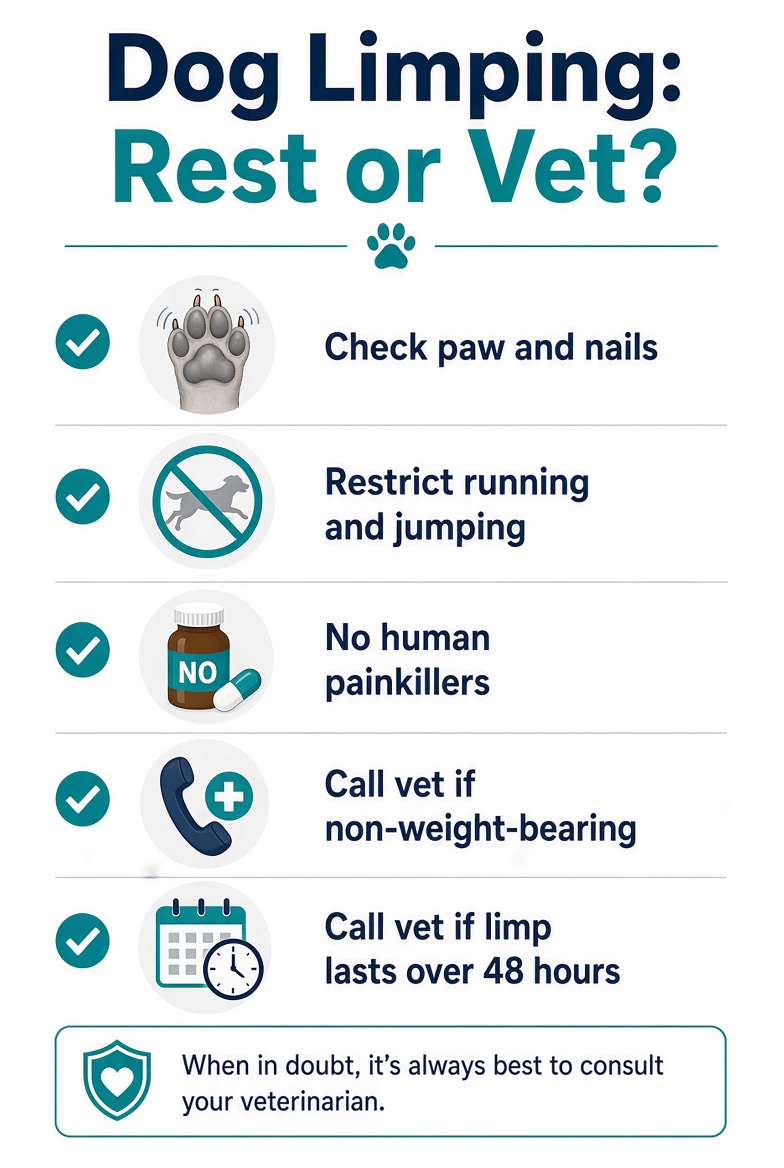
A simple checklist: rest and reassess mild limps; do not wait on non-weight-bearing or trauma-related limps.
Growing dogs — especially large breeds — can develop panosteitis (“growing pains”), developmental joint problems, or injury from rough play. A puppy that is limping more than briefly after a known minor bump should be examined. Restricting jump-heavy play on slick floors reduces some preventable injuries while bones and joints mature.
History. When the limp started, which leg, trauma, exercise, and whether it improves with rest.
Gait exam. Watching the dog walk and trot on a non-slip surface.
Orthopedic exam. Palpation of bones, joints, ligaments, and paws; manipulation for instability (including cruciate tests when indicated).
Imaging. X-rays when fracture, joint disease, or other structural problems are suspected. Advanced imaging is used selectively.
According to board-certified surgical principles taught in US veterinary programs, a thorough hands-on exam often narrows the list before any film is taken — which is why “just send photos” is rarely enough for a true limp work-up.
Treatment depends entirely on the cause:
There is no single “limping pill.” Human pain medicines from the bathroom cabinet are not a safe substitute for veterinary-prescribed care.
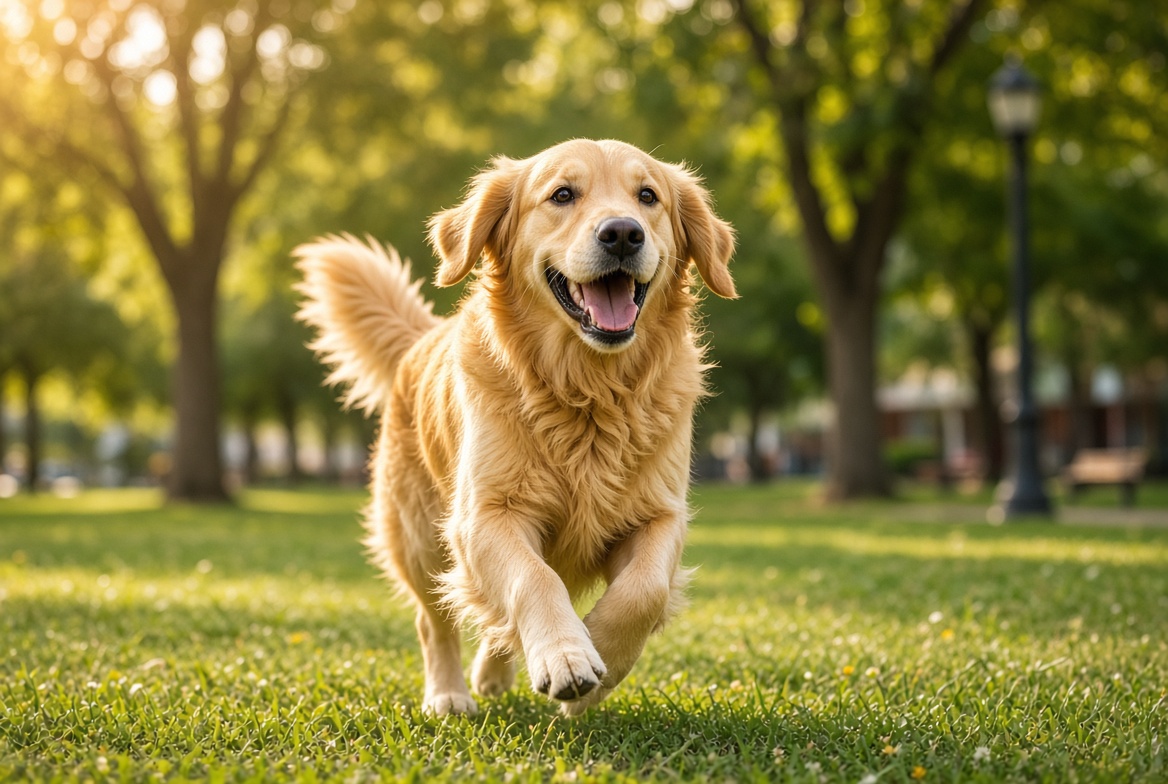
Many limping dogs return to comfortable mobility once the cause is identified and managed.
In many US regions, summer brings foxtails and burrs that lodge between toes. Winter salt and ice melt irritate pads. Wet springs mean more slippery decks and torn nails from traction loss. If your dog limps after a hike in tall grass, always check the paws first before assuming a joint injury.
Extra body weight loads every joint with every step. Dogs returning to hard play after a sedentary winter are prone to strains. A structured return to activity — shorter sessions, controlled surfaces — reduces some weekend-warrior limps.
Mild limps can improve in 24–48 hours with rest. Limps that are non-weight-bearing, worsening, or paired with swelling rarely benefit from long delay. Cruciate injuries and fractures do not “walk off” safely without a plan.
Only use pain relief prescribed by a veterinarian for your dog’s weight and health status. Over-the-counter human anti-inflammatories are a common toxicity presentation in emergency clinics. When in doubt, call the clinic before dosing anything.
Clear descriptions help triage: “Right front leg, started after a jump from the couch yesterday, still toe-touching but not full weight, no open wound, eating normally.” That sentence is more useful than “he’s limping.”
Rough play between dogs is a frequent trigger for sudden limps. Separate high-energy play on slick floors if one dog is recovering. Reintroduce activity gradually after the vet clears the injured dog.
Older dogs often have arthritis that flares with weather changes or longer walks. A new sharp limp in a senior still needs evaluation — arthritis is common, but so are ligament injuries and, less often, bone disease.
Soft-tissue injuries may need weeks of controlled activity. Surgical cases need structured rehab. Ask for written activity restrictions so every family member follows the same plan.
Why is my dog limping?
Common causes include paw injuries, strains, arthritis, cruciate ligament problems, and patellar luxation. A veterinary exam identifies the specific cause.
My dog is limping — what should I do?
Check the paw, restrict activity, and call your vet if the limp is severe, non-weight-bearing, or lasts more than a day or two.
Dog limping front leg — is that different?
Front-leg limps often involve the paw, nail, shoulder, or elbow. The work-up still starts with a hands-on exam.
Dog suddenly limping after playing — serious?
It can be a mild strain or a ligament injury. If the dog will not use the leg, seek care the same day.
Can I treat dog limping at home?
Mild limps with a clear minor cause may improve with rest, but persistent or severe limps need professional diagnosis. Never use human painkillers.
Puppy limping — normal?
Brief stiffness after hard play can happen, but ongoing puppy limping should be examined, especially in large breeds.
Dog limping but not in pain — possible?
Some dogs hide pain well. A visible limp still means something is wrong mechanically or uncomfortably.
How long can I wait?
Non-weight-bearing, trauma, deformity, or open wounds: do not wait. Mild intermittent limps: reassess in 24–48 hours and book if unchanged.
Primary searches include dog limping and why is my dog limping, with strong supporting demand for dog limping front leg, dog suddenly limping, dog limping treatment, my dog is limping what should I do, and puppy limping. Meeting that cluster means pairing practical home checks with clear emergency thresholds — not false reassurance and not panic for every mild step change.
A dog that toe-touches after a known minor bump, still eats, and improves within a day may only need restricted activity. Reassess the next morning. If the limp is the same or worse, call the clinic.
Non-weight-bearing limbs, visible deformity, open wounds, trauma from vehicles or falls from height, and limps lasting beyond two days without clear improvement all warrant professional evaluation sooner rather than later.
Dog limping is one of the most searched mobility problems for a reason — it is visible, worrying, and often fixable when addressed early. Check the paw, rest the dog, skip human medications, and involve a veterinarian when the limp is severe or persistent. Bookmark this page at nextgenpetcare.com for more trusted pet health guidance, and use Diagnostics Support if you need help preparing for the visit. Early clarity beats weeks of guessing — especially when the difference between a pad thorn and a cruciate injury is a proper exam, not another night of hopeful rest.
Medical disclaimer: This article is intended for general education and does not constitute veterinary advice, diagnosis, or treatment. Only a licensed veterinarian who has examined your dog can determine the cause of limping and recommend care.