Dog Scooting: Vet-Approved Causes, Anal Glands vs Worms, and When to See a Vet
Why is my dog scooting? Learn what dog scooting butt usually means, how anal glands differ from parasites, and when to book an exam.
Why is my dog scooting? Learn what dog scooting butt usually means, how anal glands differ from parasites, and when to book an exam.
Dog scooting is the classic “butt drag” across the carpet. When owners search “dog scooting,” “dog scooting butt,” or “why is my dog scooting,” they usually mean the dog is sitting and pulling itself forward with the front legs, rubbing the rear on the floor. The most common drivers are full or irritated anal glands, intestinal parasites, itchy skin around the rear, and fecal residue after a soft stool. Less often, scooting points to allergies, impacted glands that need veterinary expression, or rare anal/rectal disease.
This article is educational and does not replace a veterinary examination. Do not try to squeeze anal glands at home unless a veterinarian has trained you for your specific dog. Blood, extreme pain, swelling beside the anus, or repeated scooting with lethargy needs professional care.
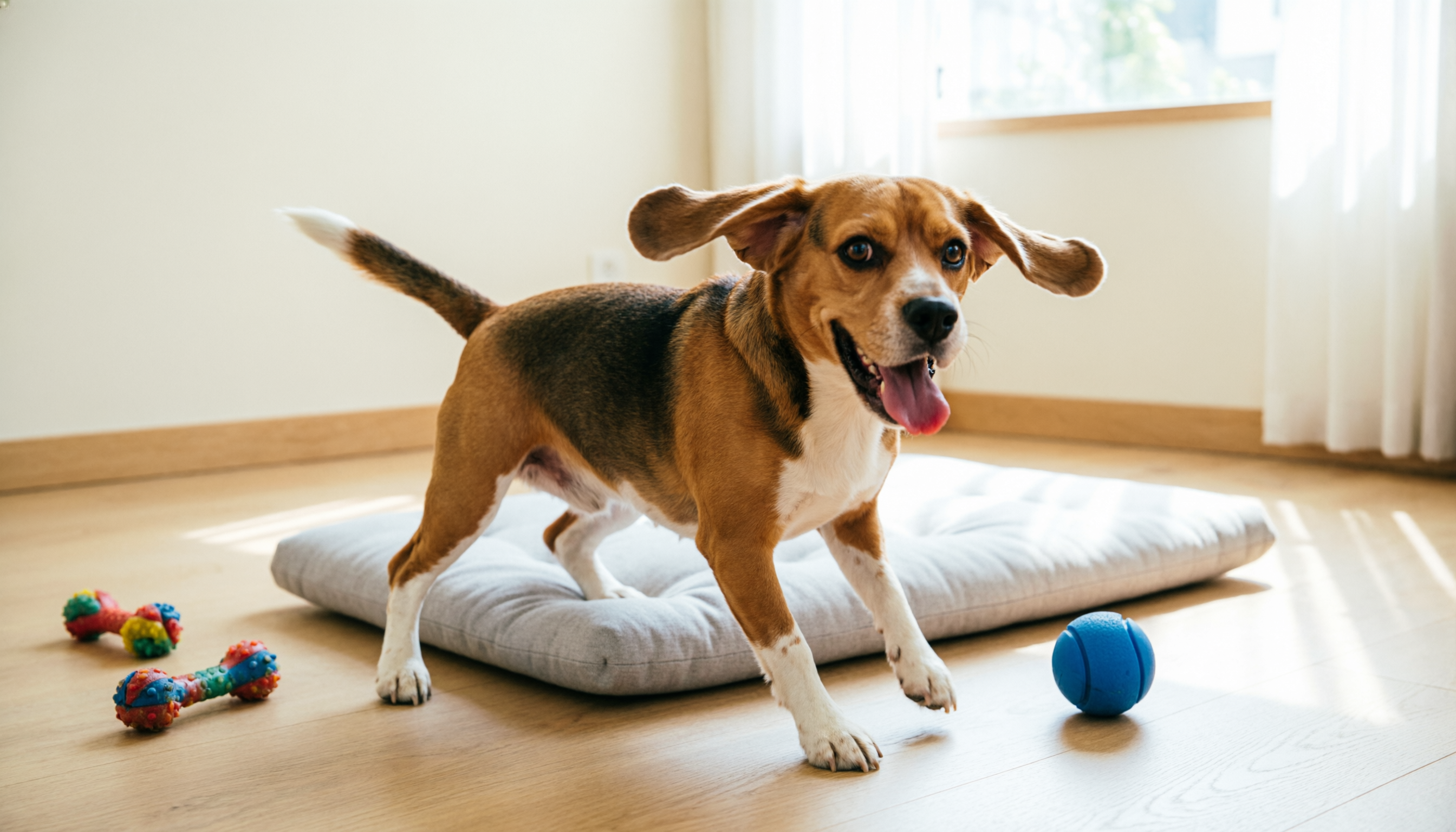
Dog scooting is common — the job is to separate routine gland irritation from parasites, allergies, and true emergencies.
Across US homes, carpet scooting is one of the behaviors that sends owners to the search bar at night. Rising clinic costs make people hope it is “just glands,” but repeated scooting is still worth a real look — especially in puppies where worms are more common.
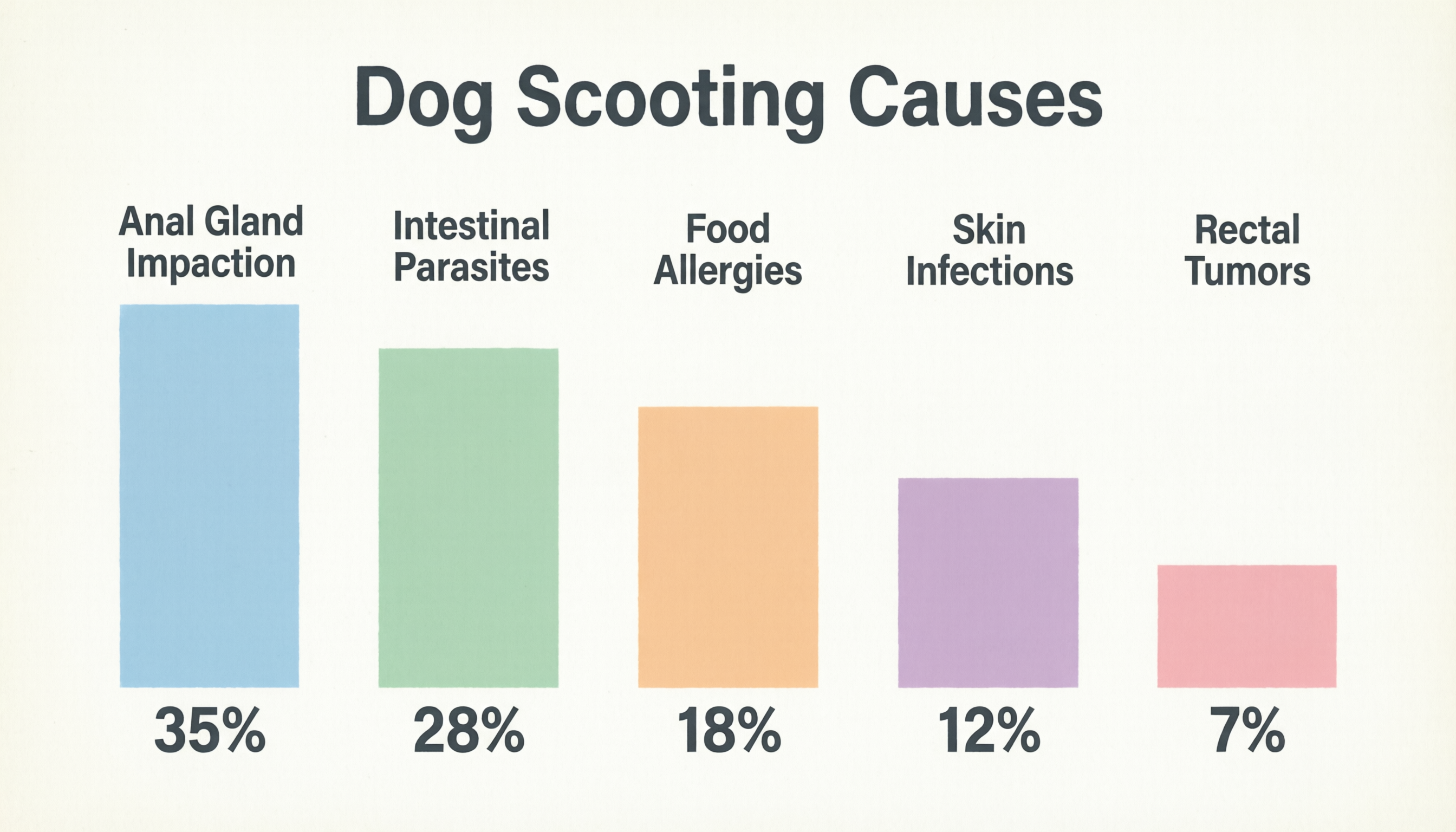
Anal gland irritation leads many scooting cases; parasites and skin itch explain a large share of the rest.
According to small-animal practice patterns taught across US clinics, occasional mild scooting after a soft stool can resolve once stools firm up. Frequent or painful scooting is a different story — glands and parasites need to be ruled in or out properly.
| Clue | More consistent with anal glands | More consistent with worms / itch |
|---|---|---|
| Odor | Strong fishy smell | Less specific odor |
| Timing | Often after stool or sudden urge to drag | Can be anytime; puppies higher worm risk |
| Other signs | Licking under tail, discomfort sitting | Visible worms, pot belly, diarrhea, or whole-body itch |
| Local exam | Full sacs, swelling, or pain beside anus | May look normal externally |
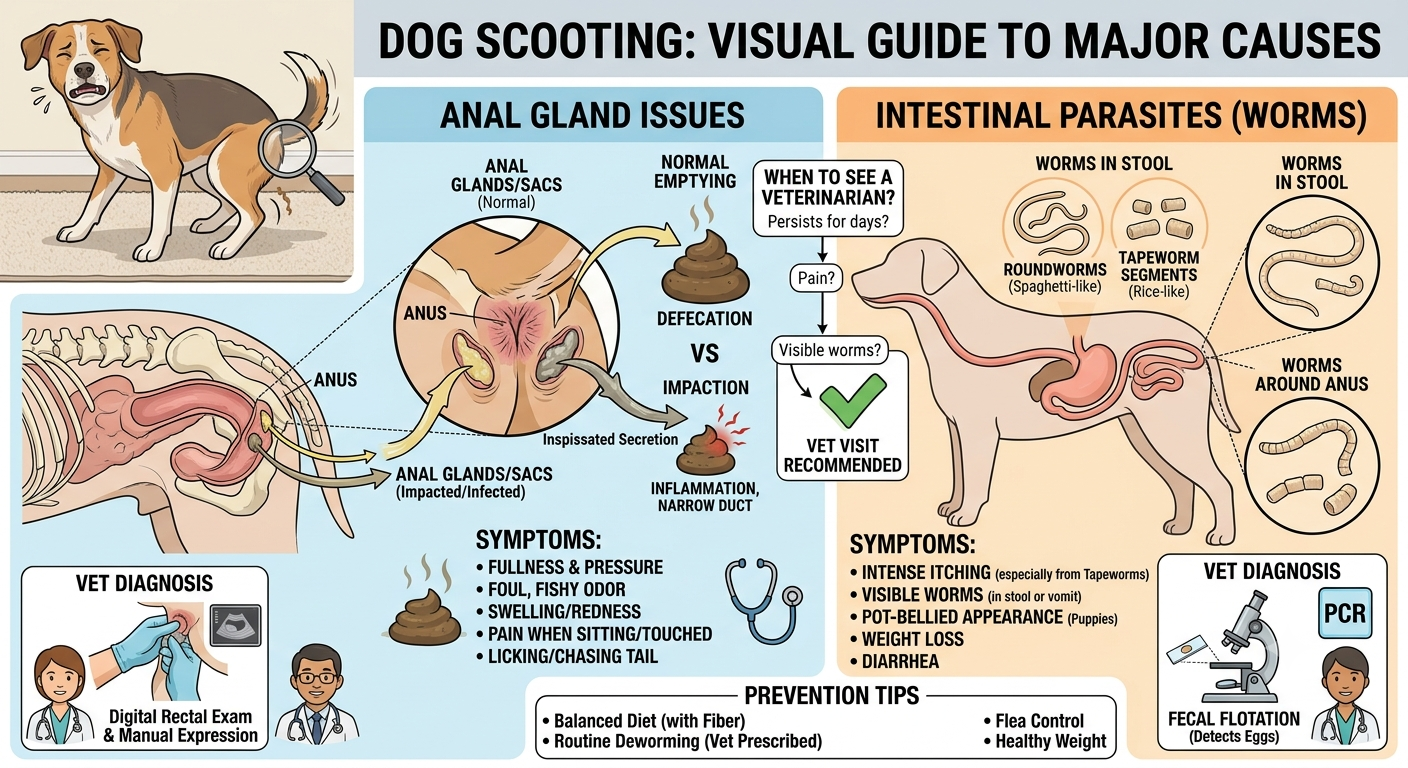
Fishy odor and post-stool scooting lean toward glands; puppies and diarrhea raise parasite suspicion.
See a veterinarian promptly if:
Do not insert objects or untrained fingers into the anus to “express glands.” Incorrect technique can injure tissue or worsen infection.
Diagnostics Support can help you organise stool notes, itch timelines, and questions for your veterinary team.
Scooting right after a bowel movement often means residue, incomplete gland emptying, or irritation from soft stool. Firm, complete stools help many dogs express glands naturally during defecation. Chronic soft stool is a reason to revisit diet and parasite control with your vet — not only to stop the mess, but to reduce scooting triggers.
History. Frequency, odor, diet, stool quality, parasite prevention, and allergy signs.
Exam. Skin under the tail, anal tone, and careful gland assessment when appropriate.
Fecal testing when parasites are possible — especially in puppies or dogs with incomplete deworming history.
According to veterinary clinical guidance used in general practice, expressing glands is a medical procedure when infection or impaction is present — not a routine DIY chore for every dog.
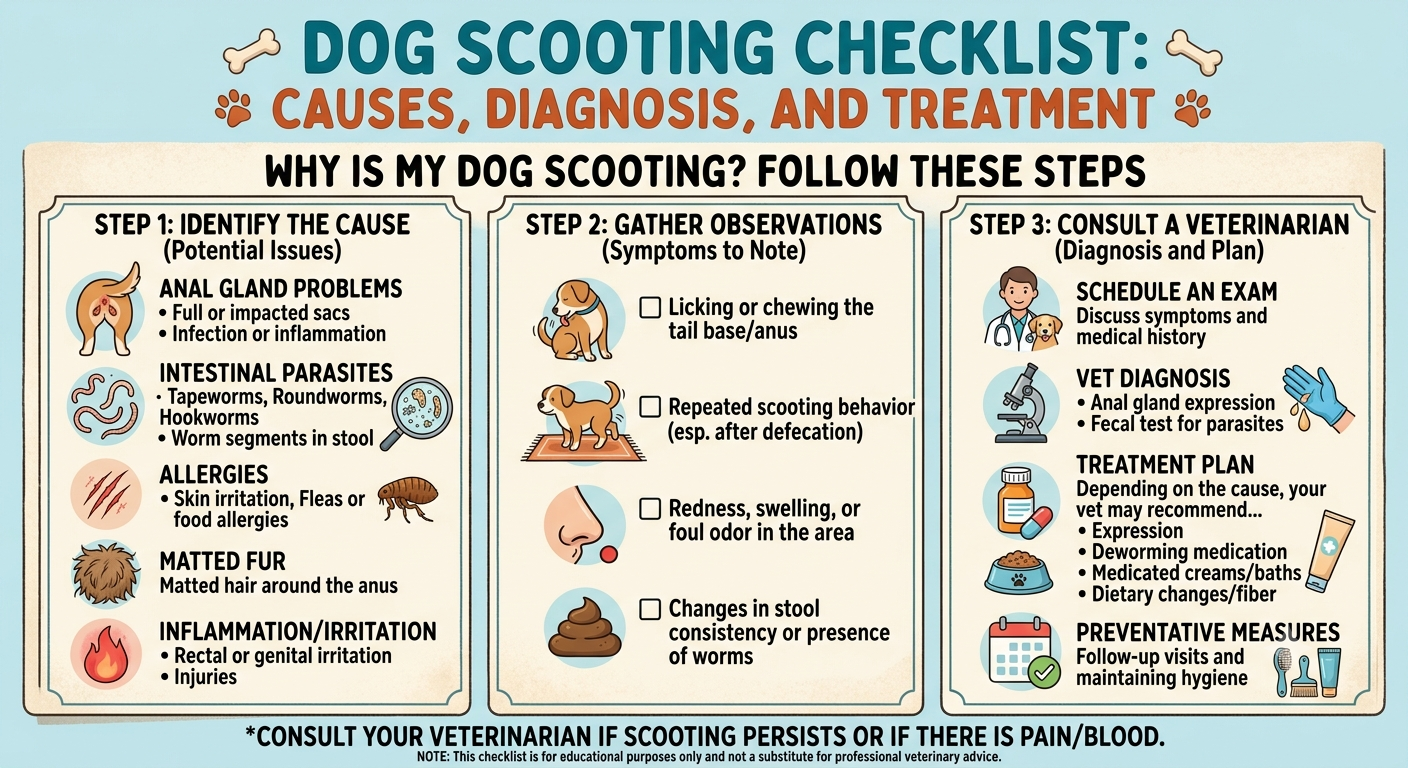
Home checklist: note odor and frequency, check stool quality, avoid DIY gland squeezing, and book care for pain or swelling.
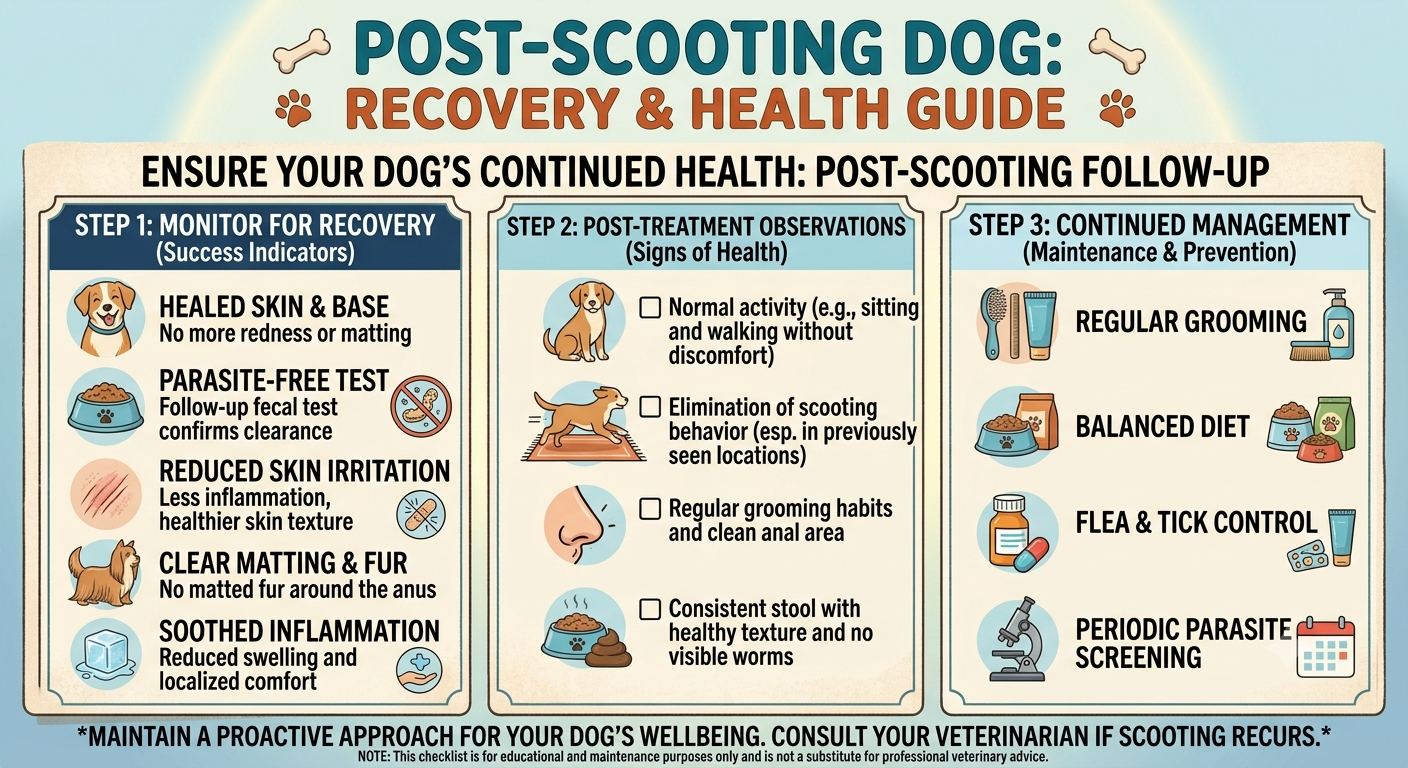
Most scooting cases improve once the underlying irritation — glands, parasites, or itch — is addressed correctly.
Why is my dog scooting?
Common causes are anal gland irritation, parasites, residual stool, and itchy skin around the rear.
What is dog scooting?
It is when a dog drags its rear across the floor, usually because something at the anus or under the tail feels irritating.
Why is my dog scooting his butt?
Same pattern — glands, worms, allergies, or stool residue are the frequent explanations.
Should I express anal glands at home?
Only if a veterinarian has shown you the correct method for your dog. Untrained expression can cause injury or miss infection.
Dog scooting after pooping — normal?
Occasional mild scooting after a soft stool can happen. Frequent or painful scooting should be checked.
Can worms cause dog scooting?
Yes. Fecal testing is especially important in puppies and dogs with incomplete parasite control.
How do I stop dog scooting?
Treat the cause — not just the drag. That may mean gland care, deworming, allergy management, or diet changes directed by a vet.
When should I see a vet for scooting?
If it repeats, the dog is painful, there is swelling or blood, or a puppy is affected.
Dog scooting is a message from the rear end — most often anal glands, parasites, or itch, not a random habit. Track odor and frequency, skip untrained gland squeezing, and involve a veterinarian when scooting is repeated or painful. Bookmark this page at nextgenpetcare.com for more trusted pet health guidance, and use Diagnostics Support if you want help preparing a clear history for your clinic visit.
Medical disclaimer: This article is intended for general education and does not constitute veterinary advice, diagnosis, or treatment. Only a licensed veterinarian who has examined your dog can diagnose the cause of scooting and recommend care.