Puppy Pees When Excited? Why It Happens and How to Stop It
Excitement and submissive urination explained, with a calm, step-by-step training plan and the signs that mean a vet check is needed.
Quick answer: Puppies pee when excited because their bladder control is still immature, so strong excitement during greetings or play causes leaks. Most outgrow it within the first year. Keep greetings calm, take your puppy to potty before exciting moments, reward calm behaviour, never punish, and see a vet if accidents happen at other times.
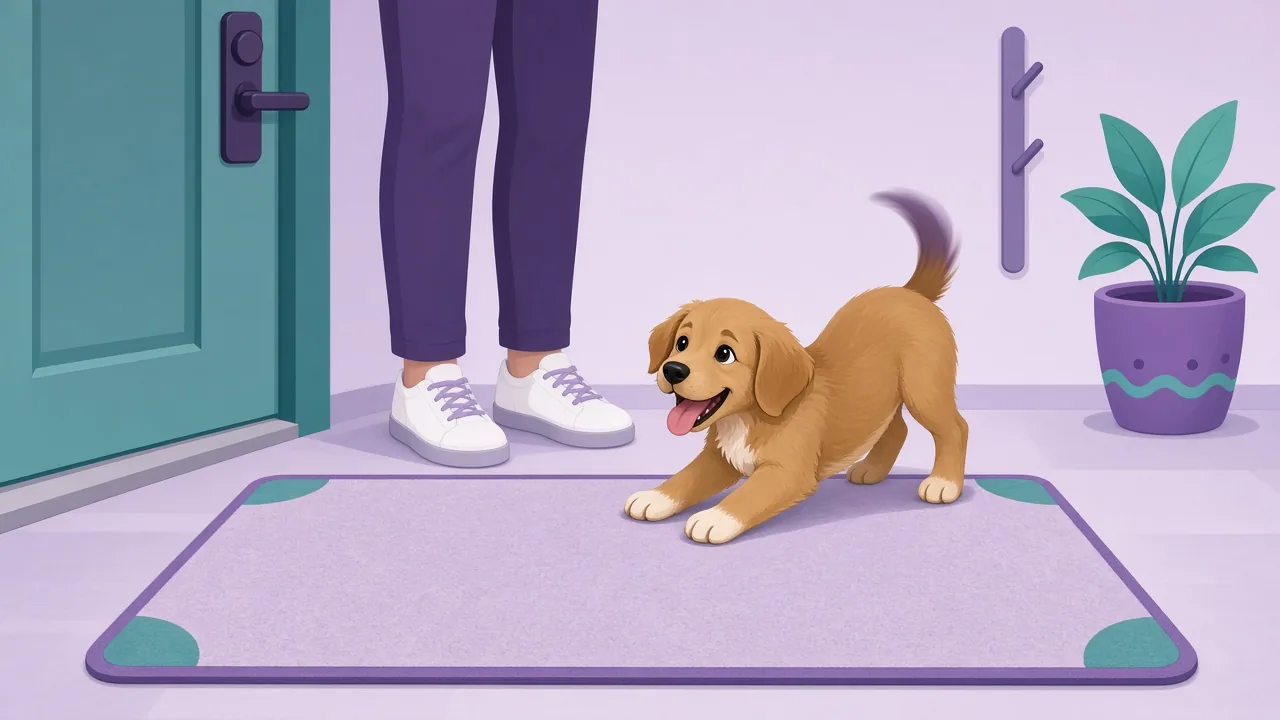
If your puppy pees when excited, whether it’s when you walk through the door, when guests arrive, or in the middle of play, you’re not alone, and it isn’t a housetraining failure. Excitement urination is common in young puppies. Their bladder control is still developing and their emotions run high. A related behaviour, submissive urination, is driven by fear or appeasement instead. Both usually improve with age and calm, consistent handling, and scolding almost always makes them worse.
This guide explains why puppies pee when excited, how to tell excitement urination from submissive urination, a step-by-step plan to stop it, how long it usually lasts, and when a vet should rule out a medical problem.
Young puppies have small bladders and immature control of the muscles that keep urine in. When they get a rush of excitement, such as their favourite person coming home, a new visitor or a game of chase, that control briefly slips and a little urine leaks out. UC Davis’s Clinical Animal Behavior Service lists the likely contributors as reduced bladder sphincter tone, a possible genetic tendency, and owners accidentally reinforcing the behaviour with high-energy greetings (UC Davis, PDF).
Common triggers include:
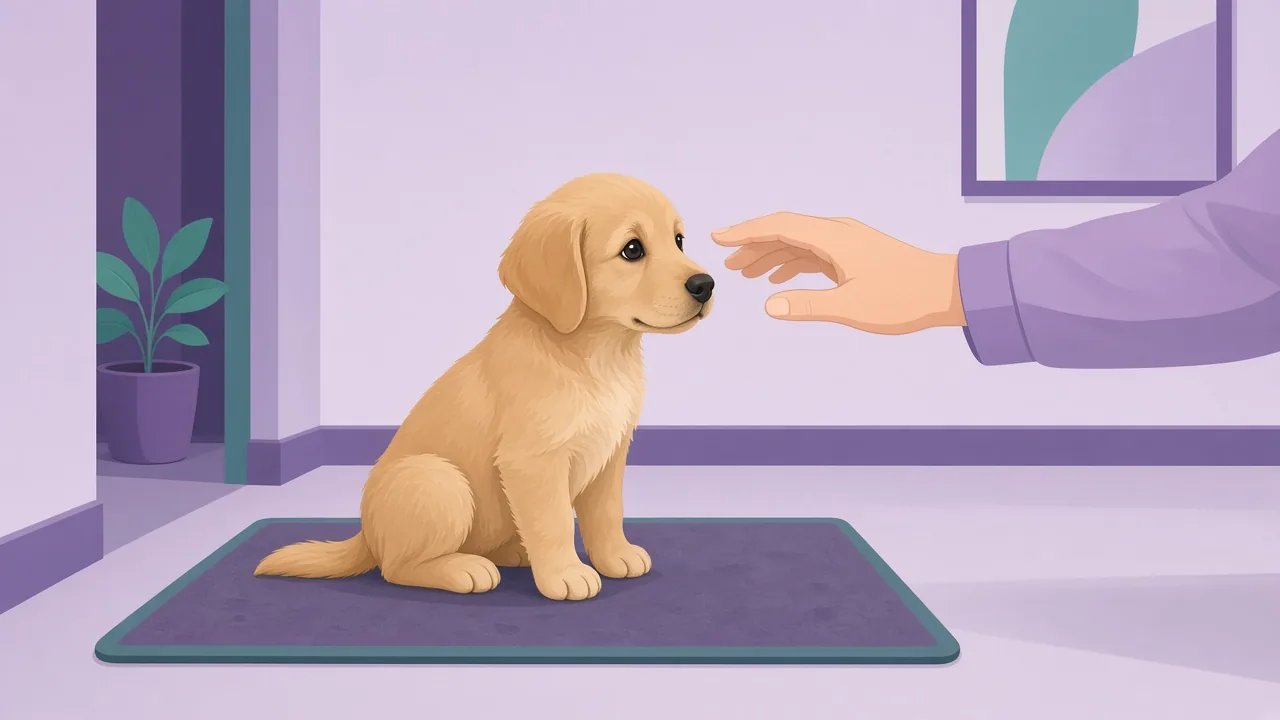
Telling these two apart matters, because the training approach is slightly different. With excitement urination, your puppy is usually standing or wiggling. With submissive urination, your puppy shows clear appeasement signals.
Excitement vs submissive urination
| Excitement | Submissive | |
|---|---|---|
| Emotion | Over-arousal, joy | Fear, appeasement |
| Body language | Wiggling, jumping, standing | Crouching, tail tucked, ears back, rolling over |
| Triggers | Greetings, play | Looming, staring, scolding |
| Main fix | Calm greetings, potty first | Non-threatening approach, build confidence |
Excitement vs submissive urination at a glance.
| Excitement urination | Submissive urination | |
|---|---|---|
| Emotion | Over-arousal, joy | Fear, anxiety, appeasement |
| Body language | Wiggling, jumping, tail wagging, standing or walking | Crouching, tail tucked, ears flat, avoiding eye contact, rolling on back |
| Typical triggers | Greetings, play, homecomings | Being approached, stared at, leaned over, scolded, loud voices |
| Who it affects | Mostly puppies under about a year | Puppies and adult dogs, especially shy or under-socialised dogs |
| Main fix | Calm greetings, lower arousal, potty first | Non-threatening body language, build confidence |
The Veterinary Information Network’s owner resource and the AKC describe the same split, and both stress that neither is a deliberate “accident” (Veterinary Partner; AKC).
8 steps to stop excited peeing
Set up
Train
The 8-step plan to stop excited peeing.
Before training, check that it really is behavioural. If your puppy also has accidents when calm, pees very often, strains, has blood in the urine or leaks while sleeping, see your vet. Urinary tract infections and anatomical problems such as an ectopic ureter can look like “excited peeing.”
When you come home, ignore your puppy for the first few minutes. UC Davis suggests waiting around 5 minutes, until they have calmed down. Then greet them quietly with a soft voice and slow movements. Ask visitors to do the same.
For the next few weeks, take your puppy straight outside to their potty spot on arrival, and say hello there. Indoors, greet on hard floors rather than carpet.
Take your puppy out to pee before guests arrive, before play sessions and before you pick them up. An empty bladder means far fewer leaks. Our puppy house training guide has a full potty schedule by age.
For submissive pee-ers especially, avoid looming. Crouch down side-on, avoid direct eye contact, and pet under the chin or on the chest rather than on top of the head.
Toss a few treats on the floor at greetings, or ask for a simple sit. This redirects energy into something calm and rewarding. Treats often work better than hands-on praise, which can tip a puppy over the edge.
Short daily sessions of sit, touch and settle on a mat teach self-control and help shy puppies feel safe. Positive puppy socialization during the early weeks also reduces fear-based urination later.
If it happens, say nothing, calmly take your puppy outside, and clean the spot with an enzymatic cleaner so the smell doesn’t draw them back. Scolding, or even an exasperated sigh, can make a submissive puppy pee more. It also teaches them that your approach is something to worry about.
Many puppies grow out of excitement urination as their bladder control matures, often somewhere in their first year, especially when greetings are kept low-key. Submissive urination can take longer and may continue into adulthood in shy dogs unless their confidence is built up deliberately. If your puppy is still regularly peeing when excited at 6–12 months despite consistent training, or if it’s getting worse, ask your vet to check for medical causes and consider a qualified, reward-based trainer or veterinary behaviourist.
What progress usually looks like
Typical progress with consistent training (individual puppies vary).
Any puppy can do it. Owners and trainers often report it more in very social, high-energy puppies and in sensitive or shy individuals. Some evidence suggests a genetic tendency, and the UC Davis handout notes a possible genetic predisposition for both types. However, there is no reliable list of breeds that “always” pee when excited, so focus on your individual puppy’s triggers rather than breed labels.
| Days | Focus | What to do |
|---|---|---|
| 1–3 | Track triggers | Note when, where and with whom leaks happen. Book a vet check if anything looks medical |
| 4–7 | Lower arousal | Ignore-then-calm greetings, greet outdoors, potty before visitors and play |
| 8–11 | Teach an alternative | Reward “sit” or “go to mat” at the door, and use treat scatters for greetings |
| 12–14 | Generalise | Practise with friendly visitors who follow the rules. Gradually return to normal greetings if dry |
Our Behavioral Coaching pathway supports positive routines for puppy confidence and household manners.
Young puppies have immature bladder control, so a rush of excitement during greetings or play can briefly overwhelm the muscles that hold urine in. High-energy greetings can unintentionally reinforce it.
Keep greetings low-key, wait a few minutes before saying hello, greet outside, take your puppy to potty before exciting events, swap petting for treats, and never punish accidents. Rule out medical causes if accidents happen at other times too.
Excitement urination often fades as bladder control matures in the first year. Submissive urination can last longer, sometimes into adulthood, unless confidence is built with reward-based training and non-threatening handling.
New people often greet loudly, lean over or reach for the head, which can over-excite a puppy or trigger appeasement. Ask visitors to ignore the puppy at first, crouch sideways, and toss treats instead of petting.
Many do, usually within the first year, especially when owners keep greetings calm. If it continues past about 12 months or gets worse, see your vet and consider a qualified reward-based trainer.
There is no reliable breed list. Any puppy can do it, and it is commonly reported in very social or sensitive individuals. Focus on your own puppy’s triggers rather than breed.