How to Care for a Puppy: The Complete Guide for New Owners
Everything you need for the first weeks and months, from puppy-proofing and feeding schedules to vaccinations, socialisation and a sample daily routine.
Quick answer: To care for a puppy, puppy-proof your home, feed a complete growth diet in 3–4 small meals a day, and book a vet visit for vaccines, deworming and a microchip. Take your puppy outside to potty every 1–2 hours, socialise gently before 14 weeks, enforce plenty of naps and use reward-based training.
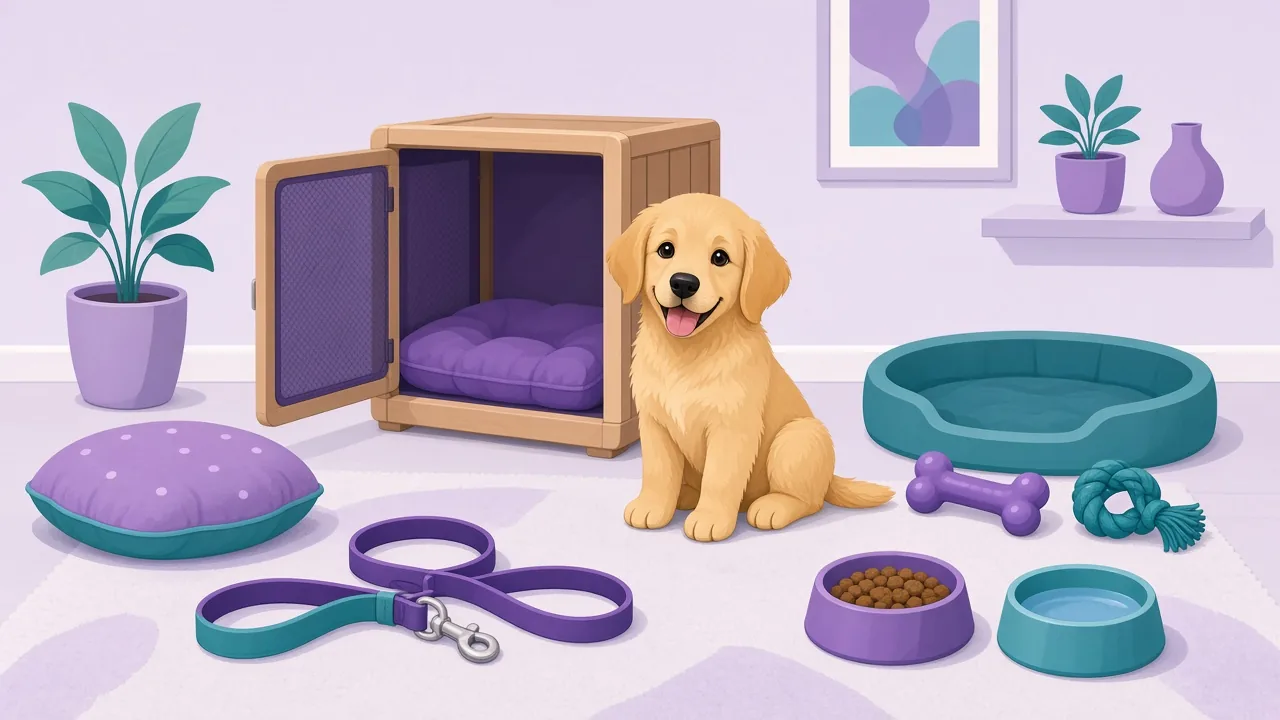
Learning how to care for a puppy comes down to six things: safe housing, the right food, a predictable routine, vet care on schedule, gentle training and early socialisation. The first few weeks set habits that last for life. That is a lot of responsibility, but it is also very manageable if you take it one day at a time.
This guide walks you through everything, from puppy-proofing and your first night to feeding amounts, vaccinations, house training, sleep, grooming, costs to plan for and the warning signs that need a vet. Use the checklists to keep track.
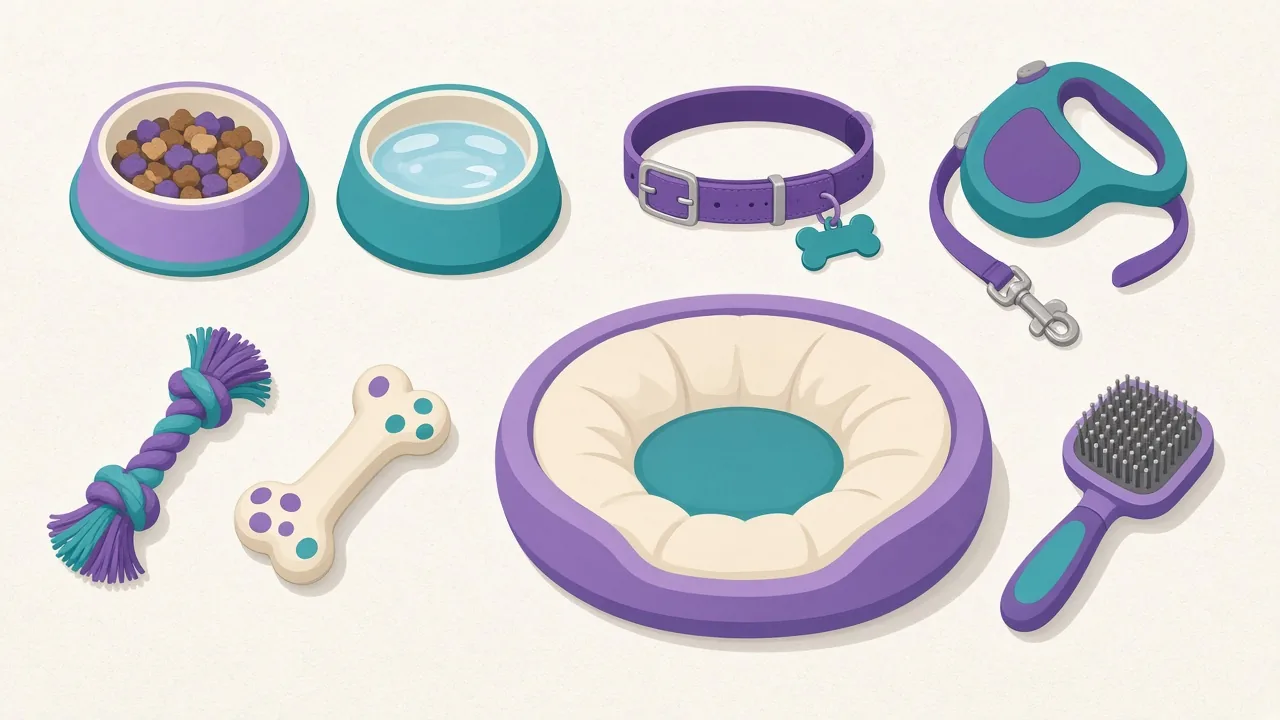
New puppy checklist
Essentials
Health & enrichment
New puppy shopping checklist.
Get down at puppy height and look around. Tidy away electrical cables, shoes, socks, children’s toys, medicines, cleaning products, rodent bait and slug pellets. Keep bins lidded and secure. Common household dangers include chocolate, grapes and raisins, xylitol (in sugar-free gum and some peanut butters), onions and garlic, and lilies for homes with cats too. Our pet toxin prevention guide has the full list.
Many owners use the informal “3-3-3 rule” as a rough guide: about 3 days to decompress, 3 weeks to learn the routine and 3 months to feel fully at home. It is not a scientific rule, but it is a helpful reminder to be patient.
Puppies need a diet formulated for growth. Look for a statement that the food is “complete and balanced for growth” or “for all life stages.” Large and giant breeds need a large-breed puppy food with controlled calcium to support healthy bone development (VCA Hospitals). WSAVA’s nutrition guidelines suggest asking whether a brand employs a qualified nutritionist and does feeding trials (WSAVA).
| Age | Meals per day | Notes |
|---|---|---|
| 8–12 weeks | 4 | Small, regular meals. Keep the breeder’s food at first |
| 3–6 months | 3 | Teething may reduce appetite briefly |
| 6–12 months | 2 | Small breeds may switch to adult food around 9–12 months |
| 12–24 months | 2 | Large and giant breeds often stay on puppy food longer. Ask your vet |
Use the feeding guide on the bag as a starting point, then adjust to keep your puppy lean. You should be able to feel the ribs easily under a thin layer of fat. Change foods gradually over 5–7 days to avoid an upset stomach. Fresh water should always be available. For routine ideas, see how to build a balanced feeding routine.
Puppy care timeline: first year
A general first-year timeline; your vet will tailor it to your puppy.
Book a wellness exam within the first few days. Your vet will check for congenital problems, start or continue vaccinations, set up parasite control, and scan for or fit a microchip.
Until your vet says vaccinations are complete, avoid high-traffic dog areas and places where unknown dogs toilet, but don’t keep your puppy isolated. Carry them out to see the world and attend a well-run puppy class.
Consistency matters more than any particular method. Take your puppy out first thing in the morning, last thing at night, after every meal, nap and play session, and roughly every 1–2 hours while they are awake. Go to the same spot, wait quietly, and reward with a treat and praise the moment they finish. Supervise indoors, or use the crate or pen when you can’t watch them. The AKC recommends never punishing accidents. Just clean up with an enzymatic cleaner. Our house training guide goes into detail, and if your puppy leaks during greetings, read our guide to puppy excited peeing.
The American Veterinary Society of Animal Behavior says the first three months of life are when sociability develops most, and recommends that puppies can start socialisation classes as early as 7–8 weeks, having received at least one set of vaccines a minimum of 7 days before the first class (AVSAB position statement, PDF). Aim for short, positive experiences with:
Watch your puppy’s body language and keep things at a level they enjoy. Our puppy socialization guide has an age-by-age checklist.
Puppies need lots of sleep, often 18–20 hours a day. Many “bad” behaviours, like mouthing, zoomies and nipping, happen when a puppy is overtired. Build in nap times in a quiet crate or pen after play and meals. Keep exercise short and play-based. Lots of short sniffy walks and games are better than long forced runs, especially for large breeds. Mental work such as puzzle feeders, sniffing games and short training sessions tires puppies out as much as physical exercise does.
Mouthing is normal. Redirect onto a toy, pause play if teeth touch skin, and offer frozen chew toys during teething (roughly 3–7 months). See our puppy teething guide.
Sample day: 8–12 week old puppy
| Time | Activity |
|---|---|
| 7:00 | Potty, breakfast, potty, short play |
| 8:00–10:00 | Nap in crate or pen |
| 10:00 | Potty, 5-min training, outing |
| 12:00 | Lunch, potty, nap |
| 15:00 | Potty, play, chew, nap |
| 17:00 | Dinner, potty, calm time |
| 22:30 | Last potty, bed; 1–2 night breaks |
Sample daily routine for an 8–12 week old puppy.
| Time | Activity |
|---|---|
| 7:00 | Potty, breakfast, potty, short play |
| 8:00–10:00 | Nap in crate or pen |
| 10:00 | Potty, 5-minute training, socialisation outing |
| 12:00 | Lunch, potty, nap |
| 15:00 | Potty, play, chew toy, nap |
| 17:00 | Dinner, potty, calm family time |
| 19:00–21:00 | Short play and training, then a late small meal if your vet recommends one |
| 22:30 | Last potty, bedtime. One or two quiet night-time breaks |
A 9-week-old puppy can’t hold its bladder for long and may panic if left alone suddenly. Build alone time gradually, starting with a few minutes while you’re in another room. Give a chew or stuffed food toy, and come back before they get upset. If you work long hours, arrange a dog walker, a pet sitter or a friend to visit for toilet breaks. Our separation anxiety guide explains how to prevent problems.
Prices vary widely by country and region, so get local quotes. The main first-year categories are: initial vet exams, the vaccine series and microchipping; parasite prevention; spay or neuter; food; crate, bed and supplies; training classes; and insurance or an emergency fund. Our pet insurance guide explains how to weigh cover options.
Our Healthcare Consultations pathway helps you organise vaccine timing questions and early-care priorities with your veterinary team.
It is an informal guide, not a scientific rule: about 3 days for a new dog to decompress, 3 weeks to learn the routine and 3 months to feel at home. Use it as a reminder to be patient.
Focus on the basics: puppy-proof your home, feed a complete puppy food in small meals, book a vet visit for vaccines and parasite control, take your puppy out to potty often, socialise gently and enforce plenty of naps.
Only for very short periods at first. A 9-week-old puppy cannot hold its bladder for long and may panic. Build alone time gradually from a few minutes, and arrange a visitor for toilet breaks if you are out for longer.
Generally about 4 meals a day at 8–12 weeks, 3 meals from 3–6 months and 2 meals from around 6 months. Follow your food’s guide and your vet’s advice, and keep your puppy lean.
Puppy core vaccines usually start at around 6–8 weeks and are repeated every 2–4 weeks until about 16 weeks of age or older, followed by a booster, according to AAHA guidelines. Your vet will set the exact schedule.
Many owners find the first few weeks, with night-time toilet breaks and constant supervision, and the adolescent phase from roughly 6–12 months the most challenging. Consistent routines and reward-based training help through both.
Puppies often sleep 18–20 hours a day. Enforced naps in a quiet crate or pen prevent overtiredness, which is a common cause of biting and zoomies.