Xoloitzcuintli Guide: Mexican Hairless Dog Temperament, Sizes & Care
A vet-informed look at the Xolo — hairless and coated varieties, three sizes, skin care, and responsible ownership in the US.
A vet-informed look at the Xolo — hairless and coated varieties, three sizes, skin care, and responsible ownership in the US.
The Xoloitzcuintli — also called the Mexican hairless dog or simply Xolo — is one of the oldest and most distinctive dog breeds in the Americas. US owners searching “dog breed Mexican hairless,” “Xoloitzcuintli facts,” and “how big do Xolo dogs get” want more than a viral photo. They want temperament, size varieties, skin care, and honest health context.
This guide is written for American households considering a rare, ancient companion. It covers coated and hairless types, toy–miniature–standard sizes, daily care, and why responsible breeders and rescues matter more than impulse “puppies for sale” searches.
Educational content only. Breed descriptions are general. Individual dogs vary. Confirm health screening and care plans with your veterinarian.
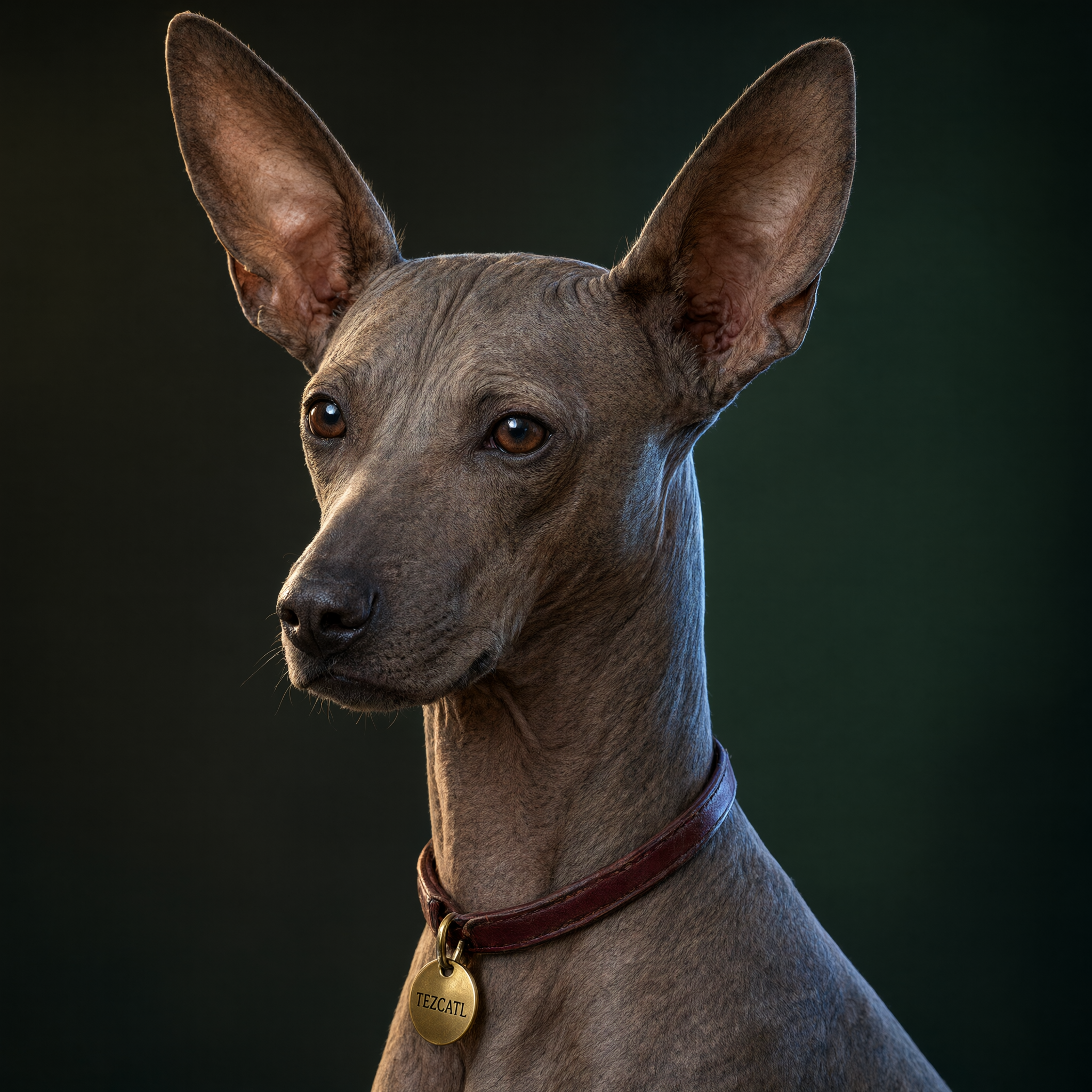
The Xoloitzcuintli is Mexico’s national dog — hairless or coated, and always best matched to an informed owner.
According to Dr. Sarah Miller, DVM, the Xoloitzcuintli (pronounced roughly “show-low-eets-QUEENT-lee”) is an ancient breed with deep cultural roots in Mexico. The American Kennel Club recognizes the breed in the Non-Sporting Group. Owners also search “Xoli dog,” “Xolos dog,” and “Mexican hairless dog facts” when they first encounter the name.
Key points US buyers should know:
| Trait | Hairless Xolo | Coated Xolo |
|---|---|---|
| Appearance | Mostly bare skin; may have tufts on head/tail/feet | Short, sleek coat covering the body |
| Skin care | Sun protection, moisturizing, watch for acne or irritation | Routine brushing; fewer sunburn risks |
| Allergen myth | Often marketed as “hypoallergenic” — still produces dander; not guaranteed allergy-free | Same dander reality as many short-coated breeds |
| Both are Xolos | Same breed standard; coat type is a variety, not a separate breed | |
Searches for “coated Xoloitzcuintli dog,” “long haired Xoloitzcuintli,” and “hairy Xolo” usually refer to the fully coated variety or occasional longer furnishings — not a different species.
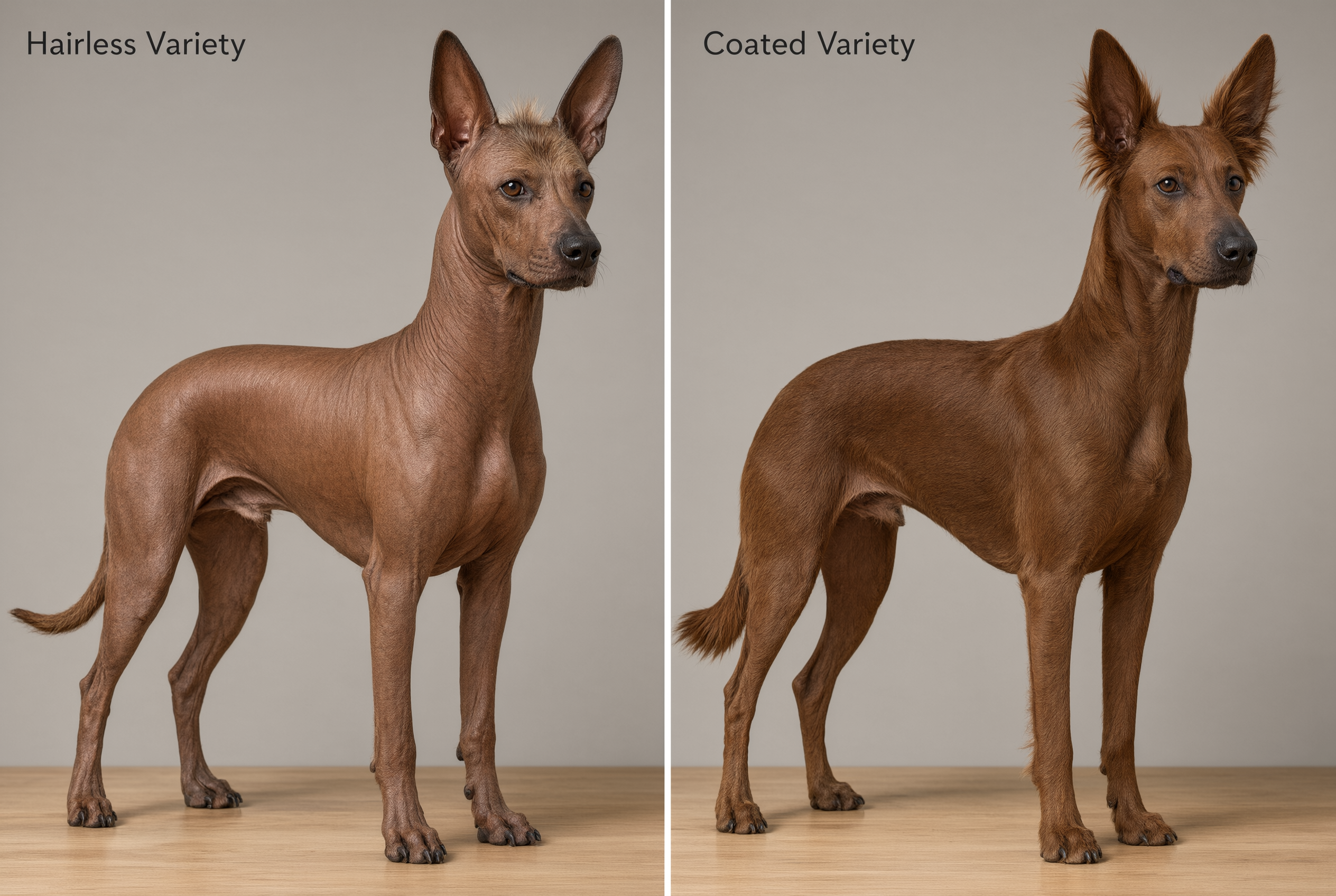
Hairless and coated Xolos share temperament goals; daily skin and coat routines differ.
AKC size ranges (approximate, adult):
“How big are Xolo dogs” and “how big do Xoloitzcuintli get” are common questions. Weight scales with height; standards are larger companions, toys fit apartment life more easily when exercise needs are met.
Well-bred, socialized Xolos are typically calm with family, reserved with strangers, and attentive. “Are Xoloitzcuintli aggressive” is a frequent search — aggression is not the breed default. Fearful or poorly socialized individuals of any breed can react. Early positive exposure, consistent training, and avoiding isolation reduce risk.
They often bond tightly to one household and may not enjoy chaotic dog-park free-for-alls without gradual introduction.
Hairless Xolos need intentional skin management:
Coated Xolos need standard short-coat grooming plus the same dental, nail, and ear care as other breeds.
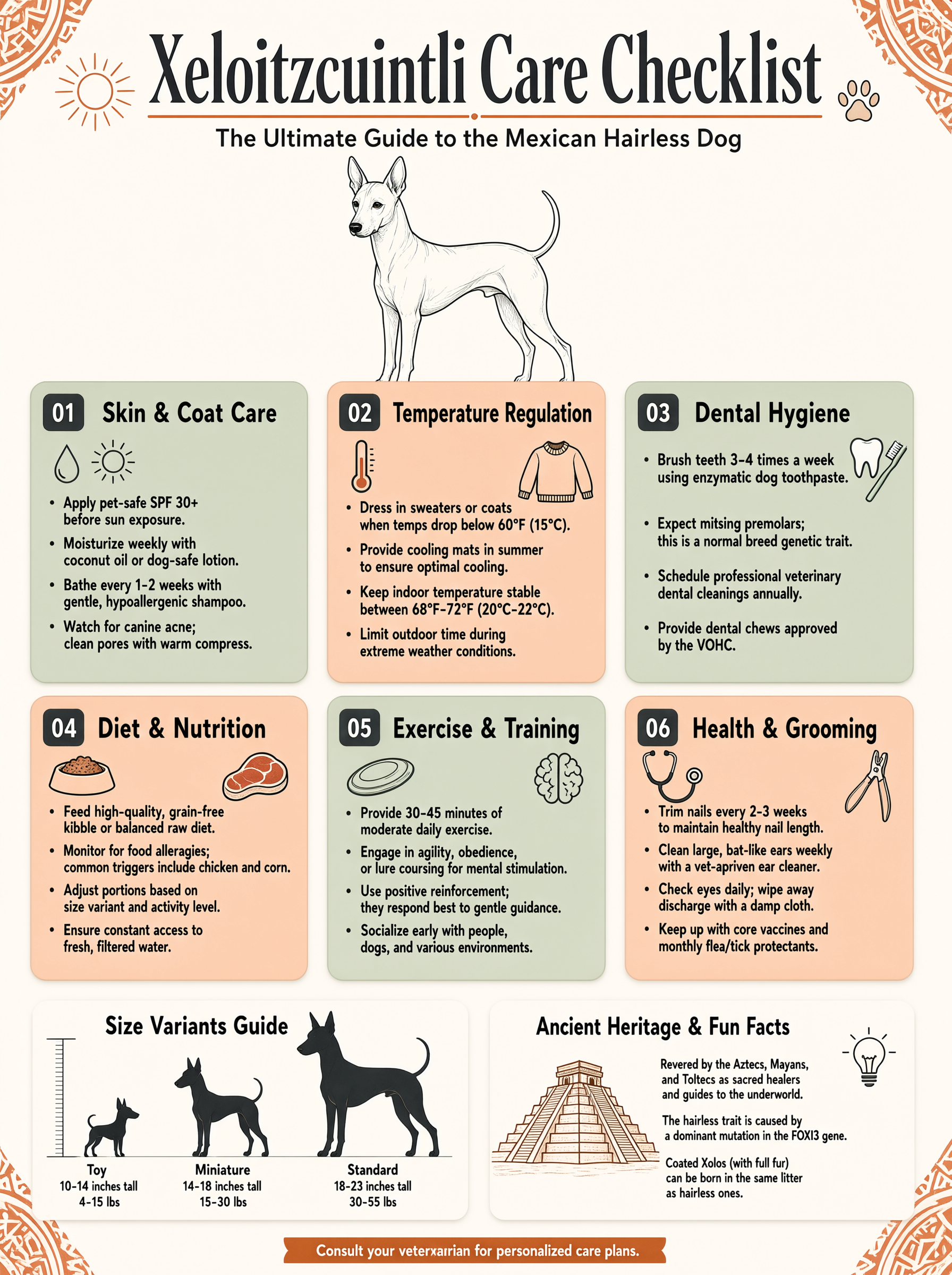
A simple weekly checklist beats guessing — especially for hairless skin and seasonal temperature swings.
Healthcare Consultations can help you prepare questions about skin care, vaccine schedules, and first-year wellness before you bring a dog home.
Reported lifespan for many Xolos is often in the low-to-mid teens with good care, though individual outcomes vary. Discuss breed-relevant screening with your veterinarian and any ethical breeder. Dental care matters; hairless dogs can show dental anomalies more often in some lines — ask for full mouth history.
Do not skip heartworm prevention, flea/tick control, and core vaccines appropriate for your region of the US.
Searches for “Mexican hairless Xolo puppies for sale” and “adopt Xolo dog” show both commercial and rescue intent. Prefer:
Avoid pure impulse purchases from unverified online ads. Rare does not mean “instant status symbol” — it means fewer experienced local vets and owners, so do your homework first.
Related interest in rare dog breeds and crossbreed dogs is high; the Xolo is a purebred with an ancient history, not a designer mix. Crossbred dogs can be wonderful companions too — evaluate each dog’s needs, not the label alone.
What is a Mexican hairless dog called?
Xoloitzcuintli (Xolo). It is Mexico’s national dog and an AKC-recognized breed.
Are there coated Xolos?
Yes. Coated and hairless varieties exist within the same breed.
How do you pronounce Xoloitzcuintli?
A common English approximation is “show-low-eets-QUEENT-lee.” Regional pronunciations vary.
How long do Xolo dogs live?
Many live into the teens with preventive care; ask your vet about screening for your individual dog.
Are Xolos good for allergy sufferers?
No dog is fully hypoallergenic. Hairless Xolos still shed dander. Meet the dog and consult an allergist before deciding.
Is the Xolo a rare breed?
Less common than Labs or French Bulldogs in the US, but recognized and actively bred. “Rare” should not replace due diligence on health and temperament.
The Xoloitzcuintli rewards informed owners: clear size expectations, honest skin-care routines, and early socialization. Whether you are comparing rare breeds or specifically researching the Mexican hairless dog, prioritize health transparency over novelty. Bookmark nextgenpetcare.com for more breed and wellness guides you can use before and after veterinary visits.
Disclaimer: Educational only. Not a purchase recommendation or veterinary diagnosis.