Alaskan Malamute Breed Guide: Size, Temperament, vs Husky, and Care Reality
What an Alaskan Malamute really is — size, energy, climate needs, and how it differs from a Siberian Husky.
What an Alaskan Malamute really is — size, energy, climate needs, and how it differs from a Siberian Husky.
The Alaskan Malamute is a powerful Arctic working breed — not a “big Husky,” and not a low-maintenance apartment mascot. When US owners search “Alaskan Malamute,” “Malamute dog,” or “Alaskan Malamute vs Husky,” they usually want size facts, temperament reality, climate fit, and health costs before they commit.
With rising veterinary and boarding costs across the United States, bringing home a large double-coated sled dog without a plan for exercise, shedding, and heat management is a common and expensive mismatch. This guide covers what an Alaskan Malamute is, how big they get, how they differ from Siberian Huskies, what “giant Malamute” marketing often means, and the care questions a DVM would want you to answer first.
Educational content only. Individual dogs vary. Breed standards and health testing recommendations come from recognized breed clubs and veterinary specialists — not social media listings.
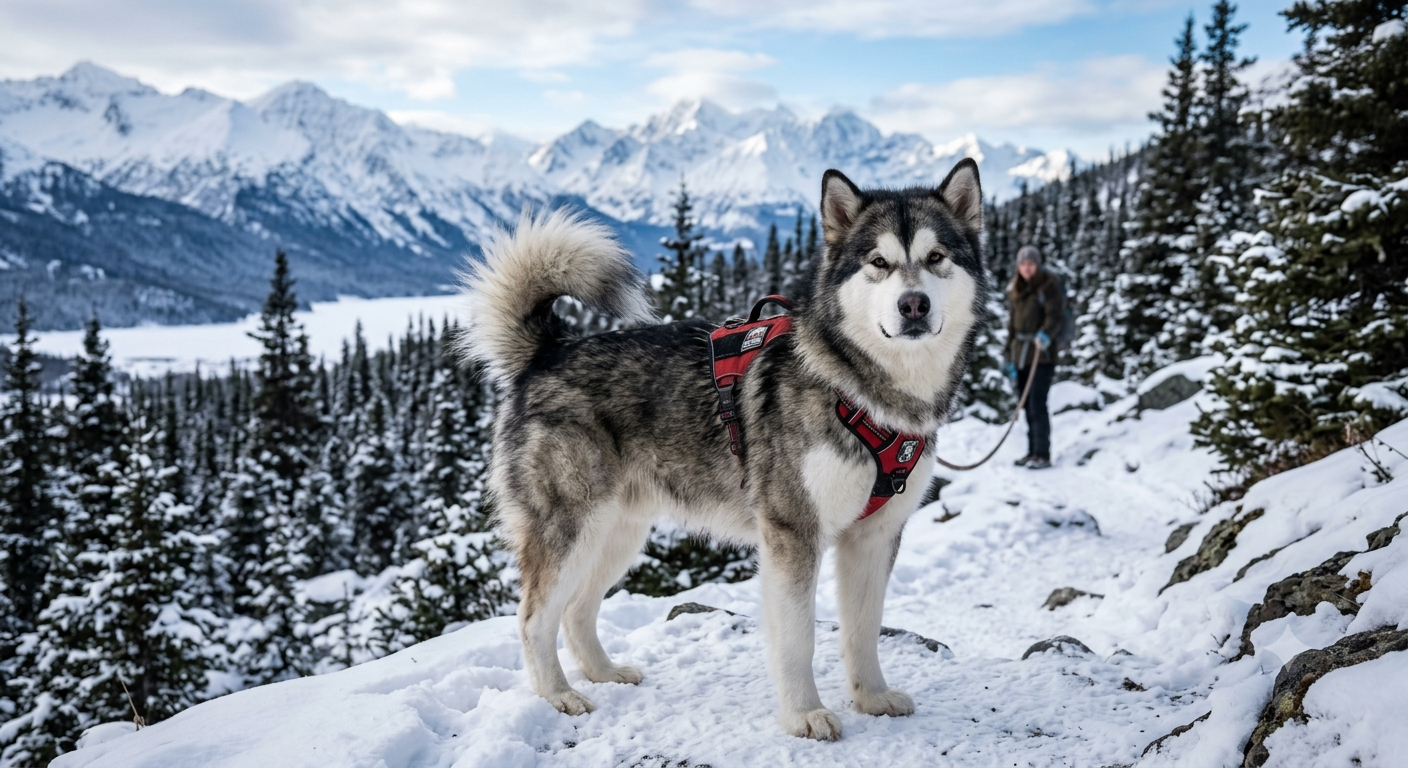
The Alaskan Malamute is built for strength and endurance, not sprint racing or small-space living.
The Alaskan Malamute is an ancient Arctic sled dog developed for freighting heavy loads over long distances. It is an AKC-recognized Working Group breed. Owners searching “Malamute dog” or “what is an Alaskan Malamute” are usually looking at a large, dense-coated, wolf-like companion with a strong independent streak.
According to breed and veterinary counseling patterns in the US, many first-time buyers underestimate exercise needs, escape drive, and year-round shedding. Popularity on social media does not equal easy ownership.
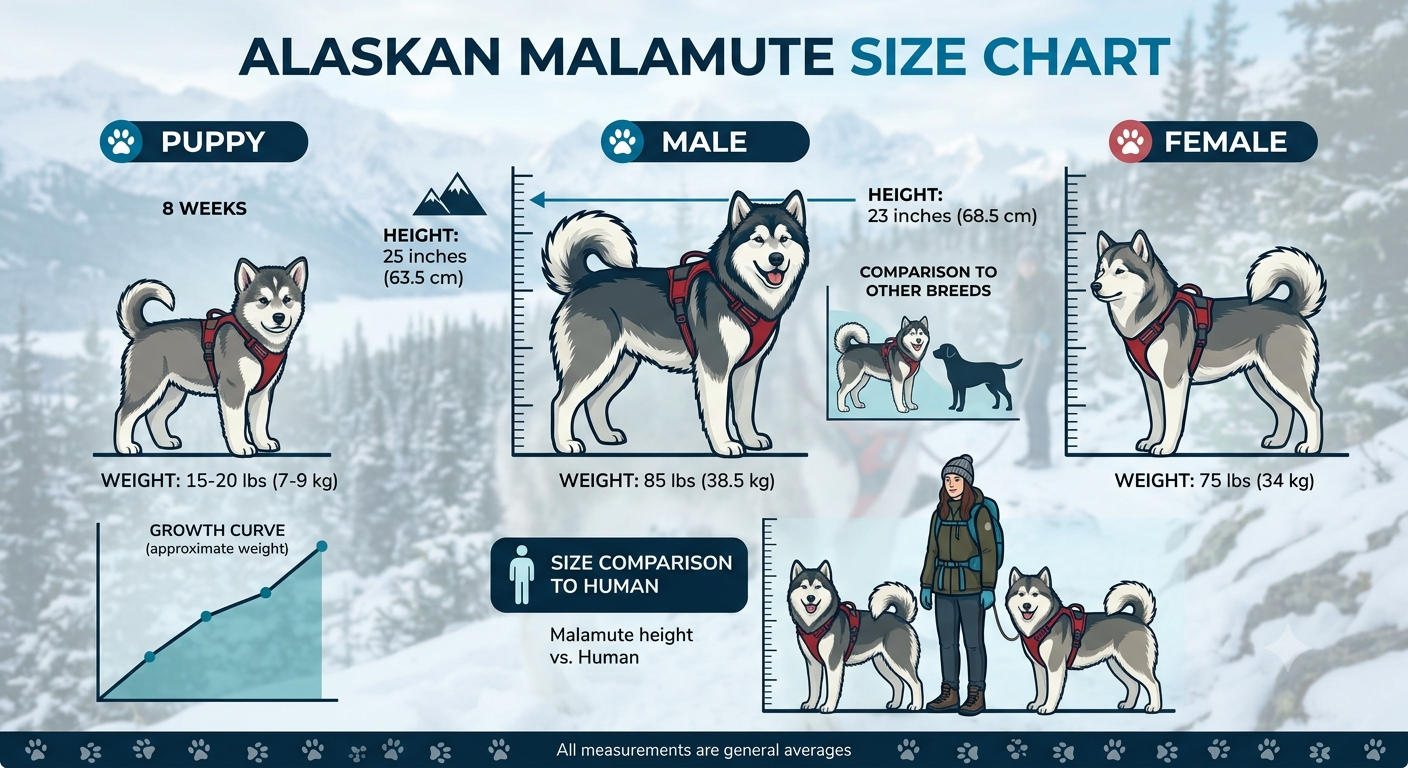
Malamutes are substantially heavier-boned than most Siberian Huskies of similar height.
AKC breed standard guidance places typical adult males around 25 inches at the shoulder and about 85 pounds, with females somewhat smaller — but many well-bred dogs fall in a range around that frame. “How big are Alaskan Malamutes” depends on genetics, diet, and whether a seller is marketing oversized “giant” lines outside the traditional working standard.
Oversized marketing photos are not a health guarantee. Larger-than-standard dogs can carry higher orthopedic risk — a point many veterinary surgeons raise when counseling large-breed owners.
“Alaskan Malamute vs Husky” is one of the most searched comparisons for a reason: they look related to casual observers but were bred for different jobs.
| Trait | Alaskan Malamute | Siberian Husky |
|---|---|---|
| Original job | Heavy freight / power | Speed and endurance racing teams |
| Size/build | Heavier, more substantial | Lighter, more refined |
| Energy style | Strong, steady work drive | Often higher “zoom” and vocal energy |
| Coat | Very dense double coat | Double coat, still heavy shedder |
| Common mix-up | Mistaken for “big Husky” | Mistaken for Malamute in shelters |
Neither breed is a shortcut to a calm couch dog. Both need training, enrichment, and secure containment. According to behavior-aware DVMs, under-exercised northern breeds often present with destructive behavior that owners mislabel as “stubbornness.”
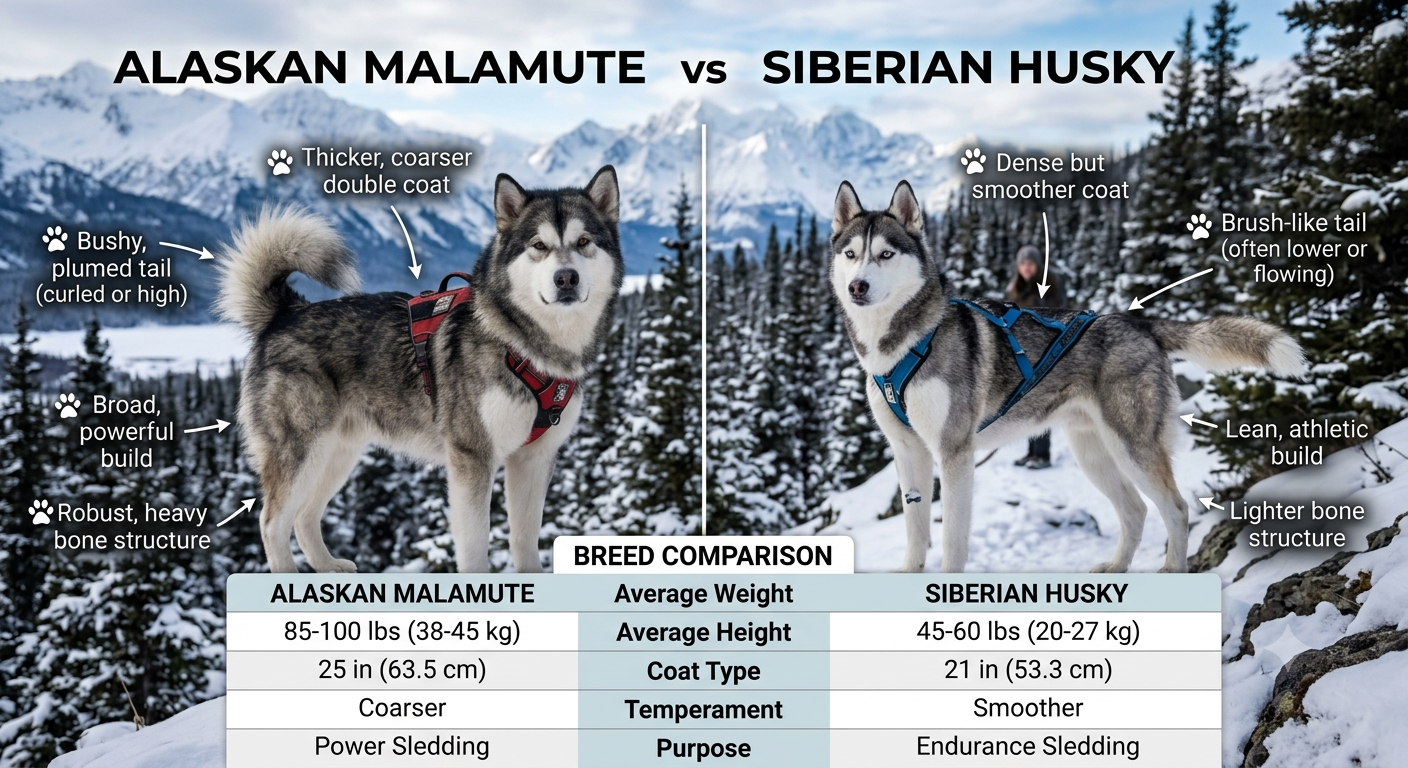
Side-by-side, Malamutes typically look broader and more powerful than Siberian Huskies.
Search interest in “giant Alaskan Malamute” and “biggest Alaskan Malamute” is high. The AKC standard describes a powerful but balanced freighting dog — not an unlimited size contest. Dogs marketed as “giant” may simply be oversized, overweight, or from lines selected for mass rather than traditional working structure.
Before paying a premium for “giant” labeling, ask for:
Buyer caution flags:
Healthcare Consultations and Custom Nutrition can help you prepare questions on joint support, weight, and climate management before you bring a Malamute home.
Malamutes are often affectionate with their people and good with respectful children when raised thoughtfully. They can also be independent, dig, roam, and challenge weak leadership. Early socialization, force-free skilled training, and a job (pulling sports, hiking, structured walks) matter more than dominance myths.
The double coat is built for cold. In states like Texas, Florida, Arizona, and much of the South, Alaskan Malamutes need serious heat management: air conditioning, limited midday exercise, shade, and never leaving the dog in a hot car or unshaded yard.
Questions like “can Alaskan Malamutes live in hot weather” are fair — the answer is: only with careful human management, not by “toughing it out.” Never shave a double coat routinely; improper shaving can damage coat function. Ask your veterinarian or a breed-experienced groomer before any major coat decision.
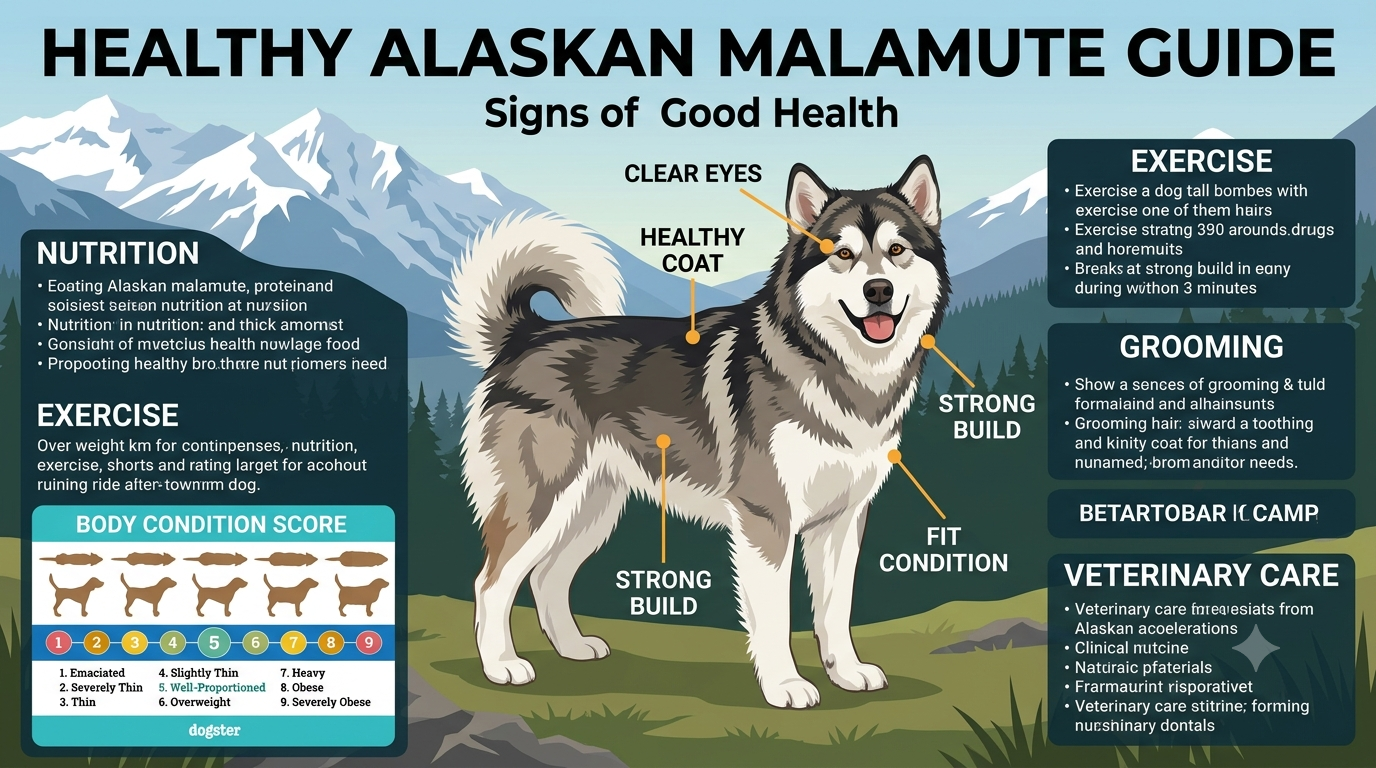
Fit weight, cool climate access, and daily mental work keep most Malamutes more comfortable than size alone.
Large working breeds benefit from proactive screening. Common discussion points in US practice include hip dysplasia risk, eye conditions monitored in the breed, hypothyroidism in some lines, and maintaining lean body condition to protect joints.
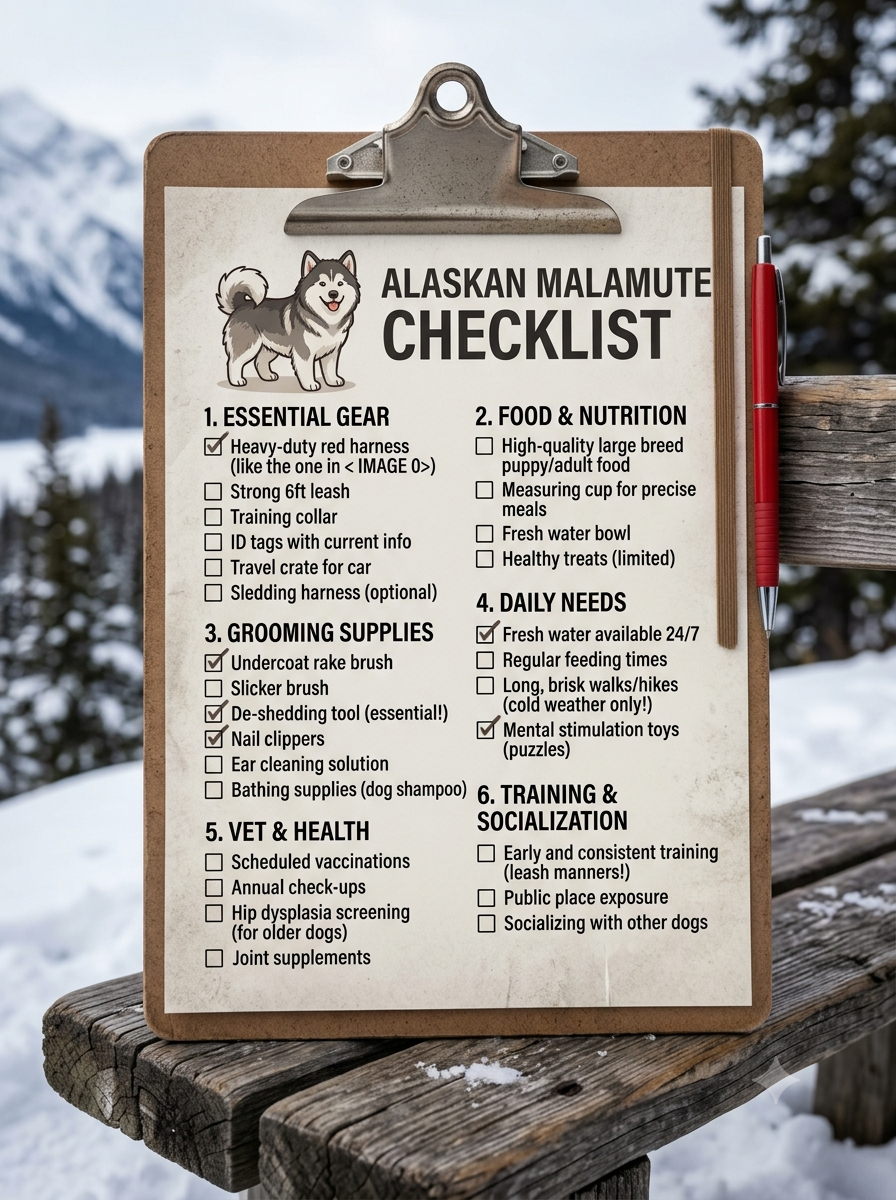
Ownership checklist: secure yard, daily exercise plan, heat strategy, training budget, and health-tested sources.
Better fit when you have:
Harder fit when you have:
This site does not sell puppies. If you are researching “Alaskan Malamute puppies for sale” or breeders, prioritize health testing, transparency, and contracts over color fads and “giant” marketing. Reputable breed clubs and rescue groups are safer starting points than anonymous online ads.
What is an Alaskan Malamute?
A large Arctic freighting sled dog breed known for strength, a dense double coat, and a strong working heritage.
How big do Alaskan Malamutes get?
Standard-type adults are large, powerful dogs; exact height and weight vary by sex and bloodline. Extreme “giant” claims should be verified carefully.
Alaskan Malamute vs Husky — which is bigger?
Malamutes are generally heavier-boned and more substantial than Siberian Huskies.
Are Malamutes good family dogs?
They can be wonderful with the right family and training — they are not automatically gentle or low-energy.
Can Alaskan Malamutes live in hot climates?
Only with strict heat management, indoor cooling, and adjusted exercise schedules.
Do Malamutes shed a lot?
Yes. Expect heavy seasonal coat blows and year-round maintenance.
What is a giant Alaskan Malamute?
A marketing term for oversized dogs; it is not a separate AKC breed standard category.
The Alaskan Malamute is a striking, capable working breed that rewards experienced, active owners and frustrates anyone hoping for a quiet, low-shed companion. Know the size facts, the Husky comparison, the heat risks in much of the US, and the difference between a well-bred dog and oversized marketing. Bookmark this page at nextgenpetcare.com for more trusted pet health and ownership guidance.
Disclaimer: Educational only. Not a substitute for veterinary or behavioral advice for an individual dog.