Most Popular Dog Breeds in the USA: AKC Rankings and Vet-Smart Choosing Guide
See the current most popular dog breeds list — and how to choose a dog for health, lifestyle, and budget, not only ranking.
See the current most popular dog breeds list — and how to choose a dog for health, lifestyle, and budget, not only ranking.
Popular dog breeds in the United States are ranked each year by American Kennel Club (AKC) registration statistics — not by Instagram likes. When people search “popular dog breeds,” “most popular dog breeds,” or “most common dog breeds,” they usually want two things: the current top list and a reality check on whether a trendy breed fits their home, budget, and health tolerance.
With rising veterinary costs across the US, choosing a breed (or mix) without understanding exercise needs, brachycephalic risks, or hip/joint predispositions is an expensive mistake. This guide walks through the latest AKC top ranks, what “most popular” actually means, and the questions a DVM would want you to answer before you bring a puppy home.
Educational content only. Breed rankings change yearly. Individual dogs vary widely; always discuss health screening and lifestyle fit with a licensed veterinarian.

AKC registration data — not social media — sets the official most popular dog breeds list in the United States.
The AKC ranks purebred dogs by how many were registered in a given year. That is a strong proxy for demand among people who register, but it does not count every mixed-breed or unregistered dog. Still, for US searchers asking “what is the most popular dog breed,” the AKC list is the standard reference used by media, breeders, and clinics.
According to AKC registration statistics released for 2025, the French Bulldog remained America’s most popular dog breed for the fourth consecutive year. The Labrador Retriever — which held the number-one spot for 31 years before 2022 — sits at number two.
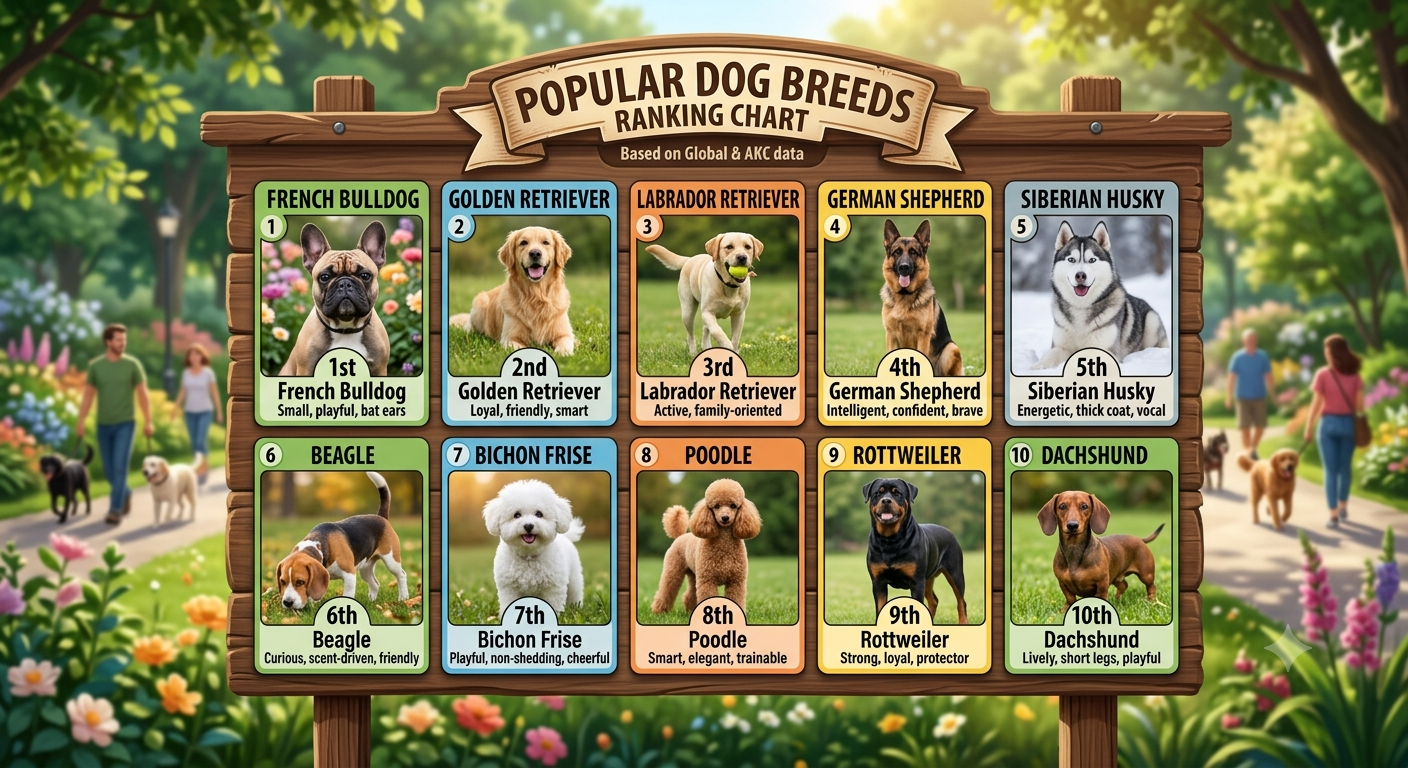
French Bulldog, Labrador Retriever, and Golden Retriever lead the current most popular dog breeds ranking.
| Rank | Breed | Group (AKC) | Quick note for US owners |
|---|---|---|---|
| 1 | French Bulldog | Non-Sporting | Apartment-friendly size; brachycephalic care critical |
| 2 | Labrador Retriever | Sporting | High energy, family classic; watch weight and joints |
| 3 | Golden Retriever | Sporting | Friendly working breed; grooming and cancer screening matter |
| 4 | German Shepherd Dog | Herding | Working drive; hips and training consistency |
| 5 | Dachshund | Hound | Back protection is non-negotiable |
| 6 | Poodle (all sizes) | Non-Sporting | Low-shed coat; regular professional grooming |
| 7 | Beagle | Hound | Nose-driven; secure fencing and weight control |
| 8 | Rottweiler | Working | Early socialization and experienced handling |
| 9 | German Shorthaired Pointer | Sporting | Serious exercise needs |
| 10 | Bulldog | Non-Sporting | Heat sensitivity and breathing management |
Just outside the top 10, the Cane Corso continued climbing (now commonly ranked near #11), reflecting strong demand for large guardian-type dogs in many US regions.
Compact, often chosen for city living. Popularity does not remove brachycephalic airway concerns, heat intolerance, or the need for careful breeding and veterinary monitoring. According to many small-animal DVMs, Frenchies rank high in respiratory and skin-related clinic visits relative to their size.
Still one of the most common dog breeds in American families. Labs need real daily exercise and calorie control — obesity amplifies joint disease. Hip and elbow screening in breeding lines remains important.
Affectionate sporting breed with heavy coat care needs. Families should discuss cancer awareness and routine wellness exams with their veterinarian as the dog ages.
Intelligent working dog. Without training and mental work, behavior problems rise. Orthopedic screening (hips, elbows) is standard responsible-ownership conversation material.
Moved up in recent rankings. Long backs mean ramp use, weight control, and avoiding high-impact jumping are practical health steps — not optional extras.
Poodles need grooming budgets. Beagles follow scent over recall. Rottweilers and GSPs need experienced handlers and exercise plans. Bulldogs share many heat and airway management themes with French Bulldogs.

Popularity predicts demand — not automatic ease of ownership. Match energy and health needs to your real lifestyle.
“Most common dog breeds” and “best dog for me” are different questions. A high-ranking breed can still be a poor match if you work long hours, live in extreme heat without air conditioning, or cannot afford breed-typical medical care.

Before following a popularity list, run a lifestyle and budget checklist with your household.
Red flags when shopping popular breeds:
Healthcare Consultations and Custom Nutrition pathways can help you prepare questions on breed-typical needs before and after adoption.
According to veterinary practice patterns across the US, the breeds that top popularity lists also drive a large share of orthopedic, dermatologic, and respiratory caseloads — simply because more of them live in our communities. Popularity multiplies both joy and clinic volume.

Compare energy, grooming, and climate tolerance — not only the ranking number.
A veterinarian or veterinary behaviorist can help interpret whether a given breed’s typical traits align with your household — especially if you already have kids, other pets, or mobility limits.
What is the most popular dog breed in the US?
Per AKC 2025 registration statistics, the French Bulldog ranks number one, followed by the Labrador Retriever and Golden Retriever.
What are the most popular dog breeds right now?
The current top five are typically French Bulldog, Labrador Retriever, Golden Retriever, German Shepherd Dog, and Dachshund (order based on the latest AKC annual release).
Are the most common dog breeds the easiest to own?
No. Common or popular breeds can have high exercise, grooming, or medical needs. Fit matters more than rank.
Why did French Bulldogs pass Labradors?
Registration trends shifted with strong demand for smaller companion dogs suited to urban living. Labs remain extremely popular at number two.
Should I pick a dog only from the top 10 list?
Not necessarily. Many excellent family dogs sit lower on the list or are mixed breeds. Use the list as information, not a shopping cart.
Do mixed breeds count in AKC popularity rankings?
AKC purebred registration rankings do not rank designer mixes. Mixed-breed dogs are still a large share of US pets.
How often do popular dog breed rankings change?
AKC publishes updated rankings annually based on the previous year’s registrations.
Popular dog breeds in the United States are led right now by the French Bulldog, with Labrador Retrievers and Golden Retrievers close behind. Rankings answer “what do many people choose?” — not “what should you choose?” Match energy, climate, budget, and health realities before you follow a trend. Bookmark this page at nextgenpetcare.com for more trusted pet health and ownership guidance, and reach out through Healthcare Consultations if you want help preparing breed-specific care questions for your veterinarian.
Disclaimer: This article is for general education. It does not replace veterinary advice. Breed health risks are population-level patterns; individual dogs differ.