Puppy Vaccination Schedule: Parvo Shots, Core Vaccines, and When Puppies Are Protected
Vaccination for parvovirus in dogs, puppy shots timing, and a practical list of core vaccinations — so you know what each visit is for.
Vaccination for parvovirus in dogs, puppy shots timing, and a practical list of core vaccinations — so you know what each visit is for.
A clear puppy vaccination schedule is one of the highest-stakes decisions new US dog owners make. Searches for “vaccination for parvovirus in dogs,” “puppy shots timing,” and “list of vaccinations for puppies” spike because parvo is common, contagious, and often deadly in unprotected puppies — while the shot series itself can feel confusing when clinics use slightly different calendars.
With rising emergency-care costs across the United States, finishing the core series on time is far cheaper than treating parvovirus. This guide explains the typical immunization schedule for puppies, how parvo shots fit into the distemper-parvo (DHPP) vaccine, when puppies are considered protected, and what “fully vaccinated” actually means before dog parks and classes.
Educational content only. Vaccine protocols are individualized by a licensed veterinarian. This page does not replace AAHA guidelines or your clinic’s written plan.
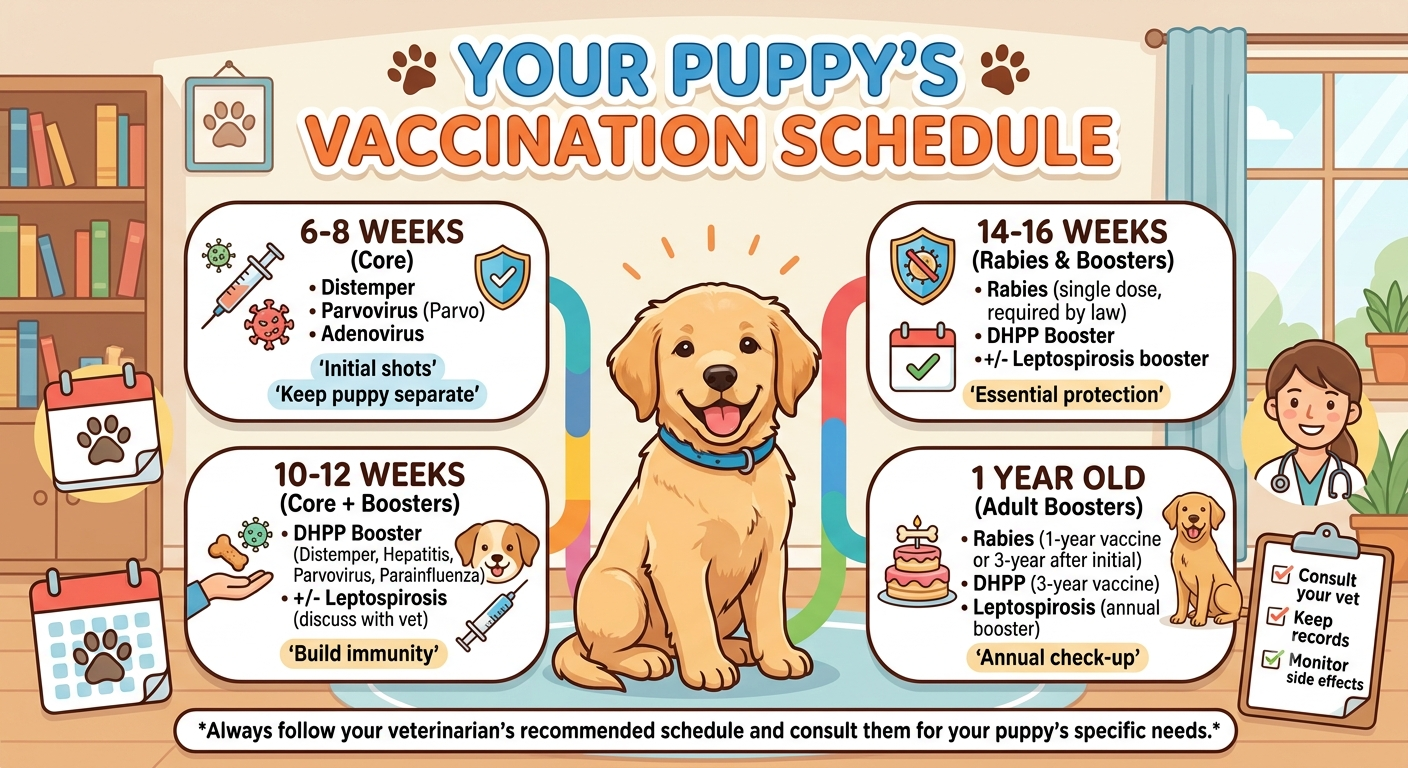
Puppy shots timing is built around maternal antibody fade and the need for repeated parvo protection.
Maternal antibodies from the mother’s milk protect newborns for a while — and can also block vaccines if given too early as a single dose. That is why veterinarians use a series, not one injection. According to standard small-animal practice in the US, missing the final booster in the series is a common reason young dogs remain vulnerable to parvovirus even after “some” shots.
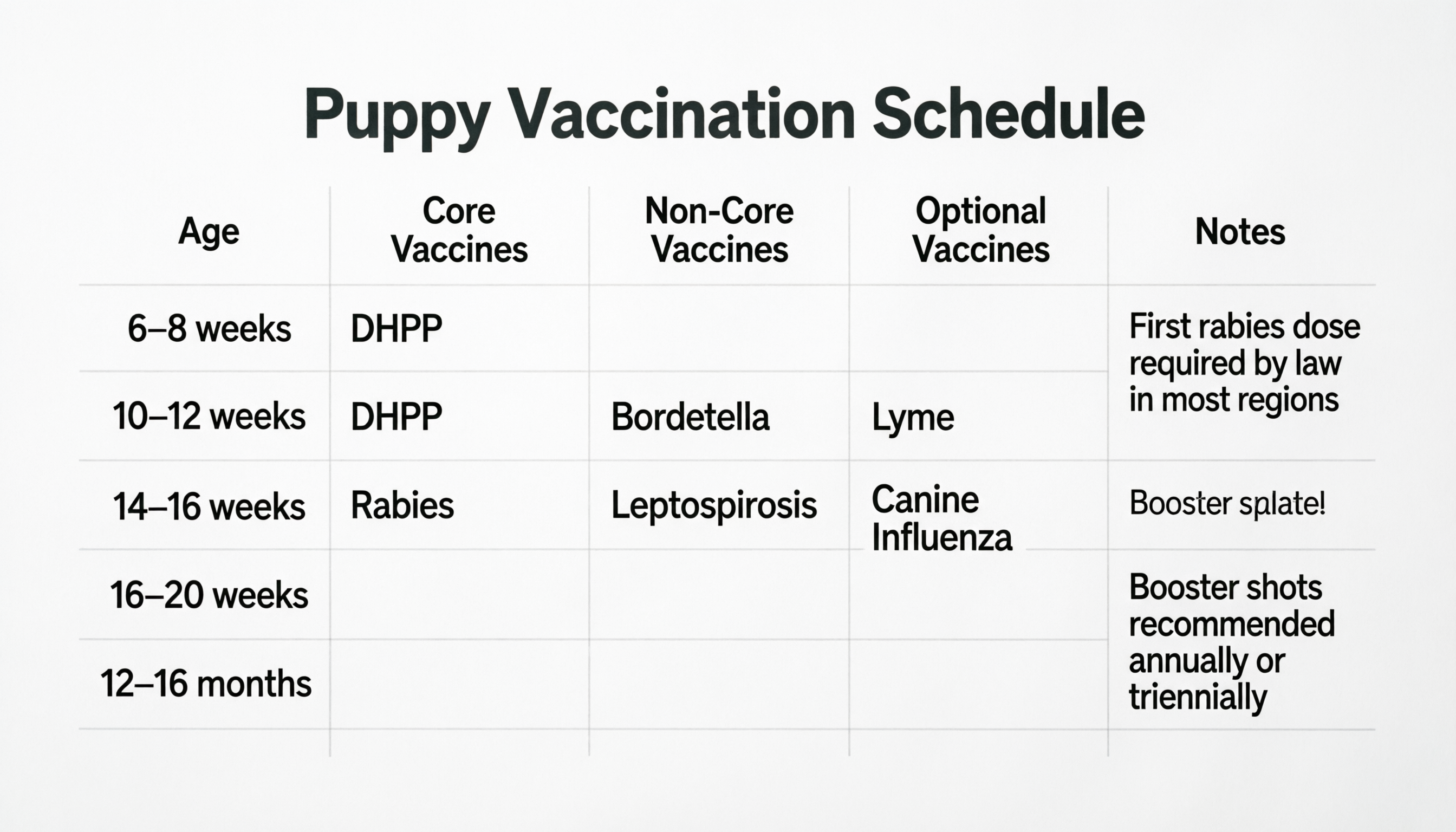
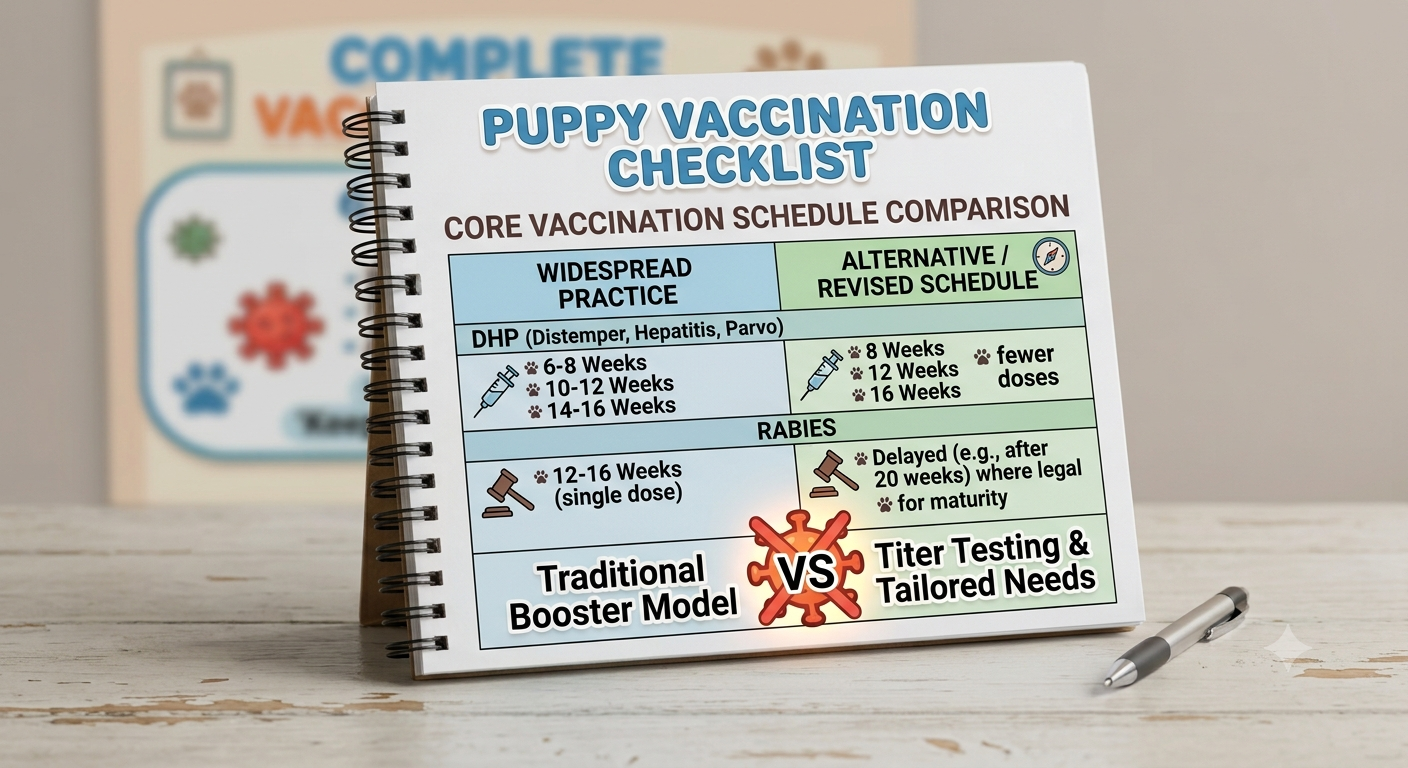
A typical US puppy immunization chart spaces core vaccines every 3–4 weeks until about 16 weeks of age.
Most US clinics follow frameworks aligned with AAHA canine vaccination guidelines. Core vaccines are recommended for nearly all dogs because the diseases are severe and/or widespread:
Combination products are often labeled DHPP or DA2PP (and similar). Non-core vaccines (for example leptospirosis, Bordetella, Lyme) depend on lifestyle and region — your DVM decides based on risk.
Vaccination for parvovirus in dogs is delivered as part of the core combination series, not usually as a standalone shot in modern protocols. Owners searching “vaccination for parvo in dogs” or “dog shots parvo” are usually asking: when does protection start, and how many doses are enough?
According to veterinary infectious-disease teaching used in US clinics, no vaccine is a guarantee — but a completed series dramatically lowers the risk of clinical parvo compared with no vaccination.
| Age window (typical) | Common focus | Notes |
|---|---|---|
| ~6–8 weeks | Start DHPP / core series | First puppy visit; deworming often discussed too |
| ~10–12 weeks | Booster DHPP | Continue every 3–4 weeks as directed |
| ~14–16 weeks | Booster DHPP; rabies often here | Final puppy core booster frequently ≥16 weeks |
| Adult | Boosters per product/guidelines | Rabies interval is law-dependent |
Exact ages vary by clinic, product label, and the puppy’s health. Your veterinarian’s written schedule overrides any general chart.
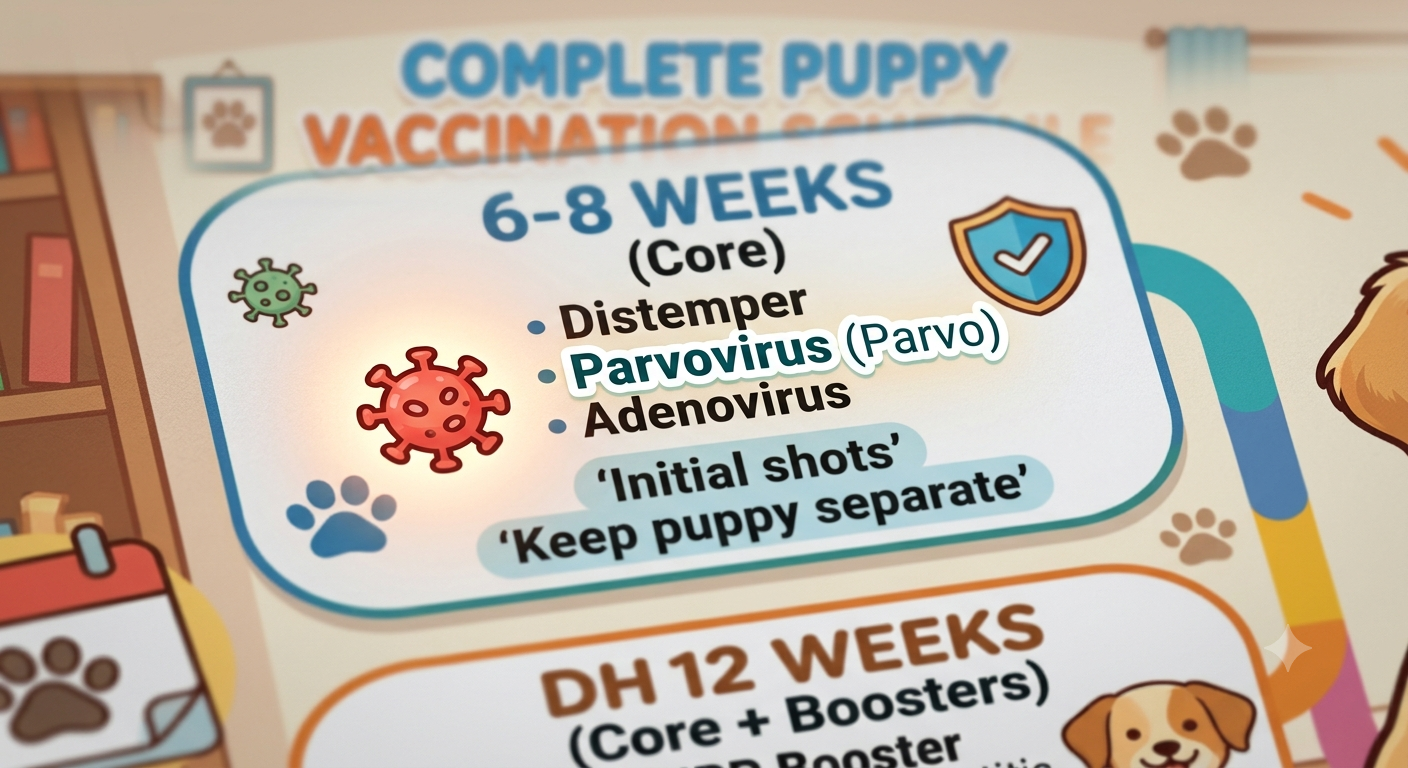
Completing the parvo-containing series is the foundation of puppy disease prevention in the US.
Most puppies receive at least three doses of a parvo-containing combination vaccine in the primary series, spaced about 3–4 weeks apart, with the last dose in the puppy series often at 16 weeks or older. Some start earlier or need an extra visit if the series began late or was interrupted.
Questions like “how many rounds of parvo shots do puppies need” and “when are puppies fully vaccinated against parvo” should always be confirmed on your clinic record — not guessed from a single receipt.
Call your veterinarian promptly if a puppy has:
Suspected parvo is an emergency — do not wait for “the next scheduled shot.”
Healthcare Consultations can help you prepare questions about core vs non-core vaccines before your clinic visit.
“Fully vaccinated” for core diseases generally means the puppy has completed the primary series according to the veterinarian’s protocol — including the final booster after maternal antibodies are expected to have waned. Many trainers and daycare facilities require proof through at least 16 weeks plus the final DHPP and rabies as applicable.
Socialization still matters during the series. Ask your DVM about safer options (known vaccinated dogs, controlled classes) versus high-traffic dog parks.
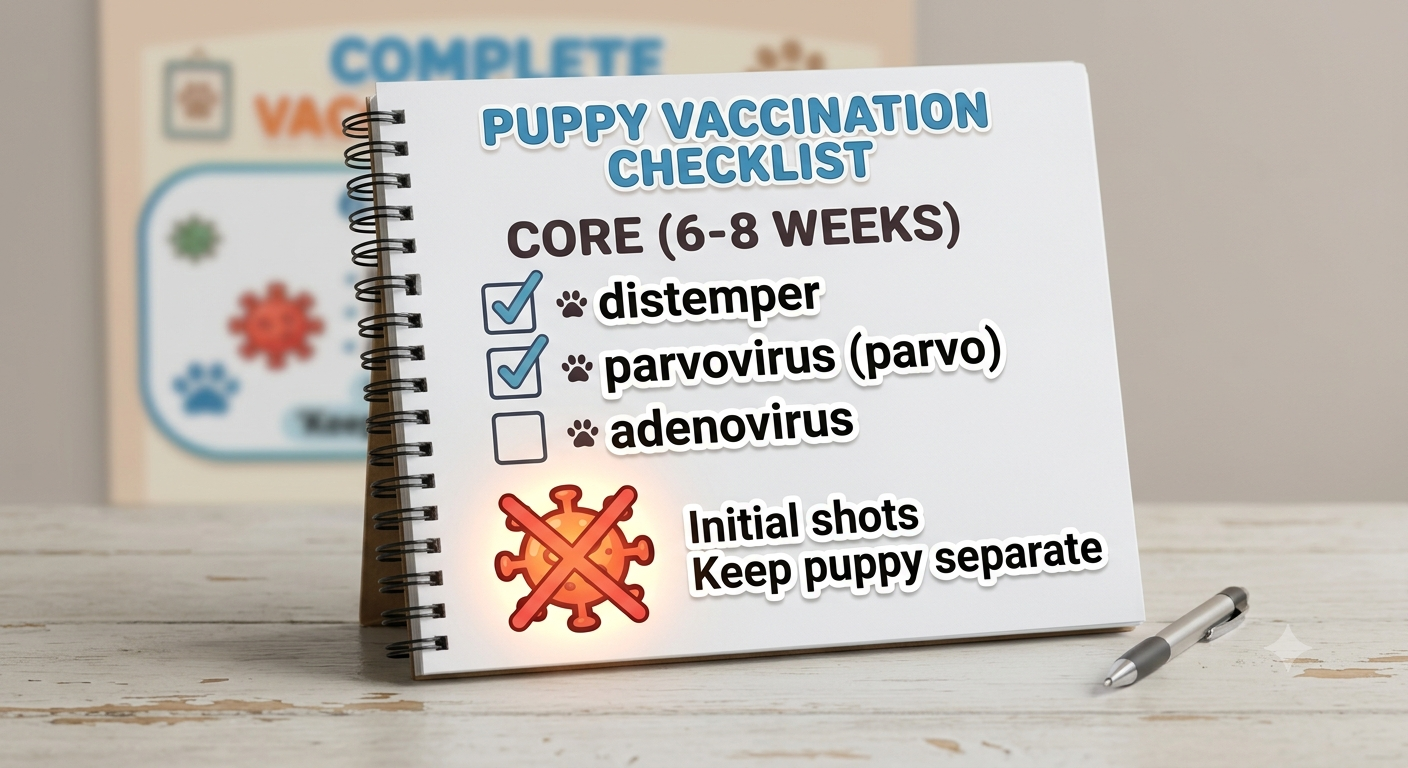
Bring a written vaccine record to every visit — gaps in the series are easier to fix early.
Yes — adult dogs need ongoing core vaccine protection on a schedule determined by the product and your veterinarian. After the puppy series and the first adult booster, many core combination vaccines are given every three years where guidelines and labels allow, while rabies intervals follow local law. “Do adult dogs need parvo vaccine” is answered with the dog’s history, titer policies at that clinic, and risk — not a one-size internet rule.
Search interest in “coronavirus vaccine dog” often confuses canine coronavirus (a dog-specific enteric virus in some discussions) with human COVID-19. Dogs are not routinely vaccinated against COVID-19 as a standard core program. Canine coronavirus vaccines are not core in the same way DHPP and rabies are; whether any enteric coronavirus product is used depends on veterinary judgment and is far less central than parvo vaccination. Always clarify with your clinic which “corona” is being discussed.
According to US veterinary practice standards, benefits of core vaccines for preventable killers like parvo outweigh risks for the vast majority of puppies.
An incomplete series leaves a window where maternal protection has faded but vaccine protection is not finished.
What is the vaccination schedule for a dog / puppy?
Typically a series of core vaccines every 3–4 weeks from about 6–8 weeks until at least 16 weeks, plus rabies per local law, then adult boosters.
Vaccination for parvovirus in dogs — is it separate?
Usually included in the DHPP/DA2PP combination, not a separate weekly shot.
How many rounds of parvo shots do puppies need?
Often three or more doses in the primary series; your clinic chart is definitive.
When do puppies get their first parvo shot?
Commonly at the first vaccine visit around 6–8 weeks, then boosters.
How long does parvo vaccine last?
After the puppy series and appropriate adult boosters, duration depends on the product and protocol — ask for the labeled interval.
Do older dogs need parvo shots?
They need continued core protection on a veterinarian-directed schedule.
Is distemper the same as parvo?
No. They are different diseases; combination vaccines protect against both (and more).
Puppy shots timing if we adopted at 12 weeks?
The series is adjusted to finish with a late booster; do not assume prior shots were complete without records.
A reliable puppy vaccination schedule centers on completing the core series — especially parvo-containing boosters — on time, then maintaining adult protection. Charts online help you prepare questions; your veterinarian’s protocol and local rabies rules finalize the plan. Bookmark this page at nextgenpetcare.com for more trusted pet health guidance, and use Healthcare Consultations if you want help organizing vaccine-record questions before your next visit.
Medical disclaimer: This article is for general education and does not constitute veterinary advice, a prescription, or a substitute for AAHA-aligned care from a licensed veterinarian who has examined your dog.