Hypothyroidism in Dogs: Symptoms, Causes & Low Thyroid Treatment
How underactive thyroid shows up as weight gain, lethargy, and coat changes — and how lifelong levothyroxine restores balance.
How underactive thyroid shows up as weight gain, lethargy, and coat changes — and how lifelong levothyroxine restores balance.
Hypothyroidism in dogs — also called an underactive thyroid or low thyroid — is one of the most common endocrine diseases in middle-aged and older dogs. Owners searching “dogs with underactive thyroid,” “hypothyroidism in dogs symptoms,” and “low thyroid in dogs” often notice weight gain, lethargy, and coat changes before a diagnosis is made.
This guide covers causes, clinical signs, how vets confirm the diagnosis, lifelong treatment with levothyroxine, and what to expect after therapy starts.
Educational content only. Thyroid blood values must be interpreted by a veterinarian in context of your dog’s age, breed, medications, and overall health.
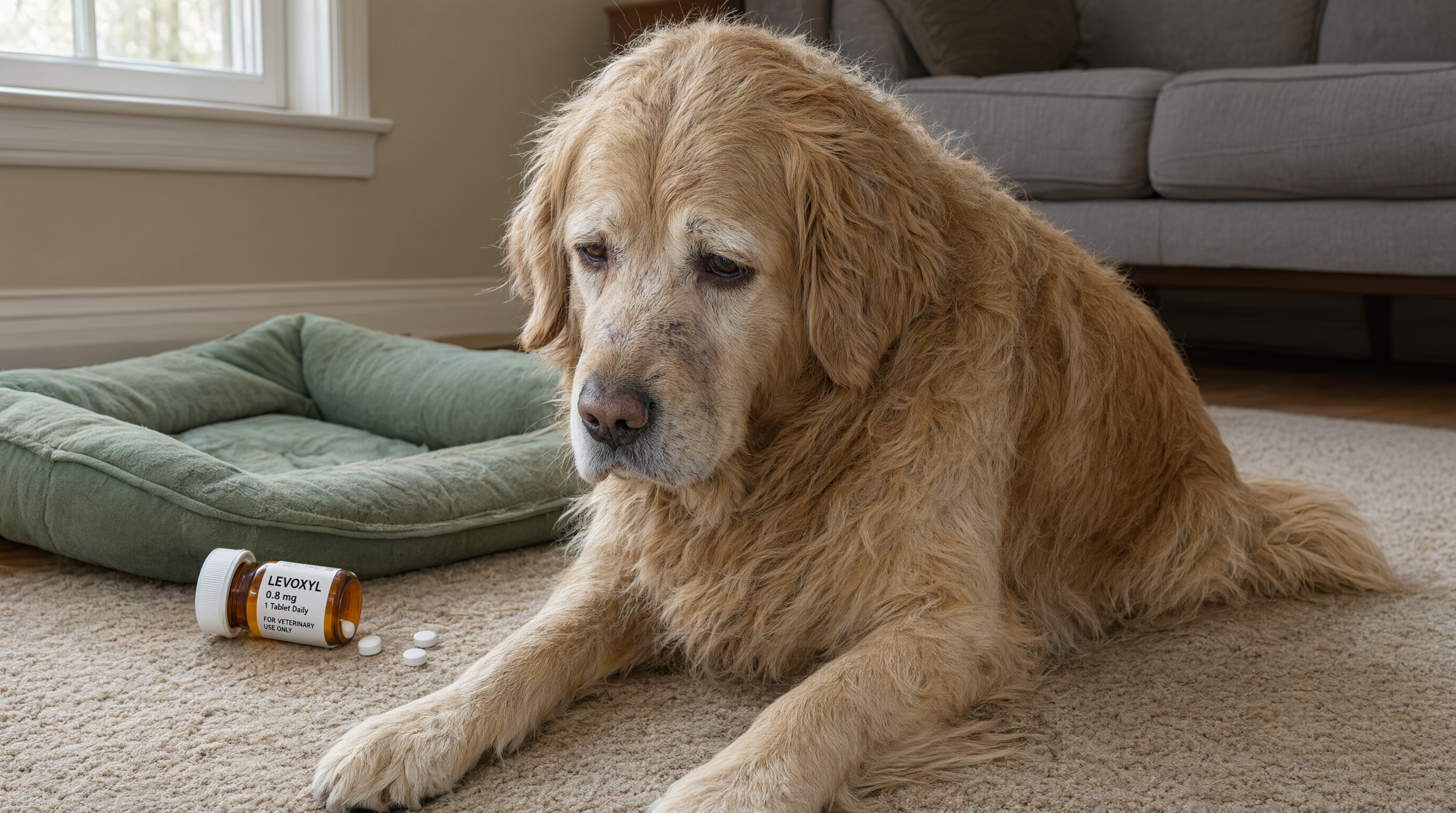
Weight gain without a bigger appetite and a dull, thinning coat are classic owner-reported clues.
The thyroid gland sits in the neck and produces hormones (mainly T4 and T3) that regulate metabolism. When production falls, every system can slow down — energy, skin turnover, heart rate, and temperature control.
According to Dr. Yawar Abbas, DVM, MPhil, more than 90% of clinical cases in dogs are primary hypothyroidism (problem in the thyroid gland itself), not a pituitary problem.
Illness, certain drugs, and non-thyroidal disease can lower measured T4 without true hypothyroidism — one reason a single low T4 is not always a final diagnosis.
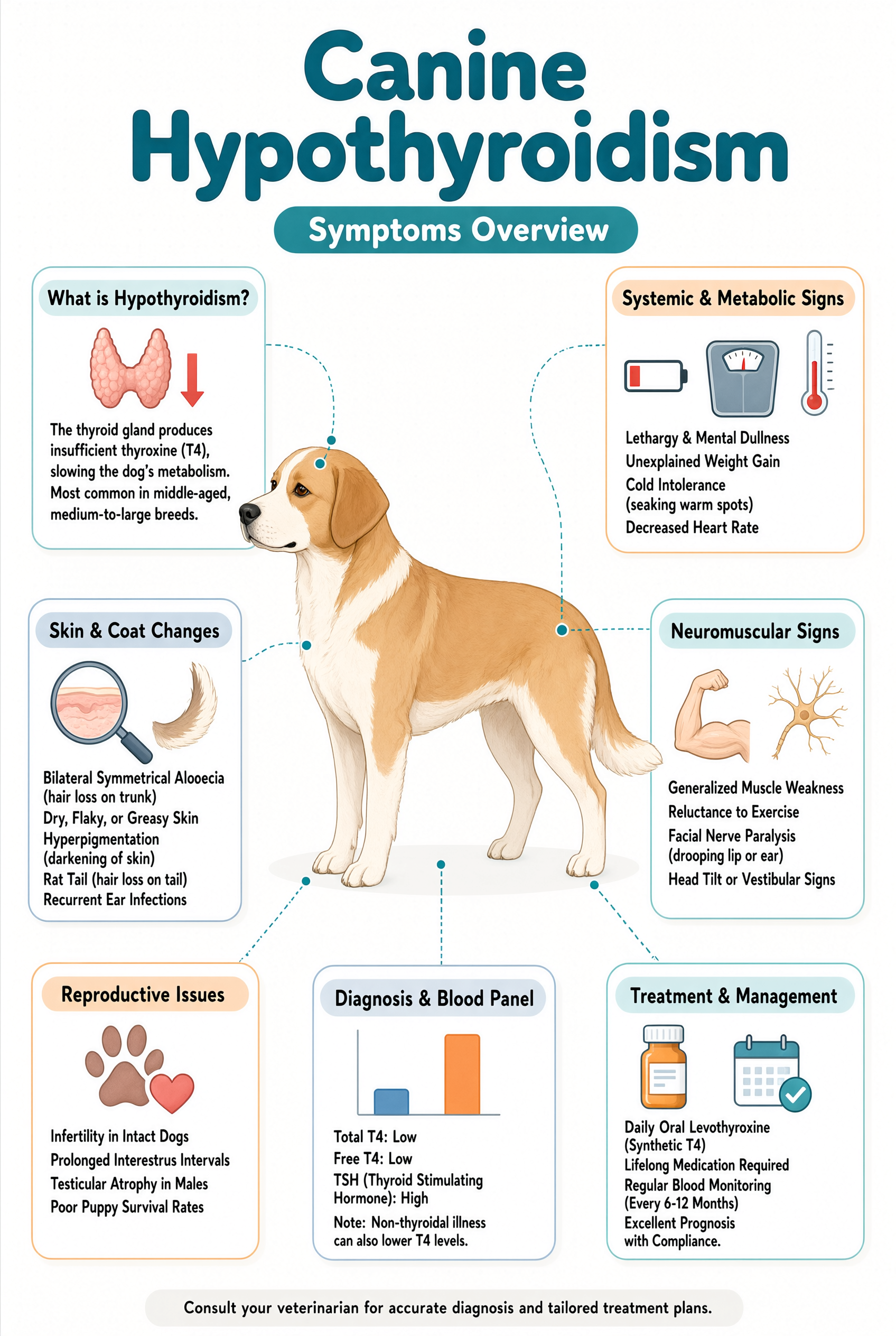
Signs are gradual and nonspecific — pattern recognition plus lab work makes the diagnosis.
Most common signs:
Less common but important:
Searches for “thyroid problems in dogs weight gain” and “symptoms of thyroid issues in dogs” map closely to this list.
Middle-aged dogs (often 4–10 years) are typical. Some breeds appear more often in clinical series, including Golden Retrievers, Doberman Pinschers, Labrador Retrievers, Cocker Spaniels, Dachshunds, Irish Setters, and various spaniels and terriers — but any breed can be affected.
| Test / step | Role |
|---|---|
| History + exam | Pattern of metabolic and skin signs |
| CBC / chemistry | May show mild anemia, high cholesterol, other supportive changes |
| Total T4 (TT4) | Common screening test; low with signs is suggestive |
| Free T4 ± TSH ± autoantibodies | Confirms or clarifies borderline cases |
Your veterinarian interprets panels carefully. Sick dogs or those on certain medications can have low T4 without primary hypothyroidism.
Healthcare Consultations can help you prepare questions for your local vet about testing panels, recheck timing, and monitoring after starting medication.
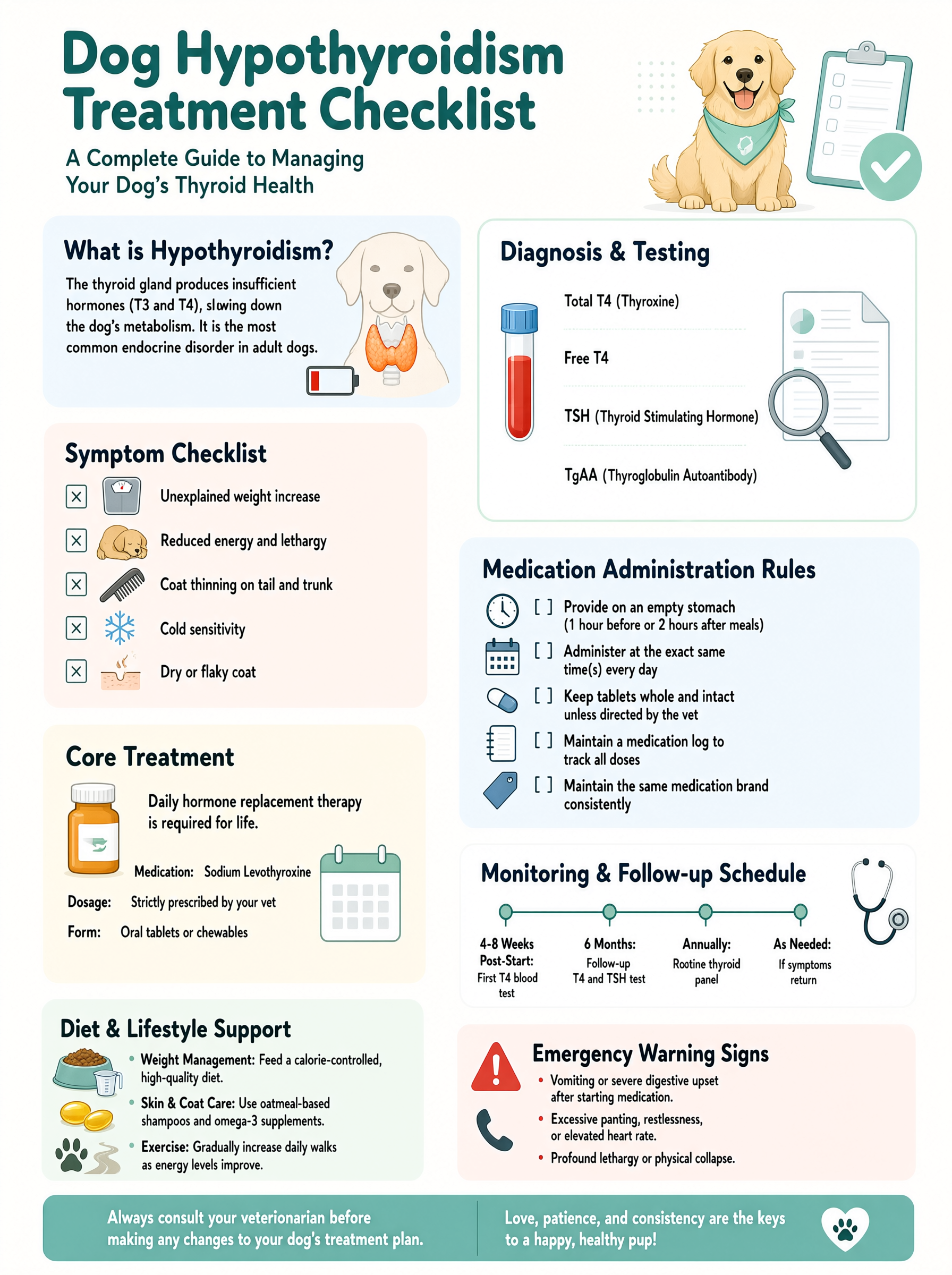
Lifelong levothyroxine works best with consistent dosing and scheduled blood rechecks.
Treatment is lifelong oral thyroid hormone replacement, usually synthetic levothyroxine sodium (FDA-approved canine products include Thyro-Tabs Canine and ThyroKare). Dose is based on body weight and adjusted after follow-up blood tests.
There is no cure that restores the gland permanently in typical adult-onset cases — management is excellent for most dogs when medication and monitoring continue.
If signs persist, your veterinarian may adjust dose, check compliance, or investigate concurrent disease.
Is hypothyroidism in dogs serious?
Untreated, it reduces quality of life and can contribute to obesity, skin disease, and other issues. With proper replacement therapy, most dogs do very well.
Can diet alone fix low thyroid?
No. Confirmed hypothyroidism needs hormone replacement prescribed by a veterinarian.
How long do dogs take thyroid medication?
Usually for life, with periodic blood monitoring.
Will my dog lose weight after starting treatment?
Many do when activity returns and calories are managed — not automatically without diet and exercise planning.
Is underactive thyroid the same as hypothyroidism?
Yes. Owners and search engines use both phrases for the same condition.
Hypothyroidism in dogs is common, gradual, and highly manageable. Recognizing the combination of lethargy, weight gain, and coat changes — then confirming with appropriate thyroid testing — opens the door to effective lifelong therapy. Bookmark nextgenpetcare.com for more endocrine and senior-care guides.
Disclaimer: Educational only. Not a diagnosis or prescription. Follow your veterinarian’s testing and dosing plan.