Lancaster Puppies Buyer Guide: Red Flags, Questions & How to Buy Safely
A vet-informed checklist for anyone searching Lancaster puppies — what the marketplace is, which seller behaviors to avoid, and how to protect your future dog.
A vet-informed checklist for anyone searching Lancaster puppies — what the marketplace is, which seller behaviors to avoid, and how to protect your future dog.
Searching Lancaster puppies, lancaster puppy, or lancaster puppies PA is how many US families start looking for a dog. Those terms pull massive search volume — and they also pull risk. Lancaster Puppies is a large online marketplace that lists puppies from many independent sellers, not a single kennel with one standard of care.
This guide is written for buyers who want a healthy companion, not a costly surprise. It covers what the platform is, red flags reported by other buyers and welfare groups, the questions responsible veterinarians and breed clubs recommend you ask, and safer alternatives when a listing feels off.
Educational content only. NextGen PetCare does not sell puppies and is not affiliated with Lancaster Puppies or any commercial listing site. Always verify sellers independently and schedule a veterinary exam soon after bringing a puppy home.

High search volume does not equal a quality guarantee. Vet the seller, not just the photo.
Lancaster Puppies (lancasterpuppies.com) is an online advertising marketplace. Sellers post listings; buyers browse. The company states it reviews listings for transparency and investigates reports, but it is not the breeder of every puppy shown. Quality depends entirely on the individual seller behind each ad.
Many listings originate from Pennsylvania’s Lancaster County region and surrounding Amish and Mennonite farming communities, though sellers can appear from other areas. Treat every listing as a classified ad that still needs full independent vetting.
Terms like lancaster puppies, lancaster puppy, lancaster puppies PA, lancaster puppies for sale, and breed-specific variants (Lab, Golden, Yorkie, French Bulldog, and more) attract heavy US traffic because the site aggregates many breeds in one place. That convenience is exactly why scams, inconsistent welfare standards, and buyer disappointment also appear in public reviews and complaint boards.
According to Dr. Yawar Abbas, DVM, MPhil, the veterinary cost of a poorly raised puppy — congenital disease, parasites, behavioral problems from under-socialization — often exceeds the purchase price. Prevention starts before money changes hands.
A listing site can remove bad actors after complaints. It cannot undo a sick puppy already in your home. Your due diligence is the real filter.
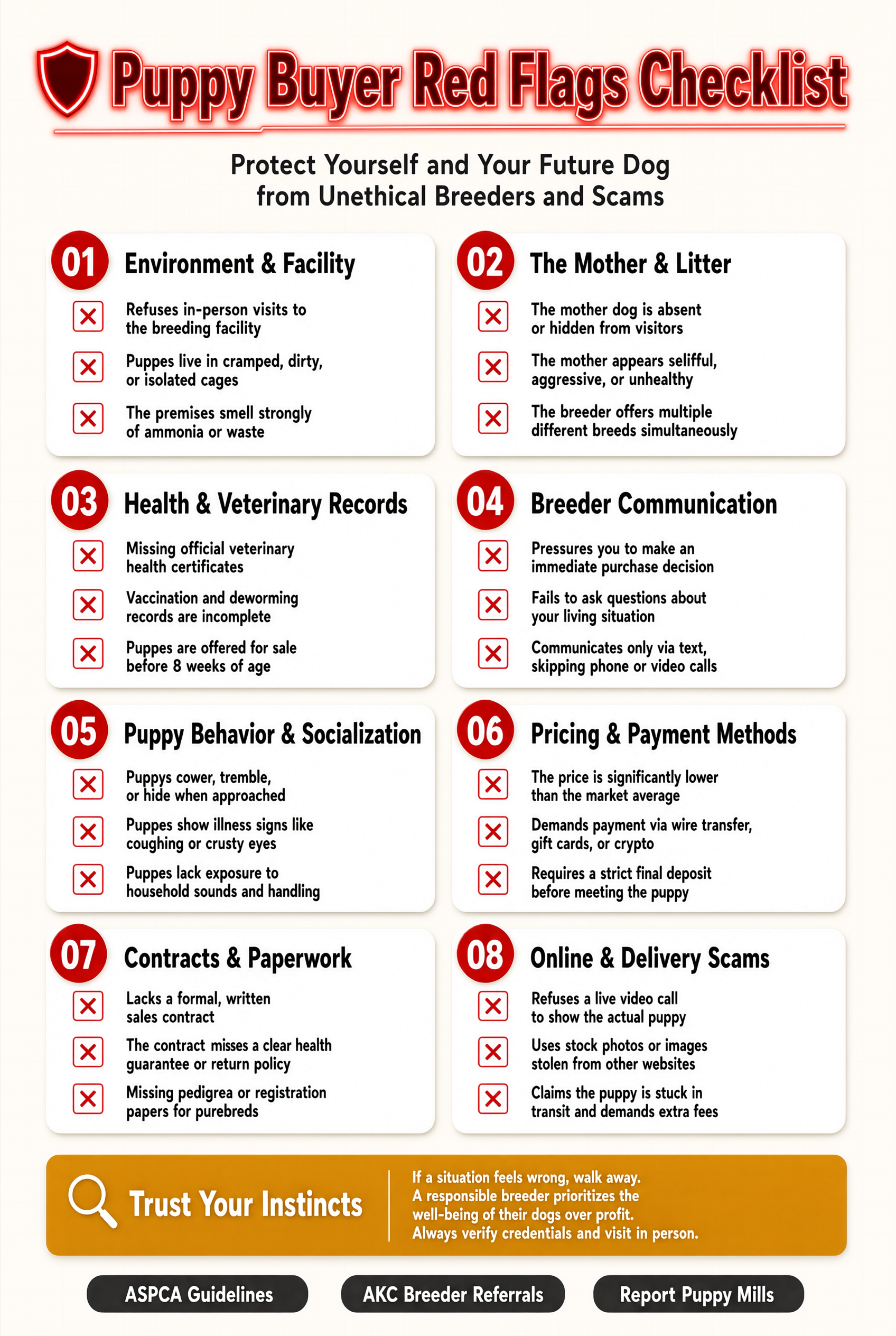
Print or save a red-flag checklist before you message any seller.
Public buyer reports and welfare investigations have repeatedly flagged some commercial and high-volume operations in the broader Lancaster-area online market. Not every seller is the same — which is why verification must be individual.
Drawn from guidance aligned with AKC responsible-breeder principles, Cornell canine health resources, and clinical practice:
Responsible sellers answer calmly and in detail. Evasion is data.
| Item | What good looks like | Risk if missing |
|---|---|---|
| Parent health tests | Breed-appropriate orthopedic, eye, cardiac, and DNA results you can verify | Higher chance of inherited disease |
| Puppy records | Written vaccine/deworming history and recent exam notes | Unknown infectious or parasite status |
| Contract | Clear health guarantee, return-to-seller clause, spay/neuter terms if applicable | No recourse if problems appear |
| Age at sale | Minimum 8 weeks; many ethical breeders prefer 10–12 weeks | Behavioral and immune risks |
“The vet said they’re healthy” without documents is not the same as formal screening. Ask for papers you can keep.
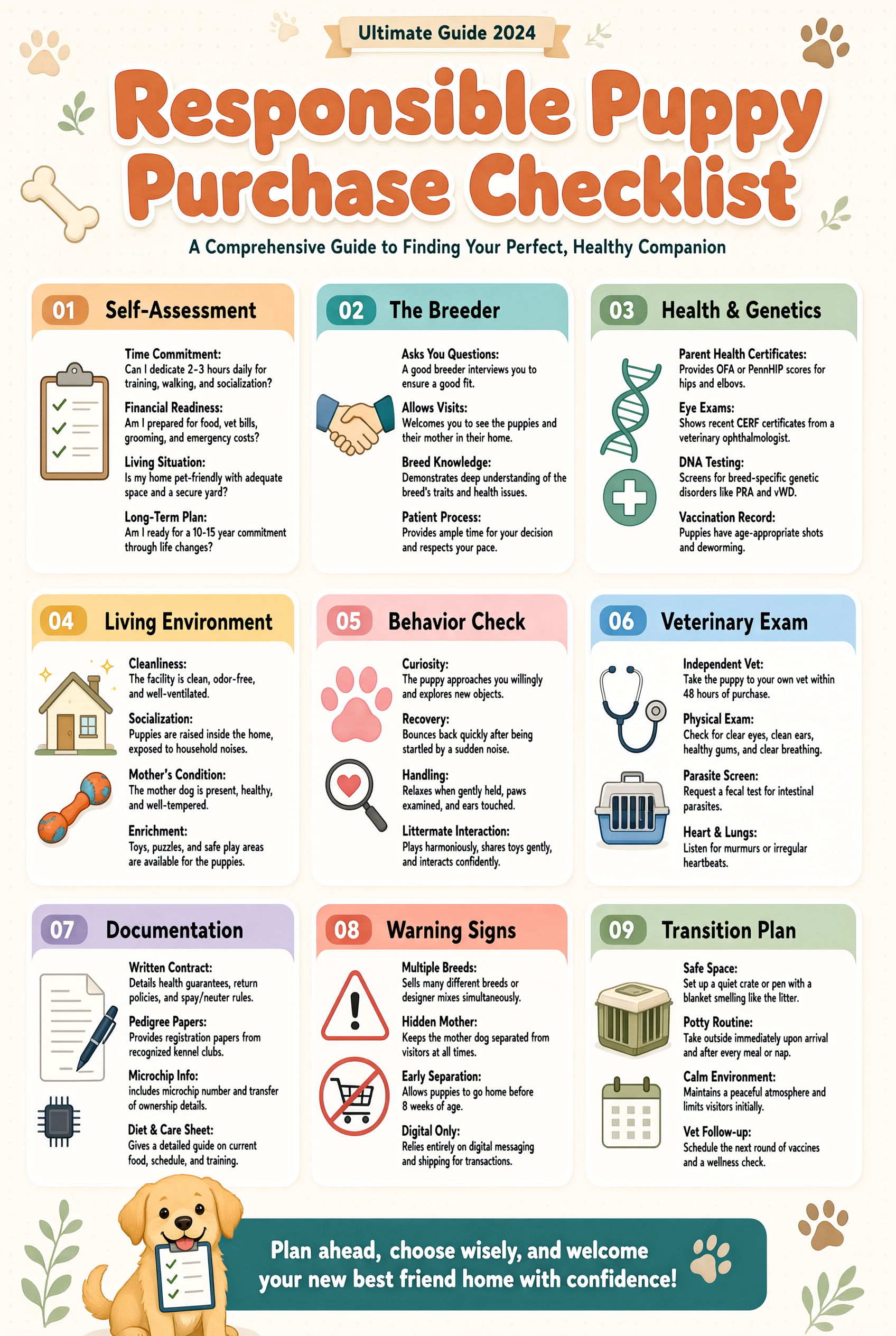
A written checklist beats memory when you are excited about a puppy.
Healthcare Consultations can help you prepare questions for your local veterinarian about first vaccines, parasite prevention, and breed-specific screening after purchase.
Online fraud is common across all pet marketplaces. Lancaster Puppies publishes its own buyer scam warnings — read them, then still verify outside the platform.
Adoption searches such as “adopt a puppy Lancaster PA” and shelter routes deserve equal consideration when your goal is a healthy companion, not a specific commercial listing.
Is Lancaster Puppies a puppy mill?
Lancaster Puppies is a listing marketplace, not a single breeding facility. Some sellers may operate at high volume with weak welfare standards; others may be smaller. You must evaluate each seller.
Can I trust health guarantees on online listings?
Only if they are written, specific, and backed by a seller you can still reach. Verbal promises are weak protection.
Should puppies leave at 8 weeks?
Eight weeks is a common legal minimum in many US jurisdictions. Many responsible breeders keep puppies longer for socialization. Avoid sellers pushing younger ages.
What if the seller only meets in a parking lot?
Treat that as a major red flag. You should see where the puppy was raised whenever possible.
Are Amish breeders automatically bad or good?
No community is uniform. Judge the individual operation: housing, health testing, willingness to show the dam, and written guarantees — not stereotypes.
Searching Lancaster puppies can surface options quickly. Protecting your future dog still requires slow questions, visible living conditions, verifiable health testing, and a written contract. If a seller rushes you or blocks transparency, walk away. Bookmark nextgenpetcare.com for more guides on puppy care, vaccines, and first-year health planning.
Disclaimer: Educational only. Not a purchase recommendation, endorsement, or legal advice. Verify all sellers independently and consult a licensed veterinarian for health decisions.