Best French Bulldog Harness: How to Choose, Measure and Fit
A buying guide to harness styles that protect a French Bulldog’s airway, with measuring and fitting steps and safe-walking tips.
Quick answer: The best harness for a French Bulldog is a padded Y-front (step-in or overhead) harness that sits on the breastbone, leaves the throat and shoulders free, and has a front clip for pullers. Avoid collars for walking and straight-across chest straps. Measure chest girth behind the front legs and neck, and check you can slide two fingers under every strap.
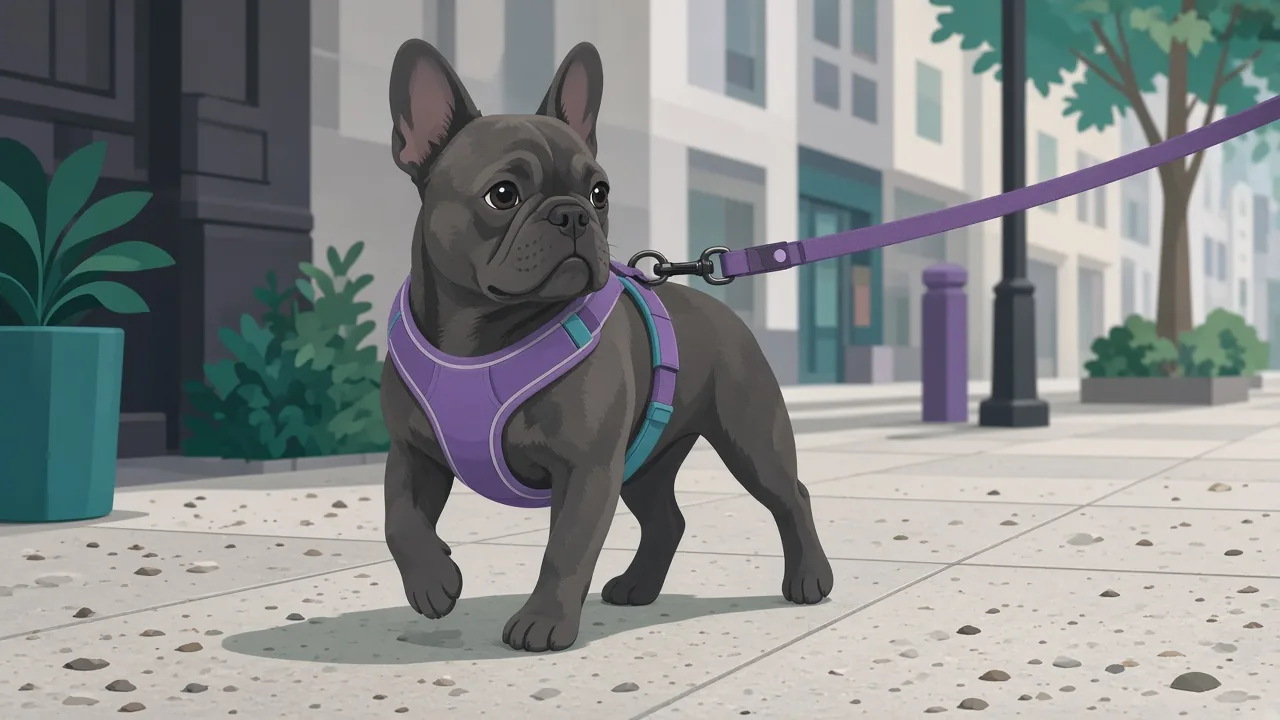
French Bulldogs are cheerful, stocky and strong for their size, but their flat faces make breathing harder than for most breeds. Many Frenchies are affected by brachycephalic obstructive airway syndrome (BOAS), which narrows the nostrils and airway. Pressure on the throat from a collar or a badly fitted harness can make this worse. That is why choosing the right French Bulldog harness matters more than with many other breeds.
This buying guide compares harness types, lists the features to look for, explains how to measure and fit a harness, and covers the breathing and heat warning signs every Frenchie owner should know. We don’t accept payment from brands, so we focus on design features rather than ranking products.
Research from the University of Cambridge BOAS Research Group shows that many flat-faced dogs, including French Bulldogs, have narrowed airways that cause noisy breathing, exercise intolerance and heat intolerance. Anything that squeezes the neck or restricts chest movement adds to the effort of breathing. Frenchies also have:
Why Frenchies need the right harness
| Frenchie trait | What it means for the harness |
|---|---|
| Narrow airway (BOAS risk) | No pressure on the throat; avoid collars for walks |
| Broad, deep chest | Adjustable chest strap, short back section |
| Thick neck | Adjustable neck or a step-in design |
| Back problems (IVDD risk) | Spread pressure across the chest |
| Strong pullers | Front clip plus loose-lead training |
Why harness choice matters for French Bulldogs.
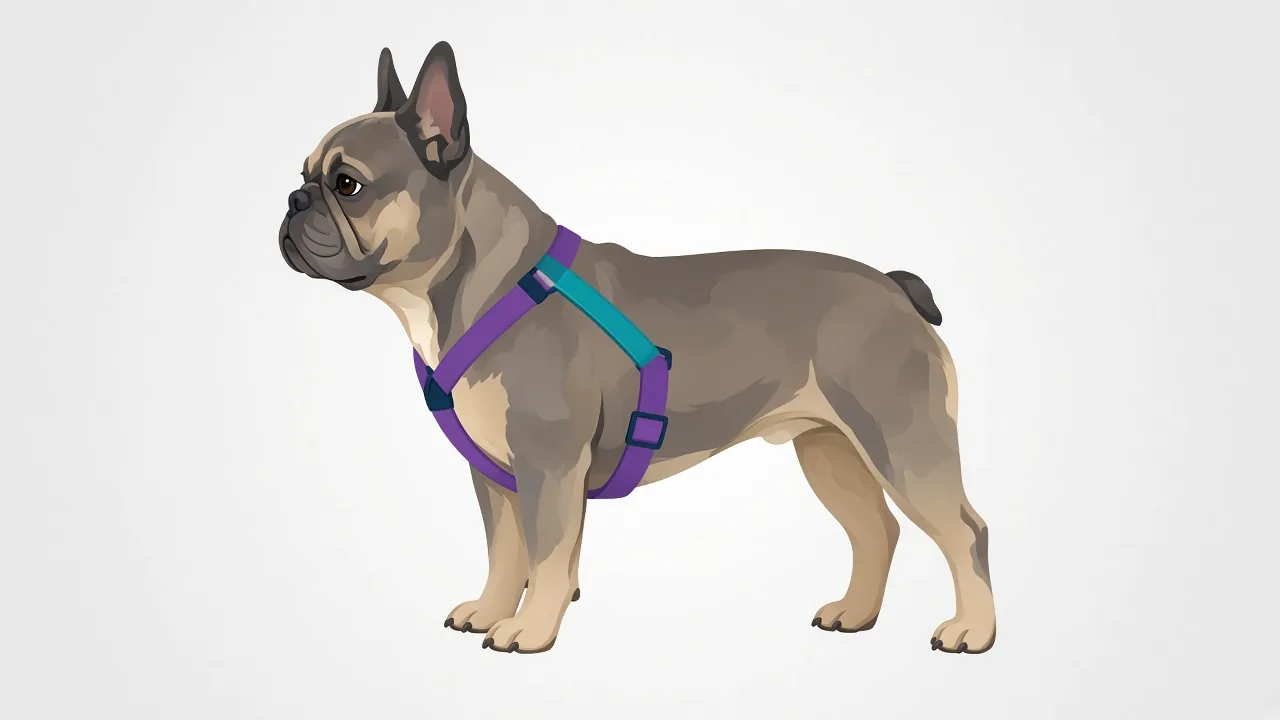
| Harness type | Pros | Cons | Best for |
|---|---|---|---|
| Y-front padded harness | Clear of throat and shoulders, spreads pressure | More straps to adjust | Most Frenchies, everyday walks |
| Step-in harness | No pulling over the head | Can slip if not fitted well | Dogs who dislike things over the head |
| Front-clip (no-pull) harness | Turns the dog gently when it pulls | Must still be Y-shaped to avoid restricting shoulders | Strong pullers in training |
| Vest harness | Soft, wide contact, easy on | Can be hot; may press on the throat if it sits high | Cool weather, short walks |
| Straight-across chest strap | Simple | Restricts shoulder movement, can press the windpipe | Not recommended |
| Collar only | Holds ID tags | Neck and windpipe pressure | ID only, not for walking |
There isn’t one single best brand for every dog. The best harness is the one that fits your Frenchie’s shape, stays clear of the throat and suits how you walk. Look for these features:
French Bulldog harness checklist
Shape and fit
Comfort and control
Features to look for before you buy.
Use a soft tape measure with your dog standing:
If your dog falls between two sizes, choose the one that fits the chest and adjust down. Puppies grow quickly, so check the fit weekly.
Harness fit check
Check these points every time you fit the harness.
Make it a positive routine. Show the harness, reward, then touch it to your dog and reward. Gradually slip it on for a second, treat, and remove. Over a few days build up to fastening it. For a step-in style, place the harness flat, guide each front paw into the loops, then lift and clip over the back. For overhead styles, loosen the neck fully first so it slides easily over the broad head.
A harness is better for walking. A light, flat collar is still useful to carry ID tags, and microchipping is essential. See our microchip and lost pet guide. If your Frenchie pulls, combine a front-clip harness with reward-based loose-leash walking training rather than relying on equipment alone.
Ask your vet about a BOAS assessment (VCA). Surgery to widen the nostrils and shorten the soft palate can greatly improve breathing in affected dogs. For more breed advice, see our popular dog breeds guide and dog accessories guide.
Our Healthcare Consultations pathway helps you prepare breed-specific questions about exercise tolerance and seasonal limits.
The best harness is a padded Y-front design that sits on the breastbone, leaves the throat and shoulders free, adjusts at the neck and chest, and has front and back clips. Fit to your dog’s measurements rather than a brand name.
Measure chest girth around the widest part of the ribcage behind the front legs and the base of the neck, then use the brand’s size chart. Choose by chest size and adjust down if your dog is between sizes.
A harness is better for walks because collars press on the windpipe, which brachycephalic dogs can least afford. Keep a light collar for ID tags.
Front-clip harnesses can help with pulling if they are Y-shaped and don’t cross the shoulders or press the throat. Avoid tightening or restrictive designs and pair the harness with training.
Snug enough that your dog can’t back out, but loose enough to slide two flat fingers under every strap. Check for rubbing or red skin after walks.
Walk in the cool parts of the day, keep walks steady and short in warm weather, carry water, rest in the shade and choose a breathable harness. Loud breathing or collapse needs a vet.