Cushing's Disease in Dogs: Symptoms, Causes & Treatment
Increased thirst, pot belly, hair loss, and panting — how hyperadrenocorticism is diagnosed and managed long-term.
Increased thirst, pot belly, hair loss, and panting — how hyperadrenocorticism is diagnosed and managed long-term.
Cushing’s disease in dogs (also called Cushing’s syndrome or hyperadrenocorticism) is one of the most searched endocrine conditions for older dogs. Owners looking up “cushing’s disease in dogs,” “cushings disease dogs,” and “cushing disease symptoms in dogs” often notice increased thirst, more urination, a pot-bellied look, and coat changes before a diagnosis is confirmed.
This guide explains what Cushing’s is, the main causes, classic signs, how veterinarians test for it, and how lifelong management usually works.
Educational content only. Diagnosis requires specialized adrenal testing interpreted by a veterinarian. Do not start or stop cortisol-related medications without veterinary guidance.
Cushing’s disease occurs when the body is exposed to chronically high levels of cortisol. Cortisol is a natural stress hormone, but excess over months to years produces the classic picture of increased drinking and urination, increased appetite, muscle loss, pot belly, and skin/coat changes.
According to Dr. Yawar Abbas, DVM, MPhil, the condition is most often diagnosed in middle-aged to older dogs and is managed rather than cured in the majority of cases.
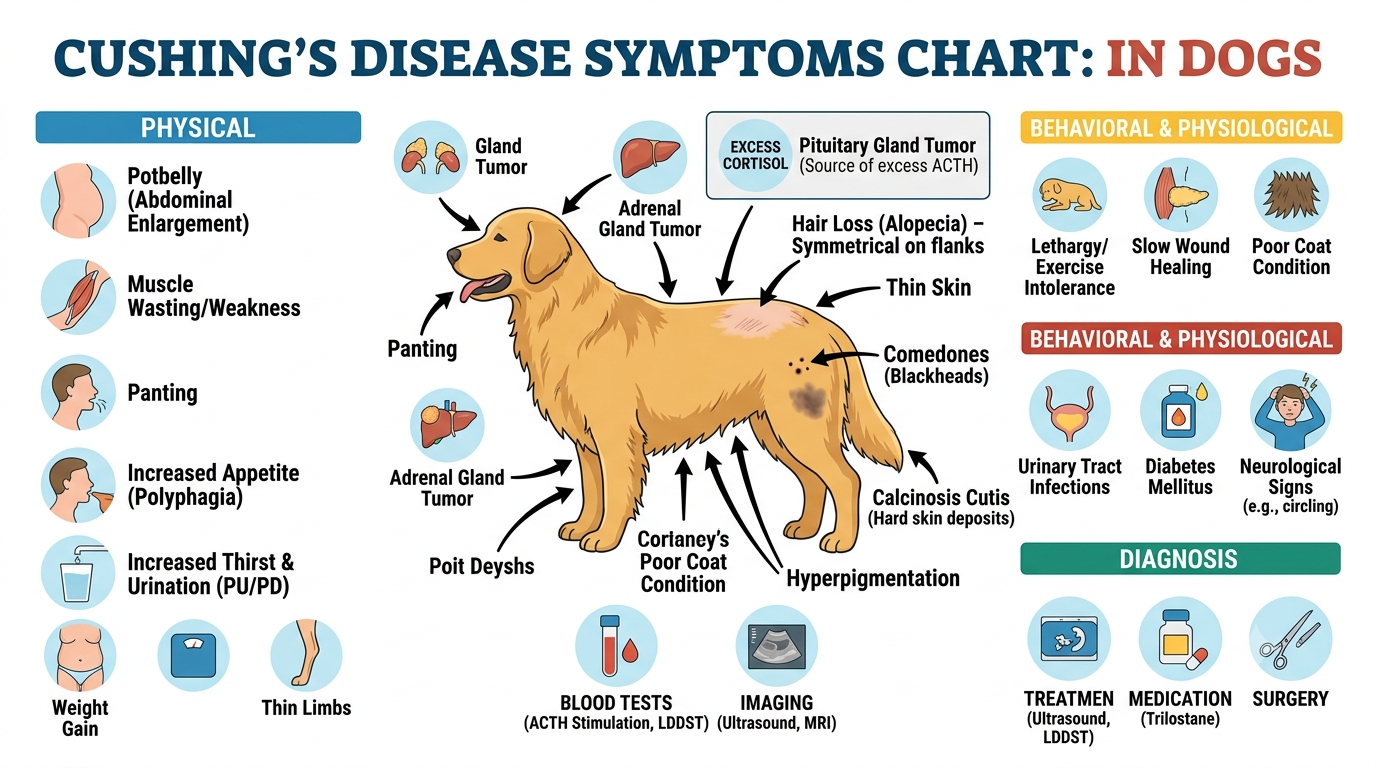
The combination of polyuria/polydipsia, polyphagia, and a pot-bellied appearance is a common owner-reported pattern.
| Type | What happens | Approximate share |
|---|---|---|
| Pituitary-dependent | Usually a small benign pituitary tumor overproduces ACTH → adrenal glands make excess cortisol | ~80–85% of natural cases |
| Adrenal-dependent | Tumor on one (or rarely both) adrenal glands produces cortisol directly | ~15–20% |
| Iatrogenic | Long-term use of corticosteroid medications (e.g., prednisone) | Depends on medication history |
Identifying the type matters because treatment plans and prognosis differ.
Most common signs:
Dogs with Cushing’s are also more prone to urinary tract infections, high blood pressure, and in some cases concurrent diabetes or clotting issues. Signs develop gradually, which is why owners sometimes attribute them to “just getting older.”
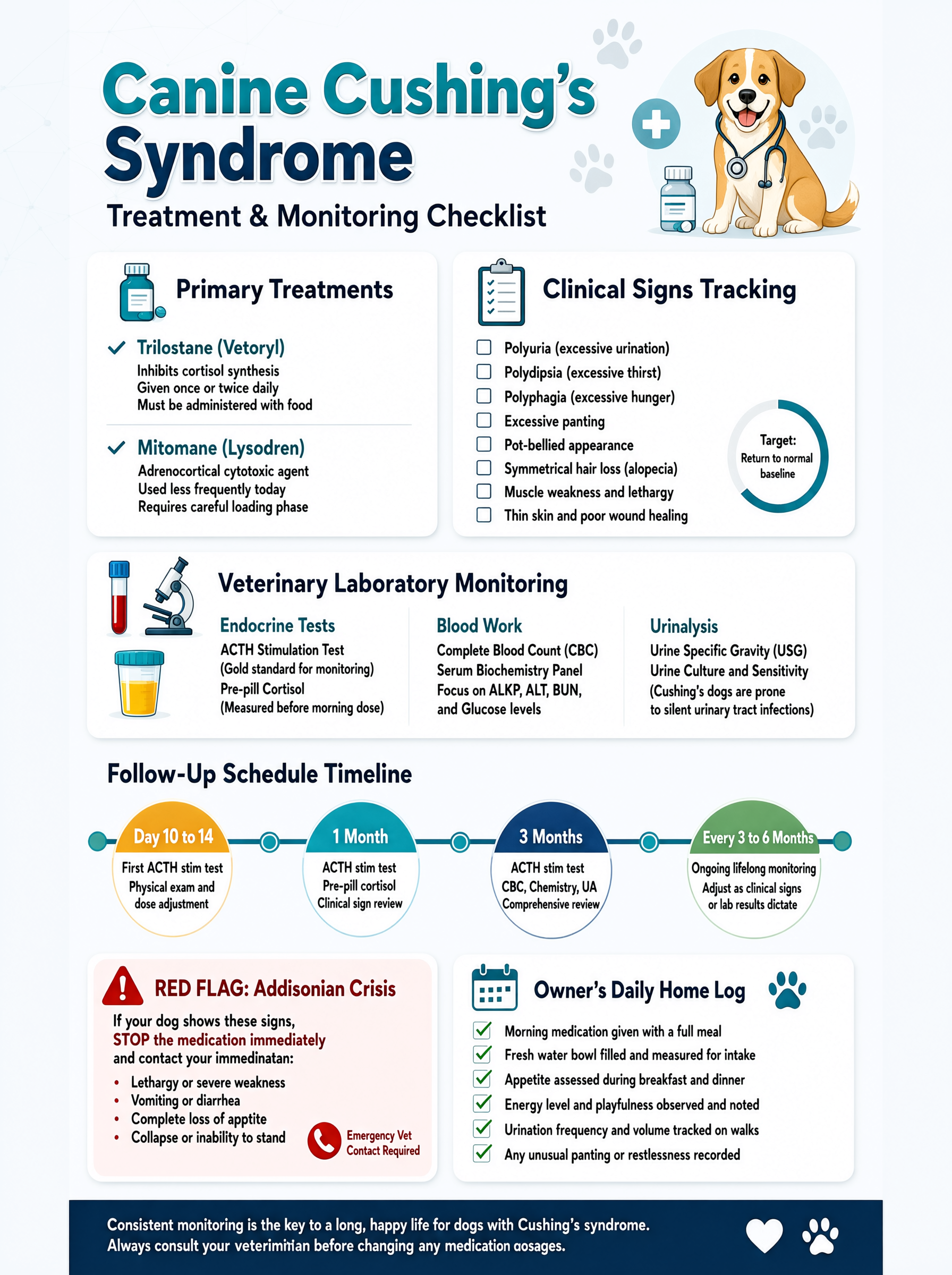
Lifelong medication works best with scheduled monitoring — dose adjustments are common early on.
No single test is perfect. Vets typically start with history, exam, CBC, chemistry, and urinalysis (looking for patterns such as elevated ALP, dilute urine, or protein in urine). Confirmatory adrenal testing may include:
Your veterinarian chooses tests based on your dog’s overall health and concurrent disease.
Healthcare Consultations can help you organize questions about test timing, costs, and monitoring schedules after diagnosis.
Most pituitary-dependent cases are managed medically for life. The most commonly used FDA-approved option is trilostane (Vetoryl), which reduces cortisol production. Mitotane is another historical option in selected cases. Adrenal tumors may be surgical candidates depending on size, type, and the dog’s fitness for anesthesia.
Iatrogenic Cushing’s is managed by carefully tapering the causative steroid under veterinary supervision — never stop steroids abruptly without guidance.
Monitoring after starting treatment is essential. Blood tests help confirm the dose is controlling cortisol without oversuppressing the adrenal glands. Side effects can include reduced appetite, vomiting, diarrhea, or lethargy — report these promptly.
Is Cushing’s disease in dogs fatal?
Untreated, complications can reduce quality of life and lifespan. With appropriate monitoring and medication, many dogs live comfortably for years.
What is the difference between Cushing’s disease and Cushing’s syndrome?
In practice the terms are often used interchangeably for hyperadrenocorticism. “Syndrome” can emphasize the clinical picture regardless of exact cause.
Can diet cure Cushing’s?
No. Confirmed natural Cushing’s needs veterinary medical or surgical management. Nutrition supports overall health but does not replace cortisol control.
Why do dogs get Cushing’s disease?
Most natural cases involve a pituitary or adrenal tumor driving excess cortisol. Long-term steroid medication can cause an iatrogenic form.
How long do dogs live with Cushing’s?
Highly individual. Early diagnosis, consistent medication, and management of complications improve outcomes.
Cushing’s disease in dogs is common in older pets and highly searchable because the signs — thirst, urination, pot belly, coat changes — develop slowly. Confirming the diagnosis with appropriate adrenal testing and committing to monitored medical therapy gives most dogs a better quality of life. More endocrine and senior-care guides are available at nextgenpetcare.com.
Disclaimer: Educational only. Not a diagnosis or treatment plan. Follow your veterinarian’s testing and medication protocol.