Dog Coughing: Causes, Hacking Cough, and When to See a Vet
Coughing is a symptom with many causes. Learn hacking vs night patterns, kennel vs heart clues, home steps, and when breathing trouble is an emergency.
Dog coughing is a symptom, not a diagnosis. Dogs cough because of infectious airway disease (including kennel cough), tracheal irritation or collapse, heart disease, allergies, pneumonia, inhaled irritants, foreign material, or other respiratory and cardiac problems. A single cough after excitement is not the same as a persistent hacking cough, a night cough, or a cough with breathing difficulty. Searches like “dog coughing,” “why is my dog coughing,” and “dog hacking cough” are so common because the sound is alarming and the cause list is long.
This article is educational and does not replace a hands-on veterinary examination. If your dog is struggling to breathe, has blue or grey gums, collapses, coughs up blood, or cannot settle because of continuous respiratory distress, contact a veterinarian or emergency clinic immediately.
A short phone video of the cough is one of the most useful things you can bring to a veterinary visit.
Because these causes need different treatments, guessing “it’s just kennel cough” from the internet is risky when the dog is older, weak, or breathing hard.
| Pattern | Owners often say | Common directions (not diagnoses) |
|---|---|---|
| Honking / hacking | “Something stuck in the throat” | Kennel cough, tracheal irritation |
| Cough + gag / foam | “Trying to vomit but nothing comes” | Airway irritation; still needs exam |
| Worse at night or at rest | Coughs when lying down | Include heart disease in the work-up |
| Worse with exercise or leash pull | Coughs on walks | Tracheal sensitivity, airway or cardiac disease |
| After boarding / daycare | Started a few days after exposure | Infectious airway disease possible |
| With fever or lethargy | Unwell, not just noisy | Infection / pneumonia concern |
For a deeper split of night cough and heart vs airway patterns, see our focused guide on dog coughing at night.
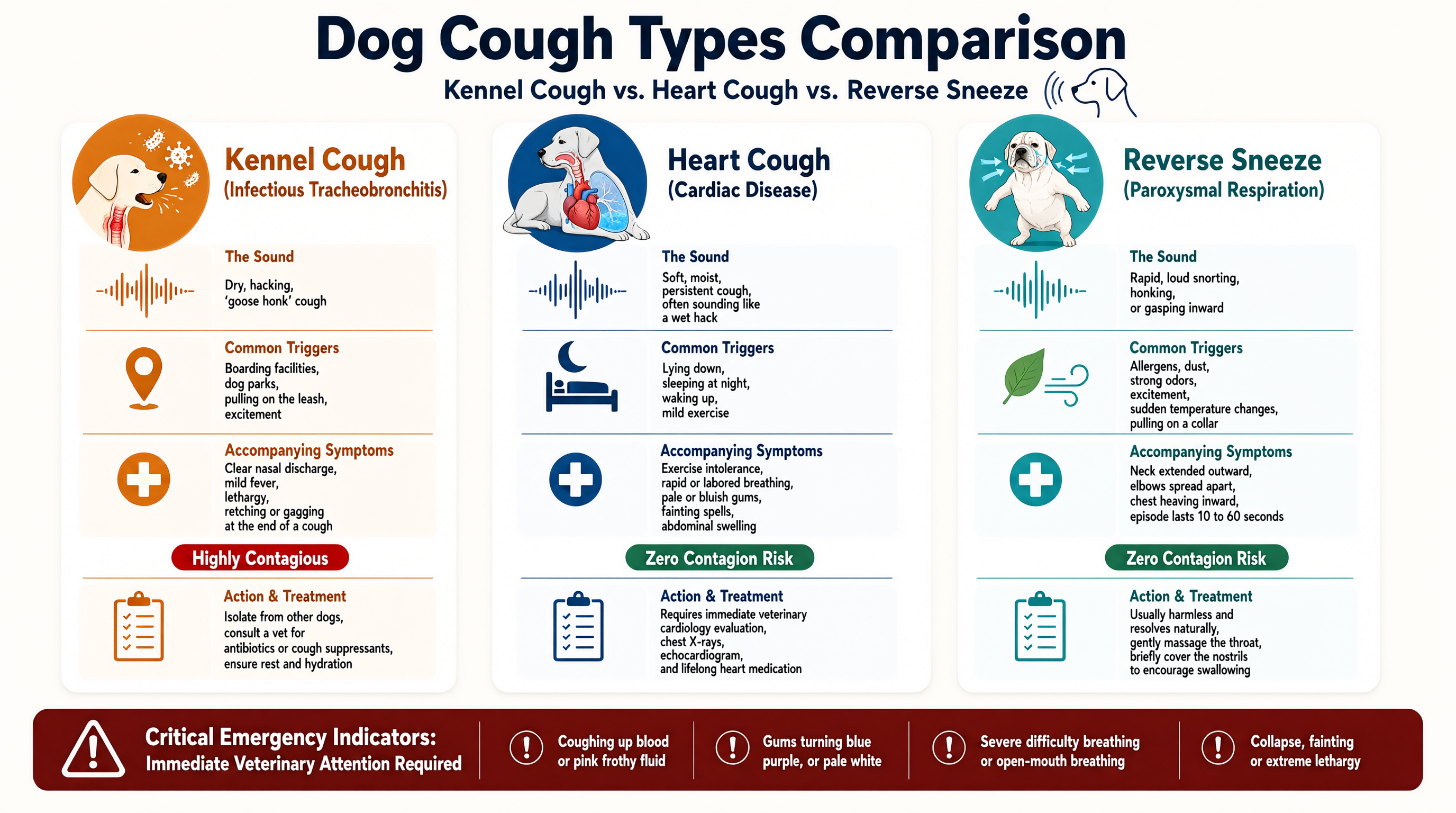
Kennel cough often appears in social dogs with a sudden honking cough and otherwise fair energy, though severe cases can look very unwell.
Heart-related cough is more common in older dogs or breeds prone to heart disease. It may worsen at night, with rest, or with reduced exercise tolerance. Only examination and appropriate tests separate these patterns reliably.
Seek emergency veterinary care now if your dog shows any of the following:
Breathing difficulty is always urgent. Do not wait for a routine appointment if your dog cannot catch their breath.
Night-time patterns and kennel cough have dedicated guides. Use this page for the overall map of dog coughing.
History. When the cough started, exposure to other dogs, vaccination history, age, breed, exercise tolerance, and whether the cough is worse at night.
Physical examination. Listening to the heart and lungs, checking tracheal sensitivity, temperature, gum colour, and breathing rate.
Imaging. Chest X-rays when heart disease, pneumonia, or chronic airway disease is suspected.
Further tests. Heart evaluation, bloodwork, infectious disease testing, or specialised airway exams depending on findings.
Treatment follows the cause:
Do not give human cough syrups unless a veterinarian specifically instructs you. Many human cold products are unsafe for dogs.
Often yes — when the cause is identified. Many infectious coughs improve with time and appropriate care. Tracheal and cardiac causes need ongoing management rather than a single “cure.” The dangerous path is ignoring a cough in an older dog or any cough with breathing difficulty.
Toy and small breeds are over-represented in tracheal sensitivity and collapse. Owners often insist something is lodged in the throat because of the honking sound. Foreign bodies are possible, but chronic tracheal disease is common. Harness use, weight control, and veterinary management matter more than repeated attempts to “dislodge” a phantom object at home.
Puppies with cough after social exposure often fit infectious patterns — still examine if they are lethargic or off food. Seniors with new cough need heart and lung evaluation more often. Age does not make a cough “normal.”
Cigarette smoke, wood smoke, talc, strong bleach fumes, and some essential-oil diffusers irritate airways. Removing the irritant is part of treatment when these are involved.
Counting breaths per minute while your dog sleeps can help you track change — especially in known cardiac patients. Ask your veterinarian what range they want you to report. A rising resting rate with cough is a reason to call sooner.
If infectious disease is possible, separate coughing dogs from others, avoid daycare, and clean shared water bowls. Follow veterinary advice on duration of isolation.
Infectious coughs may take days to weeks to settle fully. Cardiac therapy has different timelines and recheck schedules. If your dog worsens after starting treatment — especially breathing effort — contact the clinic rather than waiting out the full course in silence.
Why is my dog coughing?
Infection, tracheal disease, heart disease, irritants, and pneumonia are common categories. Exam and history narrow the list.
Why is my dog coughing so much?
Frequent coughing needs veterinary assessment, especially if energy or breathing has changed.
What is a dog hacking cough?
A harsh, honking cough often linked to tracheal irritation or kennel cough — still not a DIY diagnosis.
My dog keeps coughing and hacking — what should I do?
Rest, film the cough, avoid neck pressure, and book a vet. Go urgently if breathing is laboured.
Can kennel cough happen without boarding?
Yes. Any close dog contact can transmit infectious airway disease.
When should I worry about dog coughing?
Worry sooner with breathing effort, lethargy, poor appetite, night cough in seniors, or cough lasting beyond a short mild period.
Is dog coughing contagious to humans?
Classic kennel cough agents are primarily dog-to-dog concerns; follow your vet’s hygiene advice for your household.
Should I use a collar or harness?
A well-fitted harness is often kinder for cough-prone dogs who pull on walks — ask your vet for individual advice.
Can heart disease cause coughing?
Yes. That is one reason older dogs with new coughs need a proper examination, not only cough tablets.
How is dog coughing treated?
Treatment depends on the diagnosis — from rest and supportive care to cardiac medication or pneumonia therapy.
Neck collars concentrate pressure on the trachea. For dogs that cough when excited on lead, a front-clip or well-fitted harness often reduces triggers. Train loose-leash walking as a longer-term help. Ask your vet before switching equipment if your dog has other orthopaedic or skin issues under the harness area.
Use plain language:
Bring the video. Thirty seconds of real sound beats five minutes of imitation in the consult room.
Owners often confuse these. A reverse sneeze is a rapid snorting inhale, usually brief. A cough is an explosive exhale. Gagging may follow a cough. Videos help your veterinarian tell which one you are seeing. All can need attention if severe or persistent, but they point to different work-ups.
Some dogs develop long-term airway disease and will always have a baseline cough. The goal becomes reducing frequency and protecting quality of life — weight control, trigger avoidance, prescribed medications, and scheduled rechecks. A sudden worsening in a chronic cougher still needs prompt advice.
Never give human cough suppressants, decongestants, or leftover antibiotics without veterinary direction. “Helpful” human products are a common toxicity pathway. If a medication is prescribed for your dog, use the dose and duration given — stopping early can leave infection or inflammation incompletely treated.
Short leash walks for toilet breaks are usually fine for mild coughs; hard play, fetch, and daycare are not. If the dog coughs continuously on a slow walk or breathes harder than usual, stop and call the clinic.
Stagger rest areas, avoid shared toys that go in mouths, and watch every dog for early signs. Even vaccinated dogs can develop mild disease, and unvaccinated or immunocompromised pets are at higher risk.
Breeds predisposed to valvular disease, older small dogs, and any dog with a known murmur deserve a lower threshold for chest imaging and cardiac evaluation when a new cough appears. Night restlessness, reduced walk distance, and faster breathing in sleep are useful accompanying signs to report.
These are illustrations, not promises:
Avoid spirals of buying multiple over-the-counter syrups, essential oil “remedies,” or collar devices that claim to stop coughing. The evidence-based path is examination, diagnosis, then targeted treatment. Money spent on random products is better spent on the veterinary work-up.
Airlines, boarders, and group classes may require a clear period after infectious respiratory disease. Ask your veterinarian for written guidance. Travelling with an active cough is stressful for the dog and may be restricted by the facility.
Discuss vaccine timing with your vet if your puppy needs socialisation but respiratory risk is high in your area. Vaccination reduces risk for some agents but does not make cough impossible. Balance social development with exposure risk using your clinician’s advice.
A simple monthly note — cough frequency, walk tolerance, resting respiratory rate, weight — helps reassessments. Bring the log to cardiac or respiratory rechecks.
Day clinic: mild cough, normal energy, normal breathing effort, eating well. Emergency: hard breathing, colour change, collapse, continuous distress, known heart failure with sudden change. If you are unsure, call the emergency line and describe breathing effort honestly.
Use this page for the overview. Use the night-cough guide when timing points to rest or cardiac patterns. Use the kennel cough guide when social exposure is the main historical clue. Internal links help readers and search engines understand the topic cluster.
Hearing your dog cough for hours is exhausting. Decision fatigue leads some owners to wait too long and others to try unsafe remedies. A simple rule helps: normal breathing and energy can often wait for a same-day or next-day appointment; abnormal breathing cannot wait overnight.
If a cough is not improving as expected, or if heart disease is newly diagnosed, a second opinion or referral to a veterinary cardiologist or internal medicine clinician is reasonable. Bring prior X-rays and blood results so tests are not repeated unnecessarily.
Good days, poor days, and medication side effects should be discussed openly with your veterinary team. The aim is comfortable breathing, adequate sleep, and the ability to enjoy gentle activity — not a perfect absence of every cough in chronic disease.
Dog coughing after running?
Common with tracheal sensitivity and some cardiac or airway conditions. Rest and book an exam if it is new, frequent, or paired with slower recovery after exercise.
Dog coughing at night only?
Night cough raises the importance of cardiac and lower-airway evaluation. See our dedicated night-cough article for a deeper focus.
Should I wrap my dog’s chest or use a cough coat?
Ask your veterinarian before using compression garments. They are not a substitute for diagnosis and can be counterproductive in some conditions.
Can allergies cause dog coughing?
Yes, in some dogs. Allergies also cause itchy skin and ears; your vet will consider the whole picture.
People arrive from queries such as dog coughing, why is my dog coughing, dog hacking cough, dog keeps coughing, coughing in dogs, dog cough, dog coughing and hacking, and why is my dog coughing so much. Regardless of the phrase, the clinical approach stays consistent: characterise the cough, identify red flags, examine the dog, then treat the cause. This page is built to answer that shared intent with enough depth to guide action without pretending every cough has one internet remedy. Pair it with our night-cough and kennel-cough guides when those angles match your dog’s story.
If you need help organising a symptom timeline or deciding whether the situation sounds urgent before you reach a clinic, WhatsApp support and Diagnostics Support pathways can help you structure the information. They do not replace examination, oxygen support, or imaging when those are required. Use them as a bridge to better in-person care, not as a barrier. Clear notes and a cough video make every clinical minute more effective once you arrive.
Dog coughing is highly searched because the sound is hard to ignore and the stakes range from mild irritation to heart failure or pneumonia. The useful approach is to describe the sound and timing, note exposure and energy level, and arrange veterinary assessment rather than assuming every honk is “just kennel cough.” Seek emergency care for breathing distress, colour change in the gums, collapse, or continuous unproductive coughing with panic. Those signs override any preference for waiting until morning or finishing a work shift. When in doubt about breathing, choose the emergency entrance. With a clear diagnosis, many dogs improve — and those with chronic airway or heart disease can often be managed for comfort and quality of life. The cough is the alert; the examination is what turns the alert into the right plan rather than the wrong medication. Film the sound, note the timing, protect breathing, and get help early when effort increases — that is how owners make the best use of veterinary care for a coughing dog. You do not need to diagnose the disease at home — you need to recognise urgency and get the right help fast. That single shift in mindset prevents most of the dangerous delays we see around coughs that were “probably nothing” until they were not. Trust the breathing effort you see more than the hope that the sound will simply stop on its own. Hope is not a treatment plan — examination is. Keep this page bookmarked for the checklist, then let a veterinarian finish the job with hands-on care and the right tests for your individual dog, age, breed, and history. That partnership is what turns a scary sound into a managed condition or a full recovery when possible. Act on breathing first, always. Go.
Medical disclaimer: This article is intended for general education and does not constitute veterinary advice, diagnosis, or treatment. Only a licensed veterinarian who has examined your dog can determine the cause of coughing and recommend appropriate care. If your dog is in respiratory distress, seek emergency care immediately.