Dog Enrichment Ideas: Easy Activities That Fit Your Daily Routine
Simple sniffing, foraging, chewing and brain games that fit around work and family life, plus a ready-made weekday enrichment routine.
Quick answer: Dog enrichment means giving your dog chances to use their natural behaviours: sniffing, chewing, licking, foraging, problem-solving, play and social time. The easiest way to fit it into a busy routine is to swap the food bowl for a snuffle mat, puzzle toy or scatter feed. Add a 10–20 minute “sniffari” walk where your dog chooses the route, a frozen lick mat or safe chew while you work, and two or three 5-minute training or play sessions a day. Rotate toys weekly so they stay new. Ten to thirty minutes of enrichment a day can reduce boredom barking, chewing and restlessness.
Medically reviewed by
Vet. Dr. Yawar Abbas, DVM, MPhil
PVMC Reg. 15019 · DVM (UVAS Lahore) · M.Phil Epidemiology & Public Health (UAF) · NextGen PetCare
Last reviewed:
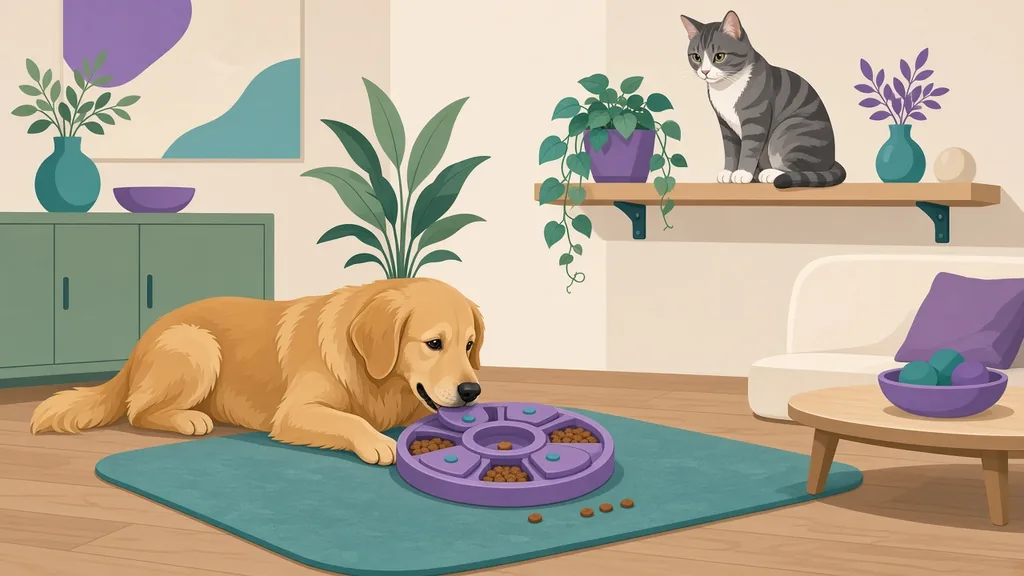
A bored dog finds their own entertainment, and it’s often chewing, barking, digging or raiding the bin. Enrichment gives dogs a healthy outlet for the instincts they were bred for. It doesn’t need expensive toys or hours of free time. Small, regular activities built into your normal day work best.
This guide explains the main types of enrichment, gives you over 25 ideas sorted by time and energy, sets out a sample weekday routine, and covers safety tips for puppies, senior dogs and dogs on restricted exercise. Many ideas also work for cats.
Enrichment is anything that improves your dog’s wellbeing by giving them choice and letting them carry out natural behaviours. The Dogs Trust and ASPCA recommend it for every dog. It is especially helpful for dogs left alone during the day, high-energy breeds, dogs recovering from surgery, and anxious dogs. Enrichment can help reduce problem behaviours such as excessive barking, destructive chewing and attention-seeking. It also builds confidence and strengthens your bond.
| Type | What it means | Examples |
|---|---|---|
| Food and foraging | Working for food, as dogs naturally would | Puzzle feeders, snuffle mats, scatter feeding, frozen stuffed toys |
| Sensory (especially scent) | Using the nose, ears and paws | Sniff walks, scent trails, new textures, hide-and-seek with treats |
| Cognitive | Thinking and problem-solving | Trick training, “find it” games, cardboard box puzzles |
| Physical | Movement and play | Fetch, tug, flirt pole, swimming, gentle obstacle courses |
| Social | Time with people and suitable dogs | Calm play dates, training classes, cuddle time |
| Environmental | Variety and choice in surroundings | New walk routes, a digging pit, a window perch, a quiet den |
If your dog panics when left alone rather than just being bored, enrichment alone won’t fix it. See our separation anxiety guide.

| Time | Activity | Minutes |
|---|---|---|
| Morning | Sniff walk, then breakfast in a snuffle mat or scatter feed | 20–40 |
| Leaving for work | Frozen lick mat or stuffed toy | 10–30 (dog-led) |
| Midday | Dog walker, or a puzzle toy or safe chew | 15–30 |
| Evening | Walk with a new route or games, then a 5-minute trick session | 30–60 |
| Before bed | Calm licking or chewing, and gentle grooming and cuddle time | 10 |
Weekends are a good time for bigger outings or a class. Use part of your dog’s daily food allowance for enrichment rather than adding extra treats, to protect their weight. Our pet weight management guide explains how.
Yes. Cats need to hunt, climb, scratch and hide. Try wand-toy play before meals, puzzle feeders, cardboard boxes, a cat tree by a window, and rotating toys. Enrichment can help with stress-related problems such as over-grooming and furniture scratching.
If your dog still seems restless, destructive or anxious despite good enrichment and exercise, or behaviour changes suddenly, book a vet check. Pain, itchy skin and other medical issues can show up as behaviour problems. A qualified behaviourist, or our Behavioral Coaching team, can then help build a personal plan.
Our Behavioral Coaching pathway helps you build a daily routine of games, training and enrichment that suits your pet and your schedule.
Sniff walks, puzzle feeders, snuffle mats, scatter feeding, lick mats, safe chews, trick training, hide-and-seek, tug and fetch, and scent games are all easy, effective options.
Most dogs benefit from at least 10–30 minutes of enrichment a day on top of walks. High-energy breeds and young dogs may need more. Several short sessions work well.
Feed meals from puzzles or scatter feed, give your dog time to sniff on walks, teach a new trick, rotate toys weekly and add short play sessions. Check with your vet if boredom behaviours continue.
It’s an informal puppy socialisation idea: let puppies experience seven different surfaces, toys, places, people, challenges, food containers and eating locations. It’s a reminder to offer variety, not a scientific rule.
It’s usually used for treats: keep treats, including enrichment snacks, to about 10% of daily calories and the other 90% from complete food. Use part of your dog’s daily food for puzzles to avoid weight gain.
A frozen stuffed toy or lick mat as you leave, safe long-lasting chews, a puzzle toy, and a midday dog walker or daycare for long days. Dogs with separation anxiety need a training plan as well.
Yes. Gentle sniffing games, easy puzzles and slow sniff walks keep older dogs’ minds active without stressing their joints.